

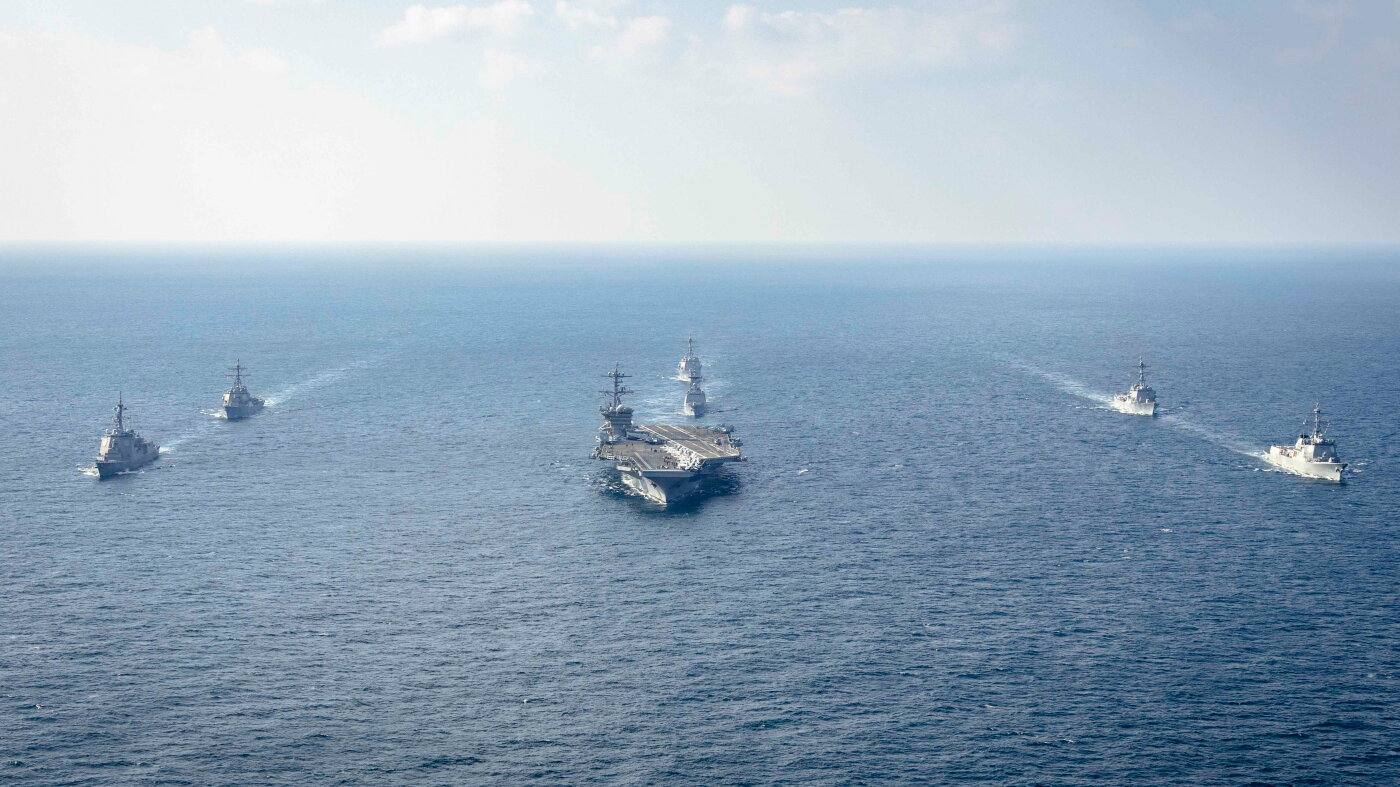
South Korea’s military announced that the three-nation Freedom Edge exercise will commence on Sept. 7 and continue for five days in waters near South Korea’s Jeju Island, according to officials in Seoul on Friday. The drill involves the United States, South Korea, and Japan and is characterized as defensive in nature, aimed at responding to North Korean nuclear and missile capabilities while promoting regional stability.
The trilateral exercise represents a continuation of joint military operations that began in 2024. The drill incorporates simultaneous air and naval components designed to enhance the participating nations’ collective capabilities in areas such as ballistic missile defense, anti-submarine warfare, and surveillance operations. Officials emphasized the exercise’s role in addressing security concerns posed by North Korean weapons development.
The announcement follows recent developments in U.S. policy toward North Korea. The Trump administration reduced the duration of the Ulchi Freedom Shield exercise, an annual bilateral drill between American and South Korean forces, ending it six days ahead of schedule. Trump attributed this decision to what he characterized as a positive relationship with North Korean leader Kim Jong Un and ordered the Pentagon to substantially reduce the exercise’s scope.
North Korea has rejected these gestures of restraint, stating that shortening the drills does not address what Pyongyang views as the inherently provocative nature of such operations. In response to recent military exercises, North Korea launched approximately ten short-range ballistic missiles toward open waters. Pyongyang has indicated it will not pursue diplomatic engagement with the United States unless Washington removes denuclearization requirements from preconditions for negotiations.
North Korea’s Foreign Ministry accused the U.S. of conducting hostile activities, including potential weapons transfers to South Korea, and pledged to respond across multiple domains. Analysts note that Kim Jong Un has significantly expanded North Korea’s military capabilities and deepened ties with Russia since diplomatic efforts with the Trump administration collapsed in 2019, potentially positioning Pyongyang to demand substantial concessions in future negotiations.
Article Attribution | Read More at Article Source
Article summary produced by Claude AI