

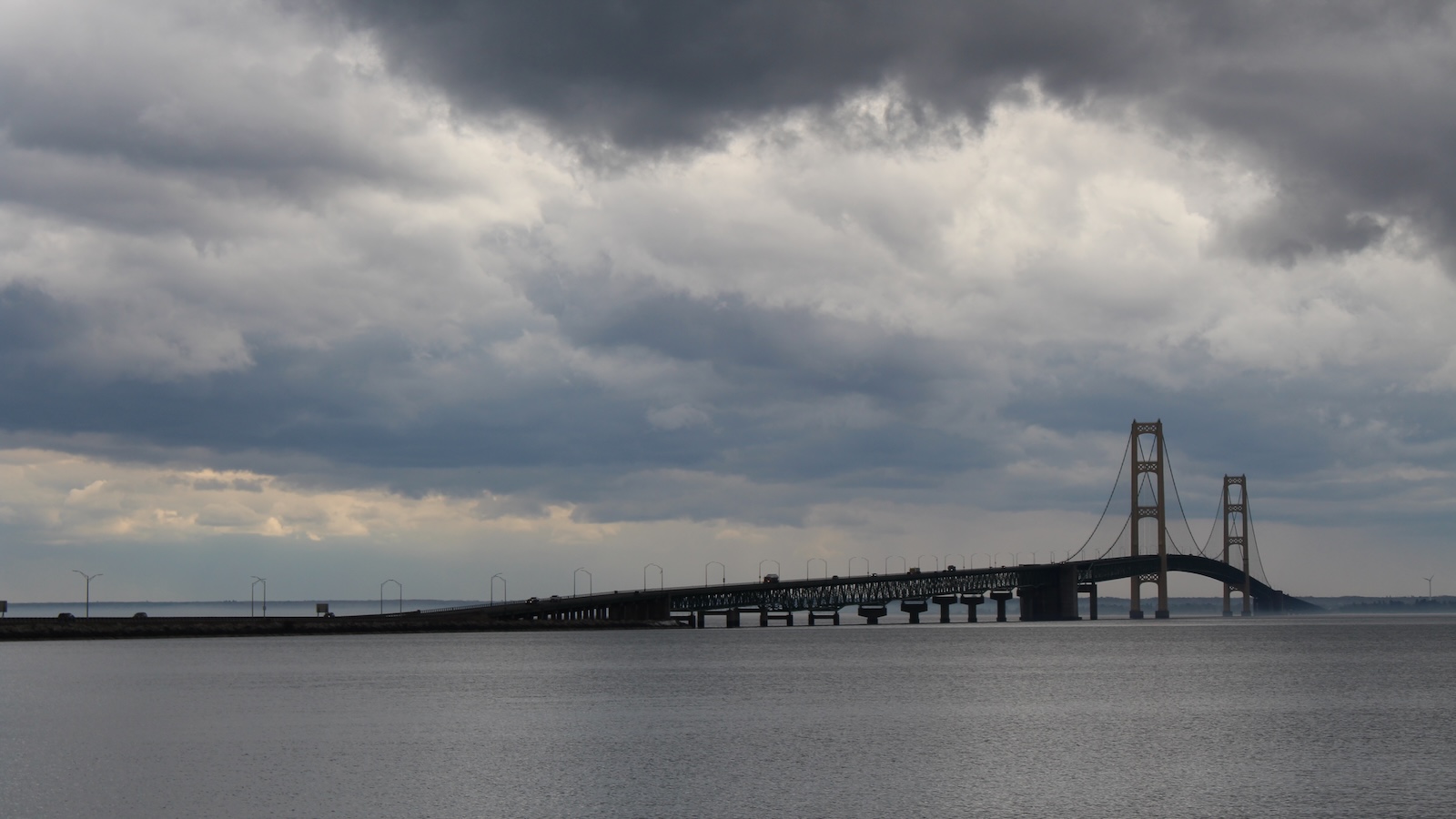
The U.S. Army Corps of Engineers issued a permit authorizing Enbridge Energy to replace a 4-mile section of the Line 5 pipeline beneath the Straits of Mackinac. The project would involve constructing a tunnel under the lakebed to house the updated pipeline infrastructure, which currently carries oil and natural gas liquids across a 645-mile route connecting Superior, Wisconsin, through Michigan to Sarnia, Ontario. The federal agency determined that the proposed tunnel would reduce environmental risks associated with the existing pipeline, such as potential leaks from boat anchor strikes.
The permit approval sparked significant opposition from Michigan tribal nations, who argue the decision disregards their sovereign rights and cultural heritage. The straits hold sacred significance for Anishinaabe peoples, featuring prominently in their creation stories and serving as burial grounds. Five tribal nations maintain treaty rights to fish and hunt in these waters under the 1836 Treaty of Washington, protections that predate Michigan’s statehood. Austin Lowes, chairman of the Sault Ste. Marie Tribe of Chippewa Indians, characterized the permit approval as disrespectful and stated that regulators ignored the project’s impacts on Indigenous communities. The Army Corps acknowledged in its own review that tunnel construction would cause permanent adverse impacts to wetlands, vegetation, land use, and cultural resources.
The permit review was expedited under a presidential executive order declaring a national energy emergency. Seven Michigan tribal nations had previously withdrawn from discussions with the Army Corps, citing concerns that regulators disregarded tribal expertise and undermined treaty rights. Legal advocates supporting the tribes questioned the emergency designation for a project expected to require six to ten years for completion, noting it would not alter fossil fuel transportation volumes.
Despite the federal approval, construction cannot commence without additional state permits. The Michigan Department of Environment, Great Lakes, and Energy continues reviewing a wastewater discharge permit, with a decision anticipated before the end of September. Additionally, the Michigan Supreme Court recently ordered regulators to conduct a more thorough environmental review of an approved state permit. Separate litigation continues regarding the pipeline’s ongoing operation in the straits, with the state appealing a federal court decision and a U.S. Supreme Court ruling having cleared the path for state court proceedings on the matter.
Article Attribution | Read More at Article Source
Article summary produced by Claude AI