

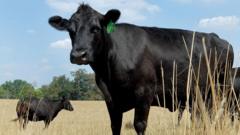
Despite beef prices in US supermarkets climbing 12% over the past year—more than three times the general inflation rate—participants across the livestock supply chain report that higher revenues have not translated into greater profits.
South Dakota cattle rancher Eric Gropper exemplifies this dynamic. While he receives record auction prices for his calves, around $2,500 for a 600-pound calf compared to $2,000 two years earlier, his operational expenses have risen dramatically. Equipment costs have surged, with pickup trucks nearly tripling in price and materials like fence posts and barbed wire more than doubling. Additionally, drought conditions affecting over 60% of US cattle grazing land have forced farmers to purchase supplemental feed, further straining margins. Gropper notes that despite appearing profitable on paper, his actual profit margin remains unchanged.
The feedlot sector experiences a similar squeeze. These operations, which finish approximately 95% of US cattle on corn and grains before slaughter, purchase animals at record prices and sell them at similarly elevated rates, leaving profit margins compressed. Meatpacking companies face the most acute challenges. The four largest processors—Tyson, JBS, Cargill, and National Beef—control roughly 85% of beef processing capacity. Tyson reported losses exceeding $500 million on beef operations during the first half of its financial year, despite selling at all-time highs. Smaller packers like Harpley’s report input costs rising 60% over three years, while operating well below capacity due to cattle shortage, spreading fixed costs across fewer animals.
Restaurants and retailers also face constraints. Block 16, a burger restaurant in Omaha, increased prices from $8.95 to $11.95 per burger but resists further increases due to consumer sensitivity and competition from chicken and imported beef alternatives. Supermarkets face similar limitations.
The fundamental issue stems from record cattle scarcity, triggered by drought and disease, resulting in the lowest US cattle inventory since 1951. This shortage drives up prices at every stage, but each segment absorbs cost increases without achieving proportional profit growth. Resolution requires significantly expanded cattle production, a process requiring three years from heifer breeding through market readiness, meaning current supply constraints will persist near-term.
Article Attribution | Read More at Article Source
Article summary produced by Claude AI