

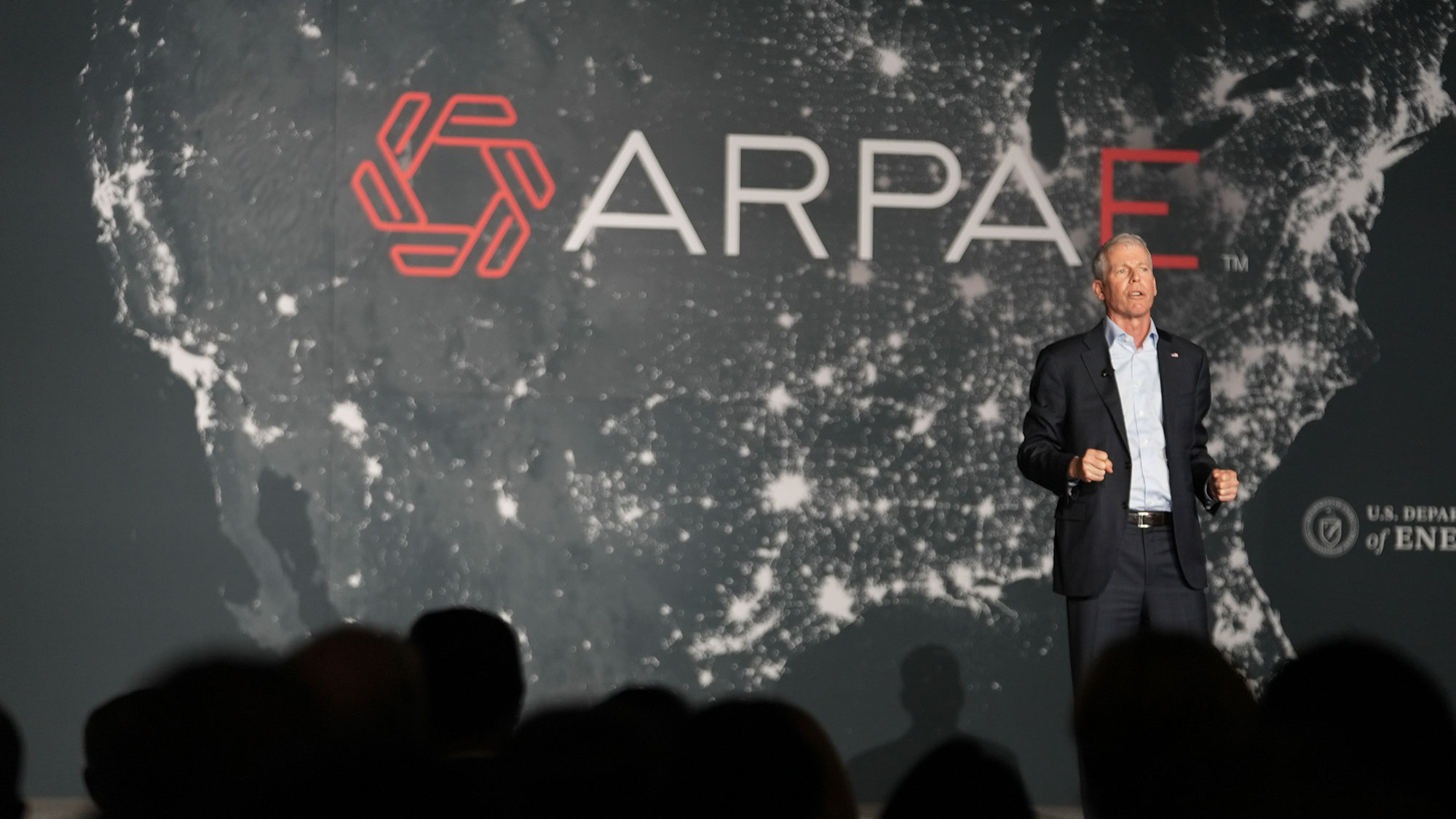
The Advanced Research Projects Agency–Energy, a Department of Energy program established in 2009, has distributed more than $4 billion to universities and startups developing innovative clean energy technologies over the past 15 years. A landmark report from the National Academies of Science, released last week at Congress’s request, evaluated the program’s effectiveness and found substantial returns on investment.
According to the report, ARPA-E’s $4 billion in grants has catalyzed more than $20 billion in additional funding and generated over 1,400 patents. Projects receiving ARPA-E support demonstrated significantly higher rates of patent generation and subsequent investment compared to rejected proposals. The analysis also identified a “crowding in” effect in approximately 40 percent of funded projects, wherein initial proof of concept by startups prompted other companies to pursue similar technologies.
The program has undergone a strategic evolution in recent years. Early grants concentrated on solar panels and lithium-ion batteries, technologies that have since become cost-competitive through manufacturing advances and international competition. The report recommends that ARPA-E shift focus toward more challenging energy problems, including geothermal power generation, long-duration energy storage systems, small-scale nuclear reactors, carbon-free steel and cement production, and nuclear fusion research. Companies including Fervo, Form Energy, and X-energy represent successful ventures emerging from this evolving investment strategy.
The report committee recommended that Congress substantially increase ARPA-E’s funding to address energy challenges requiring decades of development. However, the current administration has proposed reducing the program’s budget by nearly 50 percent, though the Department of Energy continues issuing grants for experimental technologies including long-duration energy storage, fusion reactors, and critical mineral extraction.
Article Attribution | Read More at Article Source
Article summary produced by Claude AI