

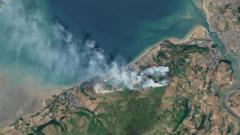
Natural Resources Wales officials have cautioned that recovery from this year’s wildfires could extend over centuries in certain cases. Nick Thomas from the organization noted that when fires incinerate soil in upland peat areas, which accumulate at approximately one millimeter annually, the restoration of vegetation may require hundreds of years. He characterized 2026 as potentially the most severe wildfire season in Welsh history.
The consequences of the fires extend beyond immediate habitat destruction. The loss of soil cover increases flood risk by eliminating its function as a water-absorbing mechanism on elevated terrain. Multiple significant incidents have struck Wales this summer, including a blaze in the Rhinogydd mountain range in Gwynedd that burned for nearly two weeks across more than 2,000 acres, affecting a National Nature Reserve and Special Area of Conservation. A separate fire in Blaenavon, Torfaen, was detectable as far away as Cardiff. Both blazes were visible from satellite imagery.
Recovery timelines vary significantly depending on fire intensity. While some regions may regenerate within a couple of years, areas where fires penetrate and destroy soil face substantially longer restoration periods. A 2018 wildfire on Mynydd Llantysilio near Llangollen, Denbighshire, destroyed approximately 10 centimeters of peat in certain locations, and eight years later large sections remain without heather vegetation. Environmental officials attribute accelerating fire conditions partly to climate change, noting that milder winters have led to increased heather beetle populations that strip plants and leave combustible material.
Conservation experts emphasize the cascading ecological impacts. Julian Thompson, a long-serving warden at Pensychnant Conservation Centre, described soil conditions after the July wildfire as reduced to dust down to bedrock, with approximately one-third of the 150-acre reserve destroyed. The fires threaten rare species found nowhere else in the world, including two moth species endemic to Snowdonia and surrounding mountains. While controlled burning has historically served as a land management tool, summer wildfires during drought conditions produce intensities that fundamentally alter soil composition.
Authorities and community advocates stress prevention through public awareness. Officials suggest moorland and heathland management to reduce fuel loads, along with grazing programs, but emphasize that most fires originate from human activity. Conservation organizations and community members have called for education initiatives regarding the dangers of discarding bottles and cigarettes, which can ignite blazes with devastating consequences.
Article Attribution | Read More at Article Source
Article summary produced by Claude AI