

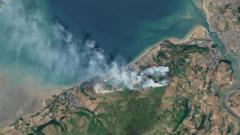
Natural Resources Wales has cautioned that the extensive wildfire damage across Wales this summer may require centuries for full ecological recovery, depending on the severity of soil destruction. Officials noted that peat, which accumulates at approximately one millimeter annually, would need hundreds of years to regenerate in areas where fires have burned deep into the soil layers. The organization’s representative stated expectations that 2026 will represent the most severe wildfire season Wales has experienced on record.
Several major incidents have affected the region, including a prolonged blaze in the Rhinogydd mountain range in Gwynedd that burned approximately 2,000 acres and remained visible from space. A separate fire in Conwy county resulted in village evacuations, while another in Blaenavon, Torfaen, produced smoke detectable in Cardiff. Officials noted that while some areas may recover within a couple of years, recovery timelines depend entirely on how deeply fires penetrate soil layers and whether vegetation-supporting organic matter has been destroyed.
A 2018 wildfire near Llangollen in Denbighshire demonstrates the long-term impacts, as certain areas have shown no heather regrowth eight years later. Recent warming trends have also contributed to increased populations of heather beetles, which strip vegetation and leave behind combustible material. Environmental specialists characterized this pattern as part of a cyclical process connected to climate change.
Wildlife conservation groups highlighted the threat to breeding birds and rare species. A reserve warden reported that soil had been reduced to dust in affected areas, with particular concern for rare moth species found nowhere else but in Snowdonia’s mountains. Multiple stakeholders emphasized that most fires originate from human activity, suggesting that public education about discarding bottles and cigarettes could help prevent future incidents. Management strategies including controlled burning and grazing have been proposed to reduce flammable materials on moorlands and heaths.
Article Attribution | Read More at Article Source
Article summary produced by Claude AI