

American beef prices have climbed to unprecedented levels, with retail costs rising 12% over the past year—more than three times the inflation rate. However, an investigation into the supply chain reveals that despite these elevated prices, participants at each stage report negligible profit increases due to corresponding cost escalations.
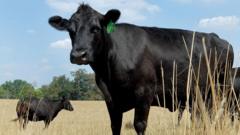
The shortage of available cattle is the fundamental driver of high prices. The United States had fewer cattle at the start of this year than at any point since 1951, resulting from drought conditions and disease pressure. South Dakota rancher Eric Gropper, who manages 350 breeding cows, has seen calf prices reach $2,500 for a 600-pound animal, compared to $2,000 two years earlier. However, his operating expenses have similarly surged. Equipment costs have tripled, with pickup trucks rising from $40,000 to $100,000, while fence posts and barbed wire have doubled or tripled in price. Additionally, severe drought has forced ranchers to purchase supplemental feed, as over 60% of US cattle graze on drought-affected land.
Feedlot operations, which fatten cattle for the final three to six months before slaughter, face the same squeeze. These companies purchase cattle at record prices and sell at equivalent highs, leaving profit margins unchanged. The four largest meatpacking firms—Tyson, JBS, Cargill, and National Beef—control approximately 85% of processing capacity. Despite selling beef at record prices, Tyson reported losses exceeding $500 million on beef operations. Smaller packers face additional pressure from underutilized facilities; one North Carolina operation designed for 425 to 450 cattle daily currently processes just 350, spreading fixed costs across fewer animals.
Restaurants and supermarkets also experience limited pricing power. A burger restaurant in Omaha has raised prices from $8.95 to $11.95 since opening in 2010, yet cannot increase further without risking customer loss to chicken or imported beef alternatives. Supply chain participants are collectively handling more revenue but retaining no additional profit. Relief depends on cattle inventory recovery, a process requiring three years from breeding to market-ready animals.
Article Attribution | Read More at Article Source
Article summary produced by Claude AI