

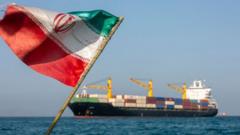
The United States has declared what it describes as “the single greatest financial offensive ever” targeting Iran in coordination with Israel, aimed at pressuring the Iranian regime during their ongoing conflict. However, experts and economists remain skeptical about the sanctions’ potential impact, citing Iran’s decades of experience navigating economic isolation and its deeply entrenched trade networks.
China represents Iran’s largest trading partner, accounting for approximately 26.9% of Iranian exports in 2025 according to UN and World Trade Organisation data. Following the US announcement, China firmly opposed the sanctions, describing them as illegal unilateral measures and signaling its intention to protect its own economic interests. Several economists note that actual Iranian oil sales to China likely exceed officially reported figures due to underreporting for political reasons.
Turkey and Pakistan present more complex cases as trading partners. Turkey, facing domestic inflation of 31.8%, cannot easily reduce trade with Iran without economic consequences, yet must balance this relationship against its NATO alliance obligations. Pakistan faces similar pressures while also serving as a mediator in US-Iran peace negotiations. Additionally, significant oil smuggling across the Pakistan-Iran border complicates government control over bilateral trade flows.
Armenia also maintains substantial trade ties with Iran, and its primary export partner is Russia, suggesting willingness to continue Iranian commerce despite mounting US pressure. Treasury Secretary Scott Bessent characterized the sanctions as comprehensive revenue-blocking measures, but analysts from Oxford Economics and the International Crisis Group dispute their effectiveness. They point to existing multilayered sanctions already in place and question whether the US possesses sufficient enforcement capabilities to compel compliance among trading nations.
Global markets have responded with relative indifference to the announcement. Oil prices declined but remained elevated compared to pre-conflict levels, while major stock indexes showed minimal movement. The US faces significant challenges in persuading economists, investors, and trading partners of the sanctions’ credibility and impact.
Article Attribution | Read More at Article Source
Article summary produced by Claude AI