

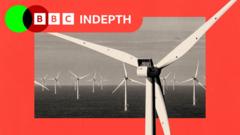
A growing policy debate has emerged in the UK regarding the most effective strategy for achieving net-zero emissions targets, with some economists and policymakers arguing that making electricity cheaper should take priority over focusing exclusively on clean power generation.
The discussion centers on the experience of consumers like Gavin Tait, a Glasgow homeowner who installed renewable energy systems a decade ago but recently switched back to his gas boiler when electricity costs became prohibitive. Despite heat pumps being significantly more efficient than gas boilers, electricity currently costs around 27 pence per kilowatt-hour compared to less than 6 pence for gas. A survey found two-thirds of heat pump owners reported higher heating costs than before. Critics argue the government’s emphasis on renewable electricity generation, which accounts for roughly 10% of UK emissions, has pushed up electricity prices while neglecting heating and transport, which together account for over 40% of emissions.
The cost structure of renewable electricity partly explains current price pressures. While generating renewable power itself is inexpensive, the broader system requires significant investment in backup generation, grid expansion, and balancing mechanisms. The UK’s reliance on offshore wind, a more expensive renewable resource, compounds these costs. Additionally, the electricity market system prices power based on the most expensive source needed to meet demand, typically gas, meaning even renewable-heavy generation periods result in high electricity costs. UK households face some of Europe’s highest electricity bills, with energy-intensive industries increasingly relocating due to cost concerns.
Proponents of a “cheap power” approach, including former Prime Minister Tony Blair’s institute, argue that lower electricity prices would incentivize faster adoption of electric vehicles and heat pumps, accelerating emissions reductions. However, economists including Oxford University’s Sir Dieter Helm contend that tackling climate change inherently costs money, as fossil fuels currently lack pricing that reflects environmental damage. Trade-offs exist between affordability, emissions reduction, and public spending. While the government maintains that renewable investment will enhance energy security and lower bills long-term, the political consensus on net-zero policy has fractured, with various parties expressing concerns about the current approach’s affordability and feasibility.
Article Attribution | Read More at Article Source
Article summary produced by Claude AI