

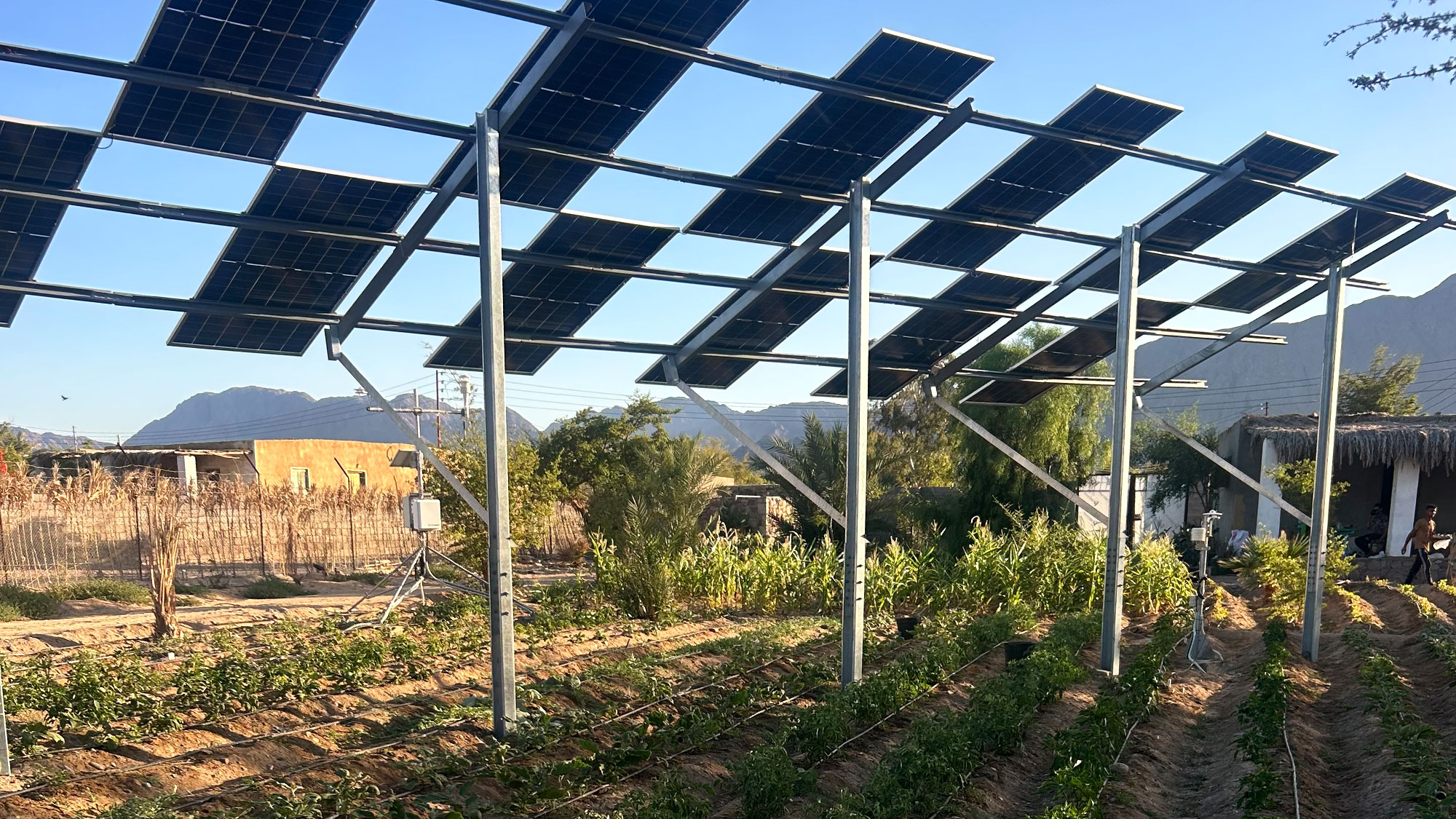
Egyptian agricultural communities are adopting agrivoltaics, a technique that combines solar energy generation with crop cultivation by installing panels above farmland. The approach addresses two pressing challenges facing the nation’s farmers: declining water availability and intensifying heat conditions that threaten crop viability.
The technology functions by providing shade that reduces evaporation and alleviates heat stress on plants, while simultaneously producing clean electricity. Research indicates that many plants benefit from partial shade, having evolved to grow under dappled forest light rather than in full sun exposure. Multiple pilot initiatives funded by various organizations and renewable energy companies are testing different panel configurations in Egyptian farming communities to determine optimal implementations.
Experiments in other regions demonstrate promising results. Researchers in Colorado found that crops grown under panels require approximately one-third the water of unshaded plants, while watermelons in Egyptian test sites have shown strong growth. Scientists are also exploring transparent solar panels that allow light penetration while maintaining power generation capacity.
Key decisions remain regarding implementation models, including whether individual farms or farming collectives should adopt the technology, and how to allocate generated electricity. Currently, the power supports irrigation equipment, though potential applications include powering desalination facilities to treat brackish water, which could expand agricultural capacity regionally.
Proponents note that agrivoltaics resolves the traditional conflict between land use for energy generation versus agricultural production, allowing communities to pursue both objectives simultaneously on the same plots.
Article Attribution | Read More at Article Source
Article summary produced by Claude AI