

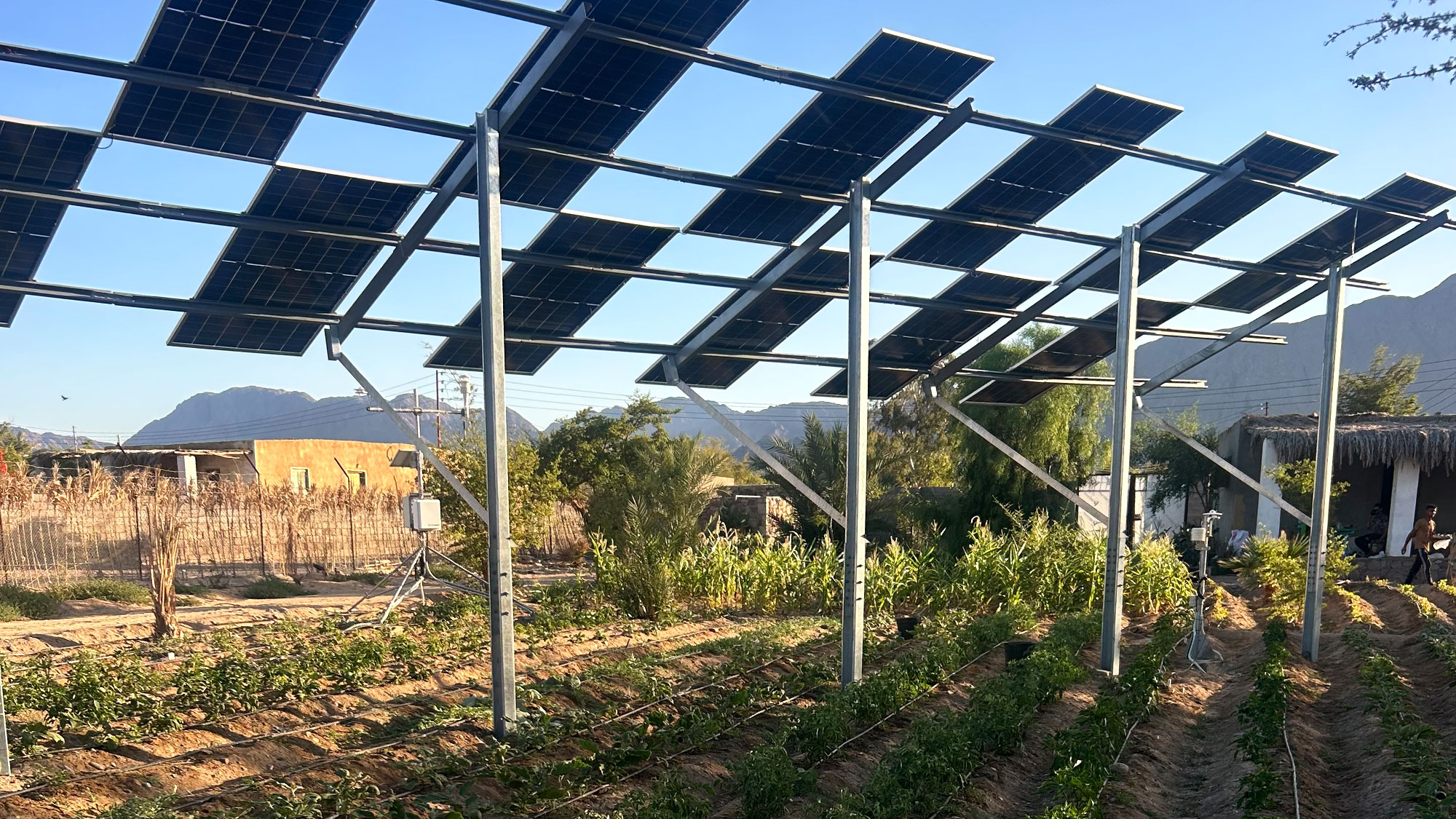
Egyptian farmers are experimenting with agrivoltaics, a technique that combines agricultural production with solar energy generation by installing panels above cropland. Two pilot projects are underway to test the viability of this approach in small farming communities and at larger scales throughout the country. The method addresses mounting challenges including water shortages and rising temperatures that threaten traditional crop yields.
The technology works by providing shade that reduces water evaporation from soil while mitigating heat stress on plants. Contrary to assumptions that shade would inhibit growth, research indicates many crops thrive under partial sunlight, having evolved to flourish in dappled forest light rather than full sun exposure. Scientists and farmers in Egypt are testing various panel configurations, such as checkerboard arrangements, to balance electricity generation with adequate light penetration for crops. While solid panel arrays generate more power, the spaced configurations better support plant growth.
Early results from pilot installations are promising. One regenerative farm in South Sinai reported successful early growth of watermelon under installed panels. Researchers are collecting performance data on both crops and panels to inform future deployment strategies. International research supports the approach: studies from Colorado showed rooftop crops under panels use approximately one-third the water of unshaded plantings, while Nevada desert research demonstrated the hydrological benefits help rare plant species flourish.
Communities implementing agrivoltaics must determine optimal organizational models, including whether individual farms or cooperative groups should adopt the technology. Questions remain regarding electricity distribution and use, with current applications powering irrigation systems and potential future applications including powering desalination plants to expand available freshwater resources. Supporters of the technology argue it resolves the tension between allocating land for renewable energy generation versus agricultural production, allowing both uses simultaneously to strengthen agricultural resilience against climate pressures.
Article Attribution | Read More at Article Source
Article summary produced by Claude AI