

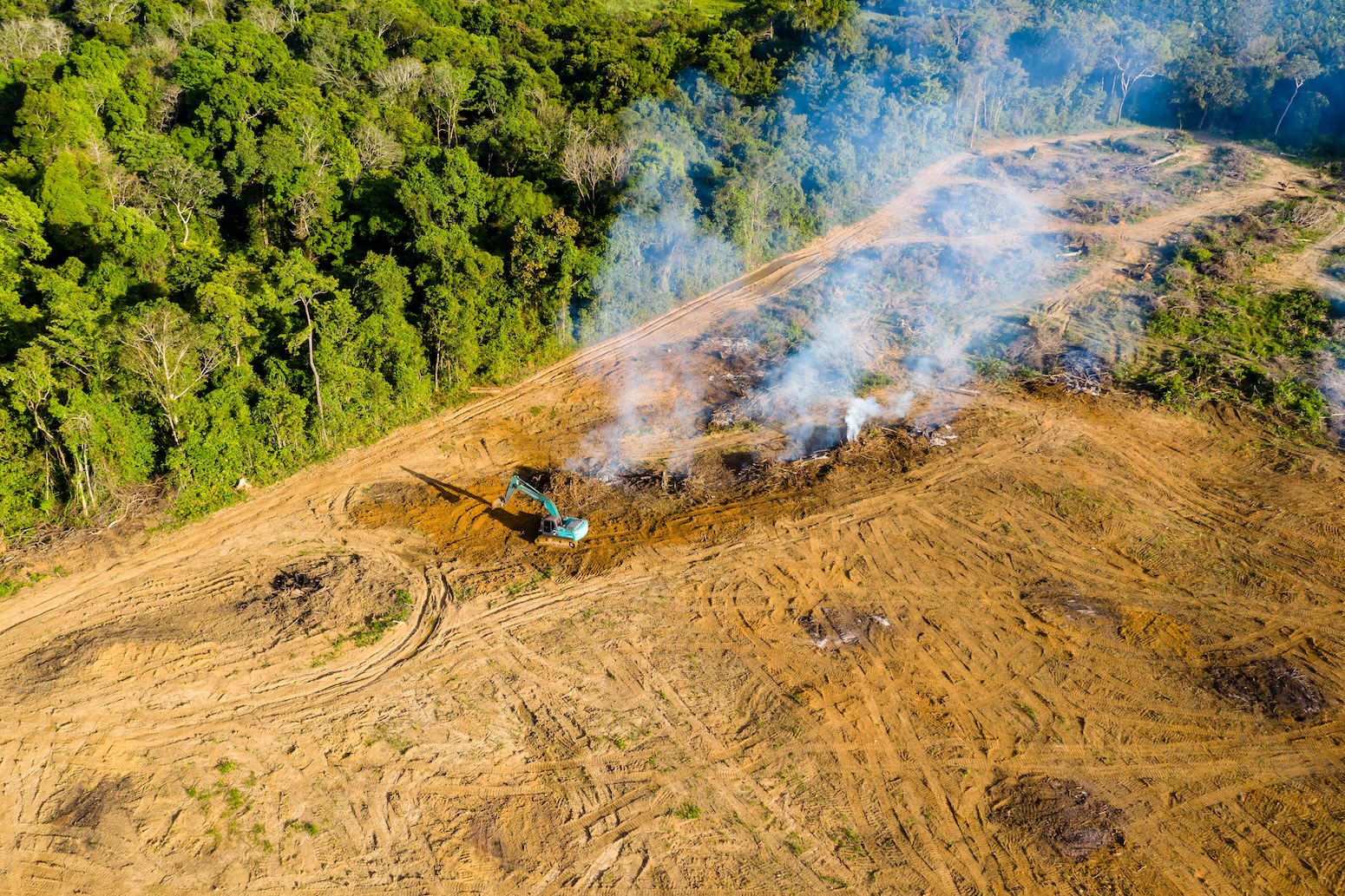
Emissions from land-use change, including deforestation and peatland loss, have experienced a statistically significant decline since the late 1990s, according to the latest Global Carbon Budget report. The analysis reveals that land-use emissions in 2025 were roughly 32% lower than their average during the 2000s, with the most pronounced drop occurring after 2015. Over the period from 2015 to 2024, land-use emissions averaged 5 gigatons of carbon dioxide annually, representing a 23% decrease compared to the 1995-2004 period.
The primary driver of falling land-use emissions has been a reduction in permanent deforestation—the conversion of forests to alternative uses such as agriculture or urban development—rather than temporary logging or rotational farming practices. Simultaneously, forest regrowth has accelerated, with carbon sequestration from reforestation and afforestation efforts offsetting roughly two-thirds of deforestation emissions between 2015 and 2024. The report notes that deforestation generated approximately 6.96 gigatons of emissions annually during this period, while forest growth removed 4.76 gigatons yearly.
The recent sharp decline in land-use emissions since 2015 reflects multiple factors, including the conclusion of elevated peat fire emissions that peaked in 2015 and a sustained long-term reduction in deforestation across numerous countries during the 2010-2020 period. The projected decrease between 2024 and 2025 has been attributed partly to the end of El Niño conditions, which typically desiccate tropical peatlands and intensify controlled deforestation fires.
Despite these improvements in land-use emissions, fossil-fuel and cement emissions have continued their upward trajectory, reaching 38.1 gigatons in 2025 compared to approximately 11 gigatons during the 1960s. Brazil, the Democratic Republic of the Congo, and Indonesia collectively accounted for over half of global land-use emissions from 2015 to 2024, though both Brazil and Indonesia have contributed to the overall decline. Experts emphasize uncertainty regarding future trends, noting that current downward momentum depends on the continuation of existing land-use policies globally.
Article Attribution | Read More at Article Source
Article summary produced by Claude AI