

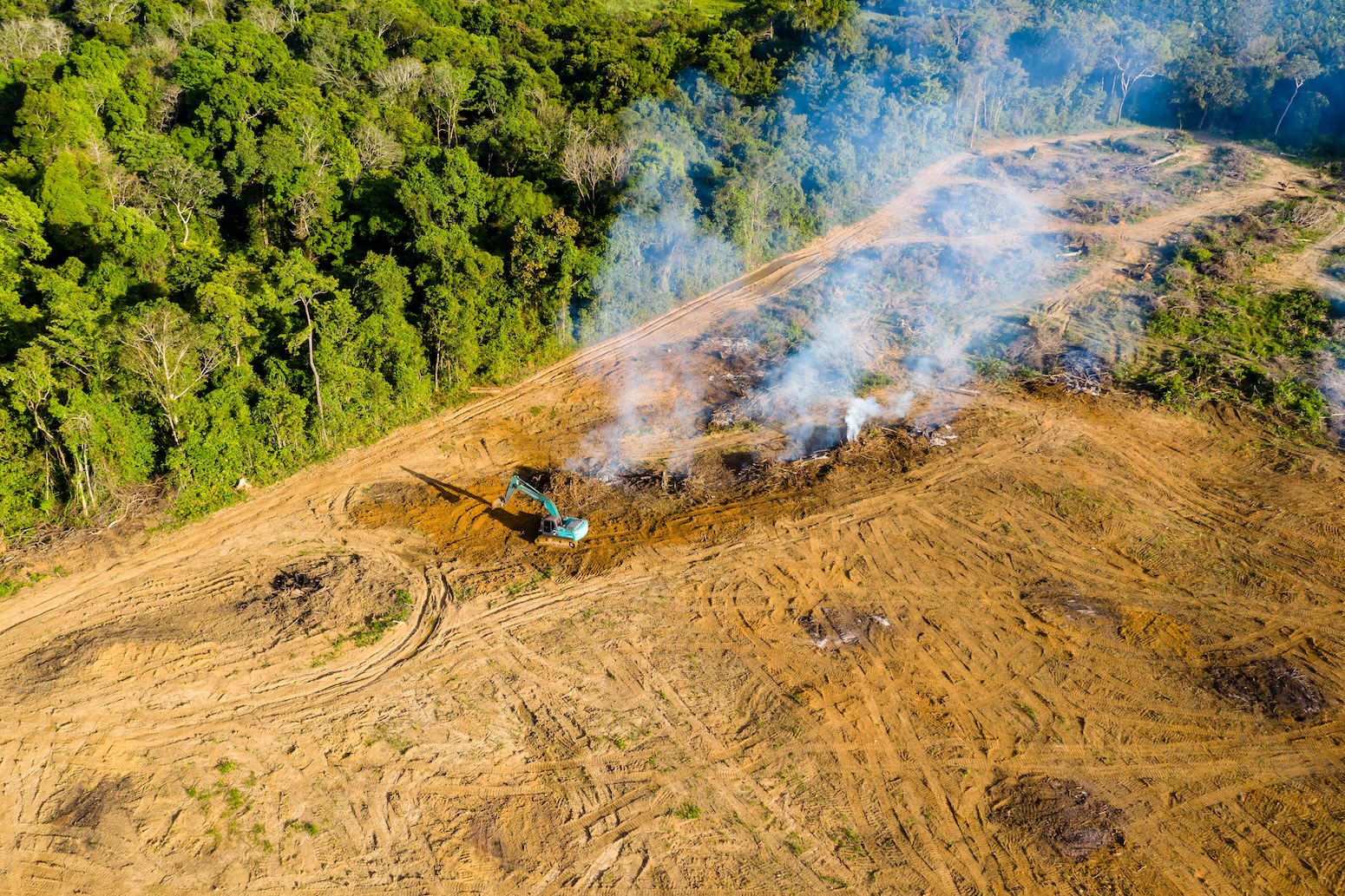
Emissions stemming from land-use changes have experienced a significant decline throughout the 21st century, contrasting with the continued rise in fossil-fuel emissions. The Global Carbon Budget report, formally published in May in the journal Earth System Science Data, documents a statistically significant downward trend in land-use change emissions since the late 1990s, with the decline becoming more pronounced in recent years.
According to data presented in the report, land-use emissions averaged approximately 5 gigatonnes of carbon dioxide annually over 2015-24, representing a 23% decrease from the 1995-2004 average. Preliminary 2025 data indicates emissions of 4.1GtCO2, continuing the downward trajectory. In contrast, global fossil-fuel and cement emissions have risen consistently, reaching 38.1GtCO2 in 2025. Over the four decades preceding 1999, land-use emissions had remained relatively stable at around 6.6 gigatonnes of carbon dioxide per year.
The report attributes the decline primarily to decreasing permanent deforestation—the complete conversion of forests to other land uses such as agriculture or urban development—combined with increased carbon removal through forest regrowth. Between 2015 and 2024, carbon sequestration from reforestation and afforestation efforts offset approximately two-thirds of deforestation emissions. The particularly steep drop in land-use emissions after 2015 reflects both a peak in peat fire emissions that year and long-term declines in deforestation across multiple countries.
Brazil, the Democratic Republic of the Congo, and Indonesia collectively accounted for more than half of global land-use emissions during 2015-24. Across the early 21st century, declining land-use emissions in Brazil and Indonesia, coupled with increased afforestation and reforestation initiatives in China, have contributed substantially to the overall global reduction. Prof Pierre Friedlingstein, director of the Global Carbon Budget office, noted that current trends are moving in a positive direction, though uncertainty remains regarding future trajectories depending on evolving land-use policies worldwide.
Article Attribution | Read More at Article Source
Article summary produced by Claude AI