

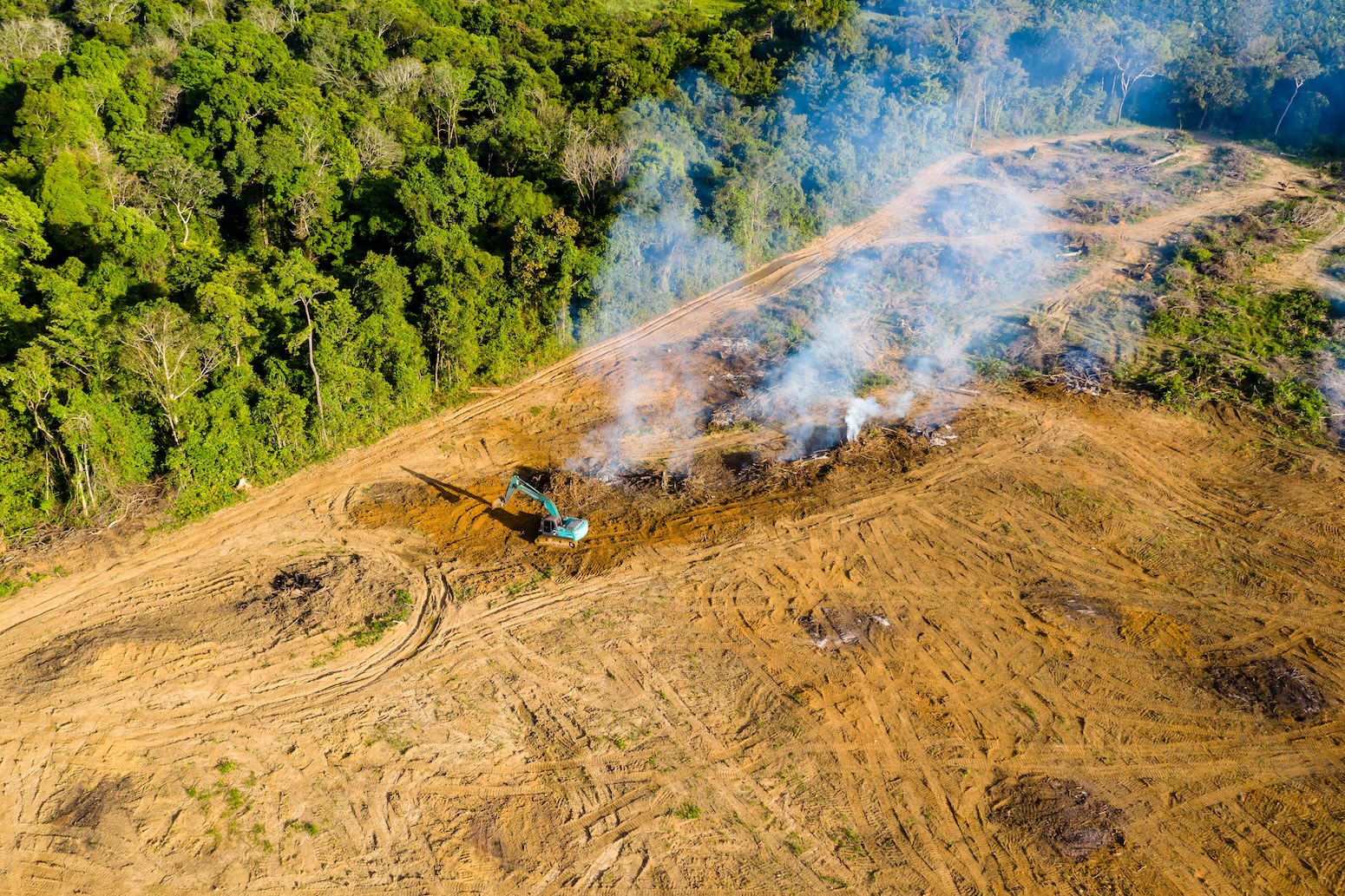
Emissions from land-use change have experienced a significant downward trend over the 21st century, contrasting sharply with rising fossil fuel and cement emissions. The latest Global Carbon Budget report documents a “statistically significant decrease” in land-use change emissions since the late 1990s, with the decline accelerating notably after 2015. Land-use emissions encompass carbon released through deforestation, forest degradation, peatland loss, and timber harvesting.
Historical data shows that land-use emissions remained relatively constant at approximately 6.6 billion tonnes of carbon dioxide annually through the 1990s. However, over 2015-24, land-use emissions averaged 5 gigatonnes of carbon dioxide per year—roughly 23% lower than the 1995-2004 average and 19% lower than 2005-14. Preliminary data indicates 2025 emissions reached 4.1 gigatonnes, continuing the downward trajectory even as fossil fuel and cement emissions reached record highs of 38.1 gigatonnes.
The reduction in land-use emissions stems primarily from decreased permanent deforestation combined with increased carbon sequestration through forest regrowth. Over 2015-24, forest growth removed approximately 4.76 gigatonnes of carbon dioxide annually, offsetting roughly two-thirds of the 6.96 gigatonnes released by deforestation. This sequestration resulted from both deliberate afforestation and reforestation initiatives and natural forest recovery from abandoned agricultural areas.
Brazil, the Democratic Republic of the Congo, and Indonesia collectively accounted for more than half of global land-use emissions over 2015-24. The steepest recent decline occurred following 2015 due to a combination of factors including reduced peat fire emissions and long-term deforestation reductions across multiple nations. Scientists note that near-term projections show further emission decreases attributed to changing climate conditions, though future trends remain uncertain depending on evolving land-use policies globally.
Article Attribution | Read More at Article Source
Article summary produced by Claude AI