

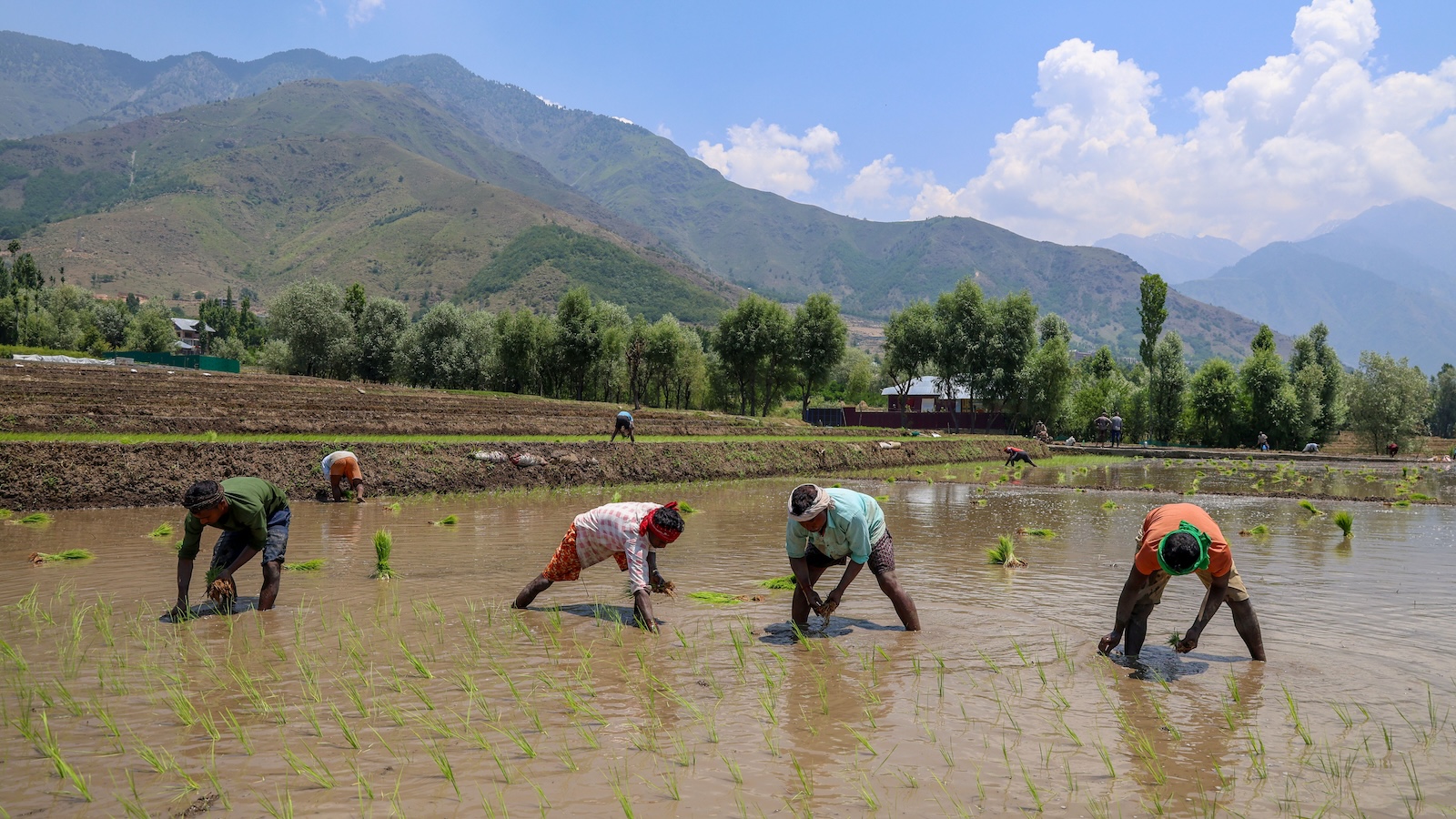
Rice production faces significant challenges as climate patterns and warming temperatures converge to threaten yields worldwide. The U.S. Department of Agriculture projects that global rice output will decline for the first time in more than a decade, with United States production expected to fall by more than half to its lowest levels in 40 years. Regions heavily dependent on rice, which feeds more than half the world’s population, are bracing for potential supply disruptions.
Climate scientists have determined that the current El Niño weather pattern will reach record intensity, a phenomenon occurring naturally roughly every two to seven years that disrupts global weather patterns. The pattern causes trade winds to weaken, allowing warmer Pacific ocean water to drift eastward and trigger atmospheric waves that resonate globally, resulting in either significantly wetter or substantially drier conditions depending on location. Researchers at Columbia University’s Climate School confirmed this week that the El Niño has already achieved “very strong” status with further intensification expected in coming months.
The consequences extend beyond production numbers. Vulnerable regions including the Philippines, sub-Saharan Africa, southern Africa, and parts of South Asia and Brazil face potential food security threats. Indonesia, one of the globe’s largest rice producers, faces the prospect of delayed planting seasons and reduced yields from weakened monsoon activity. Climate models suggest production losses may be underestimated by as much as half, with research indicating an approximately 8 percent production decline for every degree Celsius of warming.
Mitigation efforts have shown promise through agricultural technology investments in recent decades. Advanced irrigation systems and heartier rice varieties have bolstered production, with India emerging as the top rice-growing nation this year through successful adoption of new technologies. However, concerns persist about groundwater depletion from intensive irrigation and whether technological improvements can maintain pace as climate impacts intensify. Additionally, elevated atmospheric carbon dioxide levels have paradoxically enhanced rice growth through improved photosynthesis and water-use efficiency, though this benefit may be overshadowed by warming and drought conditions.
Experts emphasize that continued focus on adaptation measures remains essential. While some industry analysts note that global rice oversupply may buffer against immediate shortages, unequal access to resources means certain countries will experience greater hardship than others, potentially widening gaps between food-secure and vulnerable populations.
Article Attribution | Read More at Article Source
Article summary produced by Claude AI