

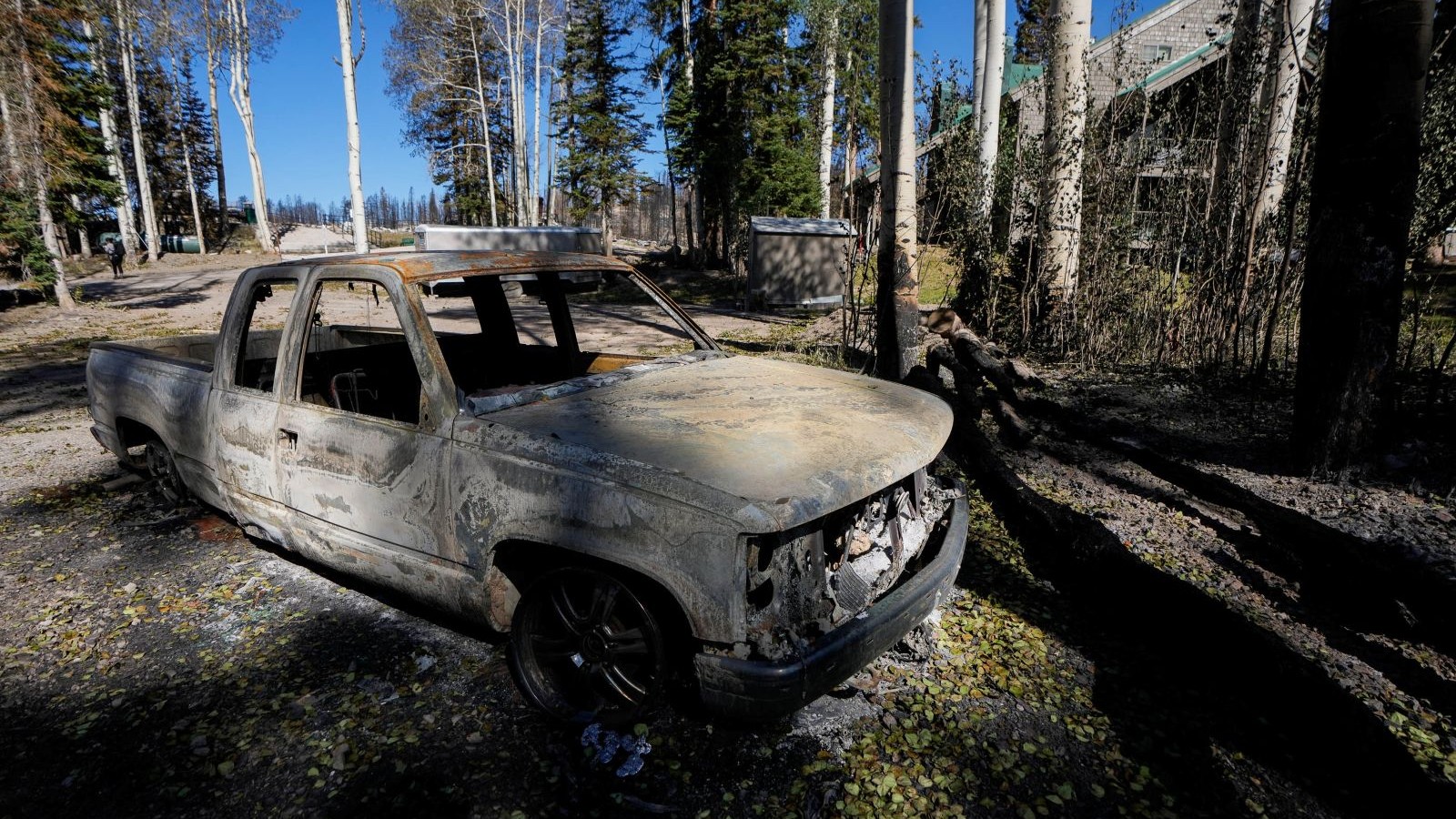
Officials and lawmakers toured the burn scar from Utah’s Cottonwood Fire, which ignited on June 22 and charred more than 97,000 acres while remaining only 95 percent contained as of late Thursday. Members of Congress attributed the fire’s severity to insufficient forest management, suggesting that thinning forests and conducting controlled burns could reduce fuel loads and prevent catastrophic blazes.
However, climate researchers challenge the effectiveness of these traditional approaches. Dominik Kulakowski, a geography professor at Clark University whose work focuses on climate and mountain ecosystems, contends that warming and drying trends now override fuel management as the primary factor determining wildfire behavior in forested areas. The National Oceanic and Atmospheric Administration identifies climate change as the primary driver of wildfire risk in the Western United States over the last two decades. Research published this month indicates that Utah’s severe winter snow deficit is 14 times more likely under current climate conditions compared to pre-industrial periods.
The Cottonwood Fire demonstrated the intensity of modern megafires, expanding by 20,000 acres overnight in late June. Kulakowski notes that embers from such extreme fires can travel approximately a mile, potentially jumping firebreaks hundreds of yards wide and interstate highways. As conditions continue warming and drying, fires regenerate faster than forests can adapt, with some research indicating soil sterilization and diminished tree survival that may lead to ecosystem collapse in certain Western regions.
Fire management experts remain divided on solutions. Utah State University fire ecology professor Larissa Yocom acknowledges that traditional fuel treatments still provide benefits but concedes they cannot prevent fires under extreme conditions. A bipartisan group of lawmakers has proposed the Fix Our Forests Act, which would establish streamlined fuel treatment procedures in high-risk areas, though it awaits a full Senate vote. The Trump administration issued a directive this year mandating aggressive suppression of all fires, including smaller ones that historically maintained forest health through natural fire cycles. Experts suggest that allowing controlled burns during mild seasons might reduce fire intensity, but current policy prevents such approaches.
Article Attribution | Read More at Article Source
Article summary produced by Claude AI