

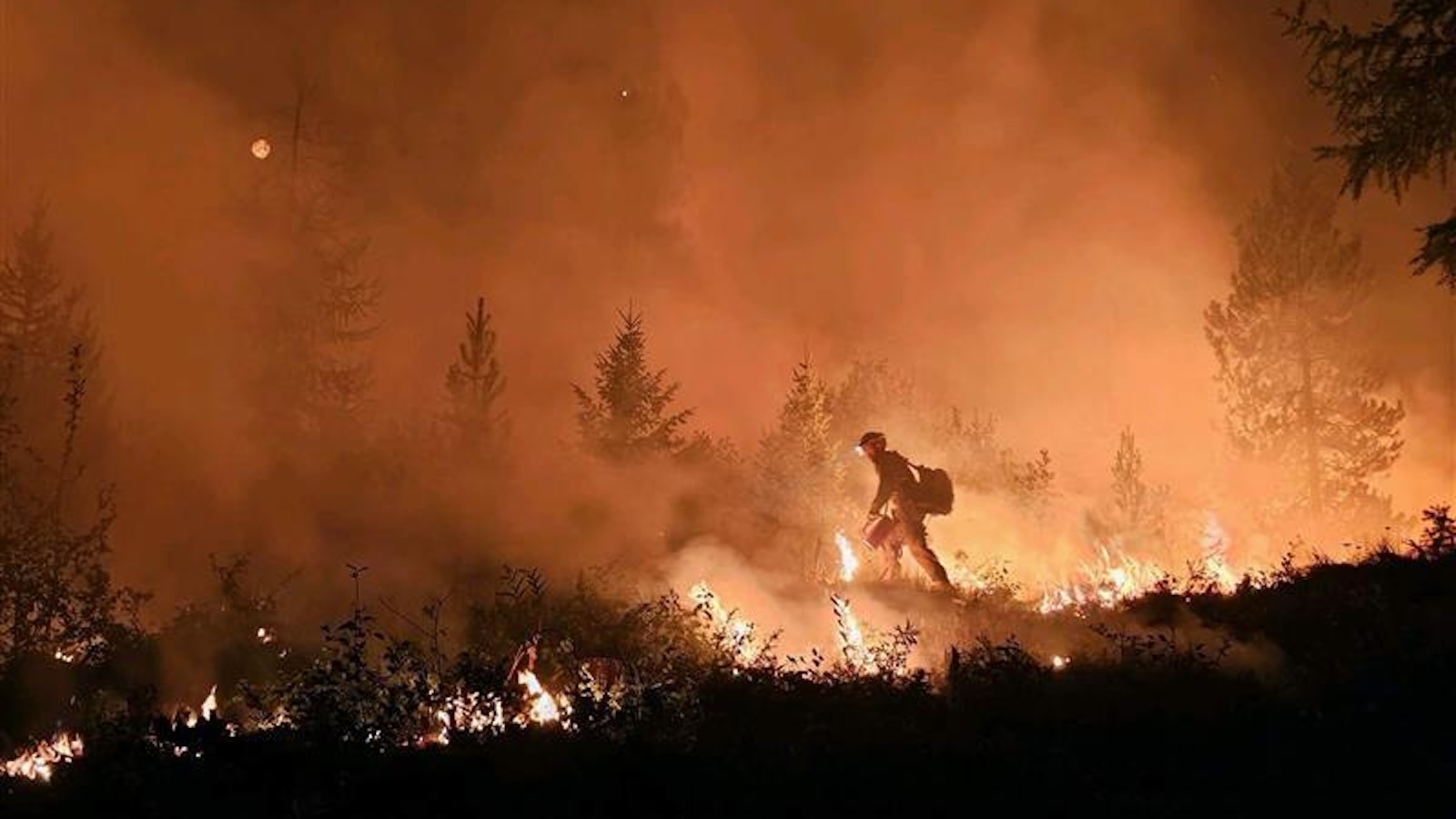
Spokane, Washington’s second-largest city, activated a major emergency shelter at its Convention Center as three wildfires burned neighborhoods just miles away. Red Cross personnel and volunteers provided care for hundreds of evacuees, including seniors and families with young children. The fires, which started over the weekend, had destroyed more than 700 buildings by Monday afternoon and forced at least 65,000 residents to evacuate across the state.
Washington is experiencing its most destructive wildfire season on record, with over half a million acres burned. The situation mirrors recent fire outbreaks in the region, as Oregon recently exceeded its historical annual acreage-burned record with nearly 2 million acres scorched. Weather conditions combined to create the volatile environment: the region experienced historically low snowfall, causing early spring melt and leaving vegetation exceptionally dry, while extreme drought and heat waves intensified fire risk.
Scientists attribute the escalating severity of wildfire seasons to climate change. Warmer atmospheric conditions enable retention of additional moisture, drawing water from vegetation and soil while simultaneously creating conditions for more intense but less frequent precipitation. This cycle produces prolonged drought periods ideal for fire spread. University of Washington hazards mitigation expert Bob Freitag emphasized that understanding these fires requires connecting them to broader climate shifts, describing the pattern as predictable rather than anomalous.
Spokane’s vulnerability reflects broader development patterns. The fires spread rapidly through neighborhoods characterized by steep terrain and dense vegetation, while cul-de-sac street layouts complicated evacuations and emergency response. The wildland-urban interface—where suburban homes intermingle with natural areas—represents the fastest-growing residential development type in the United States and presents elevated fire risk. City officials noted that affected neighborhoods had limited evacuation routes, with residents spending hours in traffic watching homes burn.
Mitigation strategies remain contentious. California and other fire-prone states increasingly require homeowners to maintain defensible spaces by clearing vegetation around properties, dramatically reducing fire ignition risk. However, many residents resist these requirements because they chose these neighborhoods specifically for their natural vegetation. Fire management officials argue such tradeoffs have become necessary given current wildfire patterns.
Article Attribution | Read More at Article Source
Article summary produced by Claude AI