

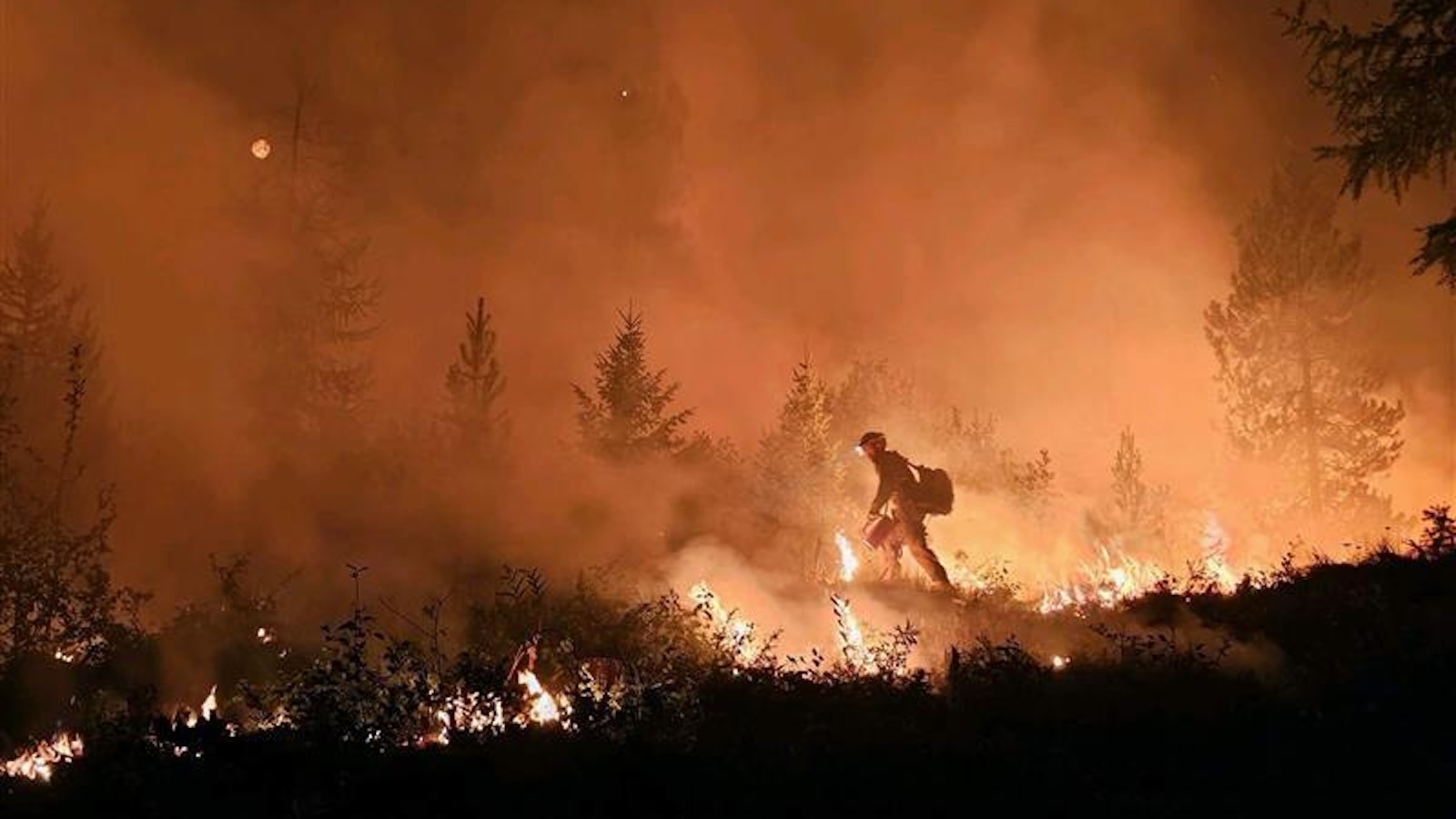
Multiple large wildfires erupted around Spokane over the weekend, prompting the establishment of emergency shelters and forcing evacuations across Washington state. The three fires destroyed more than 700 buildings by Monday afternoon, with authorities reporting that hundreds of residents sought refuge at the Spokane Convention Center and other facilities. Red Cross personnel and volunteers provided aid to evacuees, including elderly residents and families with young children.
The fires occurred amid historically dry conditions across the Pacific Northwest. Washington is experiencing its most destructive fire season on record, with over half a million acres burned and at least 65,000 residents evacuated statewide. Oregon recently surpassed its annual acreage record with nearly 2 million acres burned. A historically dry winter, extreme drought, and heat waves created conditions conducive to widespread fire activity, with dozens of large fires breaking out in the region within days.
Meteorological factors contributed significantly to the crisis. Spokane received approximately half its typical snowfall this year, while other areas reached historic lows. The reduced snowpack, combined with early spring warming, caused the limited snow that did fall to melt prematurely, leaving the landscape exceptionally parched. Powerful winds further complicated firefighting efforts, with embers from the Little Giant fire, a 70,000-acre blaze in central Washington, traveling more than 3 miles across Lake Chelan.
Experts attributed the escalating severity of fire seasons to climate change. Warmer atmospheric conditions increase moisture evaporation from soils and vegetation while also altering precipitation patterns, producing intense but infrequent rainfall that leads to extended droughts. The vulnerability of Spokane’s neighborhoods was compounded by their location in the wildland-urban interface, where homes intermingle with natural vegetation. Steep terrain, abundant plant life, and limited evacuation routes slowed emergency response and created dangerous conditions for residents fleeing the flames.
Firefighting officials and city leaders highlighted the need for comprehensive mitigation strategies. Some fire-prone states have implemented defensible space requirements, mandating homeowners clear vegetation in buffers around their properties. However, residents often resist such measures due to aesthetic preferences. Officials stressed that maintaining current suburban development patterns in fire-prone areas may no longer be feasible given changing fire dynamics.
Article Attribution | Read More at Article Source
Article summary produced by Claude AI