

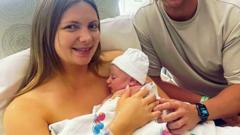
Doctors have successfully completed experimental in-utero surgery to repair a severe birth defect in an unborn baby. The procedure took place at Texas Children’s Hospital in Houston on a patient from London who was 26 weeks into her pregnancy. The baby, named Theo, had gastroschisis, a condition characterized by improper development of the belly button that causes intestinal tissue to grow externally rather than within the abdominal cavity.
The mother, Maisie Savage, and the baby’s father, Josh French, both educators, traveled to Texas after their child was diagnosed with the more complex form of the condition. Prior to the primary surgery, Maisie received a Botox injection administered through the womb into the fetal abdominal wall at a hospital in Belgium to relax muscles and facilitate the repair. The surgical team, led by Dr. Michael Belfort, partially exposed the womb, drained the amniotic fluid, and replaced it with carbon dioxide gas to create adequate operating space. Using minimally invasive keyhole techniques, surgeons gently repositioned the organs back inside the abdomen and closed the opening.
Theo was the third infant worldwide to participate in this first-of-its-kind clinical trial. The surgery resulted in zero complications during and after the procedure. The mother carried the pregnancy to term and delivered vaginally in February. Theo is now five months old and reportedly developing normally without the serious complications that typically accompany the condition.
Gastroschisis affects approximately one in 3,000 babies born in the UK annually. Conventional treatment for complex cases involves extended neonatal intensive care, multiple surgeries, prolonged intravenous nutritional support, and in some instances, intestinal transplantation. Without intervention, the condition carries a mortality rate of one in 10 cases despite comprehensive medical care.
If the trial demonstrates continued success, the procedure could be offered more broadly in the United Kingdom under the direction of pediatric surgeons at Great Ormond Street Hospital. Dr. Belfort indicated that the surgical techniques developed for intrauterine repair may have applications beyond gastroschisis and spina bifida, potentially extending to certain cardiac and pulmonary surgeries performed before birth.
Article Attribution | Read More at Article Source
Article summary produced by Claude AI