

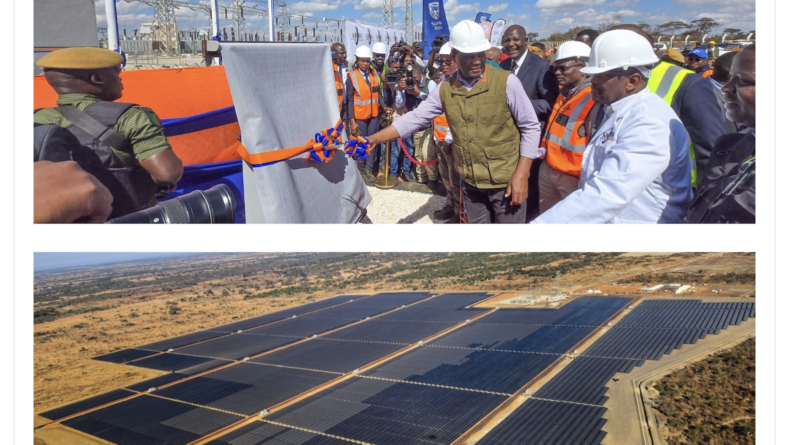
Zambia has undertaken a significant energy infrastructure expansion following years of electricity shortages that reached up to 20 hours of daily loadshedding. The Southern African nation initially designed its grid around hydroelectric power, a renewable energy source that once produced excess capacity. However, prolonged droughts and declining rainfall reduced water levels at hydroelectric facilities, severely constraining generation and forcing the government to seek alternative energy sources.
In response to these challenges, Zambia has pivoted toward large-scale solar deployment as the primary mechanism for expanding generation capacity. Over the past three years, the government has collaborated with both domestic and international partners to construct 500 megawatts of utility-scale solar infrastructure. Notable projects include the Chisamba solar facility, which was recently expanded to 200 megawatts. The private sector has contributed substantially to this expansion effort.
The government has established ambitious targets for solar capacity growth, with a goal of reaching 1,000 megawatts by the end of 2026. This solar expansion is part of a larger national strategy to increase total electricity generation capacity from the current 4.5 gigawatts to 10 gigawatts by 2031. Officials have indicated that eliminating loadshedding and building surplus capacity to support economic development and industrial growth are central objectives of this energy transition plan.
The Zambian government has introduced various policy reforms to facilitate this energy infrastructure expansion. These measures represent an effort to diversify the nation’s energy portfolio while reducing dependence on hydroelectric generation vulnerable to climate-driven weather variations. Officials have characterized the progress to date as substantial, with the expansion timeline and capacity targets positioned as achievable through continued implementation of the stated strategy.
Article Attribution | Read More at Article Source
Article summary produced by Claude AI