

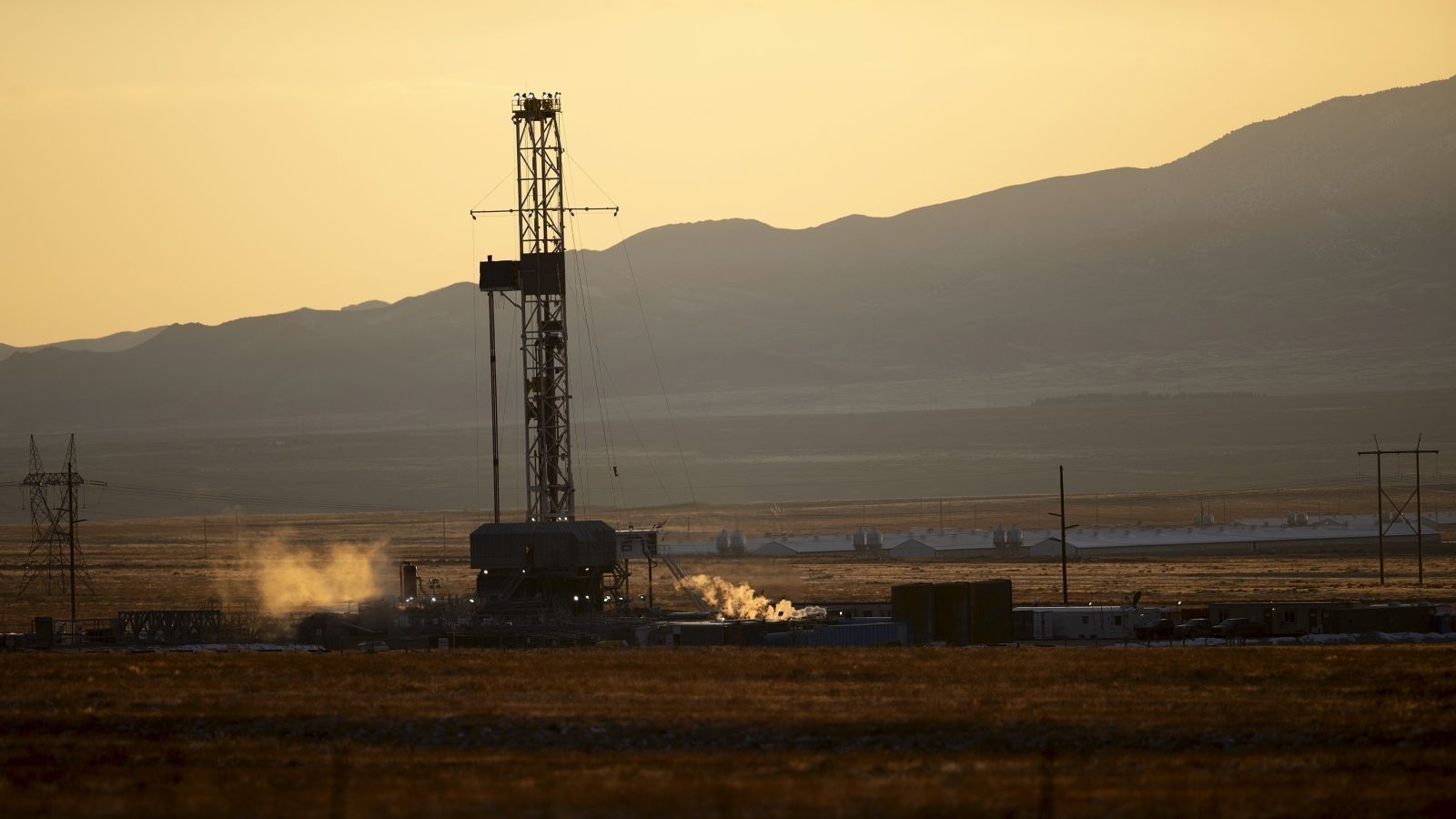
Geothermal energy is emerging as a major clean power source across the American West, driven by tectonic geological features that bring heat from Earth’s core near the surface. Tech companies including Meta and Google have begun signing substantial contracts with geothermal developers, seeking reliable baseload power to support data center operations while meeting sustainability commitments. Google’s agreement announced this month with Fervo Energy to purchase 396 megawatts from its Cape Station facility in southwest Utah exemplifies the scale of these commitments, representing enough capacity for approximately 430,000 households. The federal government has also seen record bidding activity for geothermal development rights on public lands in the Mountain West this year.
Traditional geothermal power generation relies on accessing naturally occurring underground hot water reservoirs, limiting deployment to geologically favorable locations. Newer technologies attempt to overcome this constraint by artificially circulating water through hot rock formations. Enhanced geothermal systems, which employ fracking techniques adapted from the oil and gas sector, can create artificial reservoirs but inevitably result in water loss. Fervo’s operating Project Red facility in Nevada reports 30 percent water loss, though the company projects substantially lower losses at Cape Station. Closed-loop systems like those developed by XGS Energy recycle water continuously with minimal losses and aim to reduce water consumption significantly, potentially enabling development in water-stressed areas like New Mexico.
Despite geothermal’s benefits as a consistent power source, water availability presents a critical challenge for scaling deployment across the arid West. Stanford University researchers caution that water-efficient closed-loop systems, while conserving resources, may produce insufficient power per well to meet the substantial demands of large data center operations at economically competitive rates. Enhanced geothermal’s water losses, though potentially lower than natural gas power generation, could still consume substantial quantities in large-scale deployment. Balancing geothermal expansion with the region’s limited water resources will require technological advancement, cost absorption by technology companies, or careful geographic planning to ensure sustainability.
Article Attribution | Read More at Article Source
Article summary produced by Claude AI