

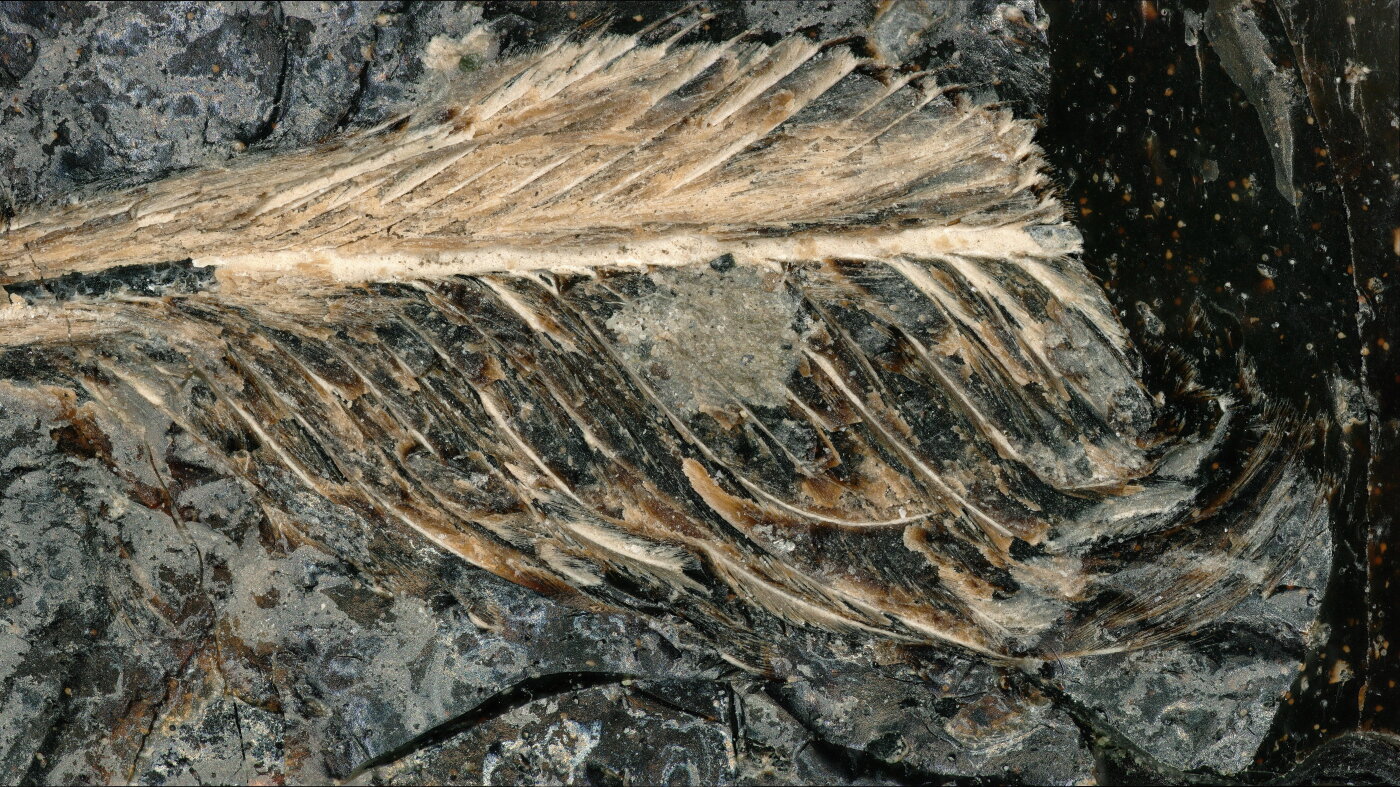
A fossilized feather discovered in the Hell Creek Formation of Montana has become the subject of significant paleontological study due to its exceptional preservation and the insights it may offer into avian survival during the late Cretaceous extinction event. The specimen was found in 2016 by David DeMar, a lab manager at the Burke Museum in Seattle, who noticed the small dark object while conducting fieldwork in the badlands. The feather, no larger than a cherry pit, was embedded in a fossilized coprolite—preserved feces from a large theropod dinosaur, likely Tyrannosaurus rex or Nanotyrannus.
Analysis by Jingmai O’Connor, an associate curator at the Field Museum of Natural History, revealed that the feather likely belonged to an aquatic bird similar to a modern loon or grebe. Additional specimens within the coprolite, including other feathers, bone fragments, and fish scales, suggested the ancient bird was a foot-propelled diver. The arrangement of remains suggests the bird may have consumed the fish before becoming prey itself, creating a snapshot of late Cretaceous food web dynamics.
The research raises questions about why certain bird lineages survived the catastrophic asteroid impact approximately 66 million years ago, while others perished alongside the dinosaurs. O’Connor has proposed that superior feather insulation in surviving bird species may have provided a crucial advantage during the post-impact climate disruption. The fossilized body feathers from the extinct bird species in question appeared to lack the insulating properties found in their surviving counterparts, suggesting thermal adaptation differences may have influenced survival rates.
While the findings have generated interest within the scientific community, not all researchers accept the proposed connection between feather insulation and extinction patterns. Some experts note the incomplete nature of the fossil record and caution against drawing broad evolutionary conclusions from limited material. Nevertheless, the discovery demonstrates how coprolite analysis can provide access to exceptionally well-preserved specimens that illuminate aspects of prehistoric ecosystems and evolutionary processes.
Article Attribution | Read More at Article Source
Article summary produced by Claude AI