

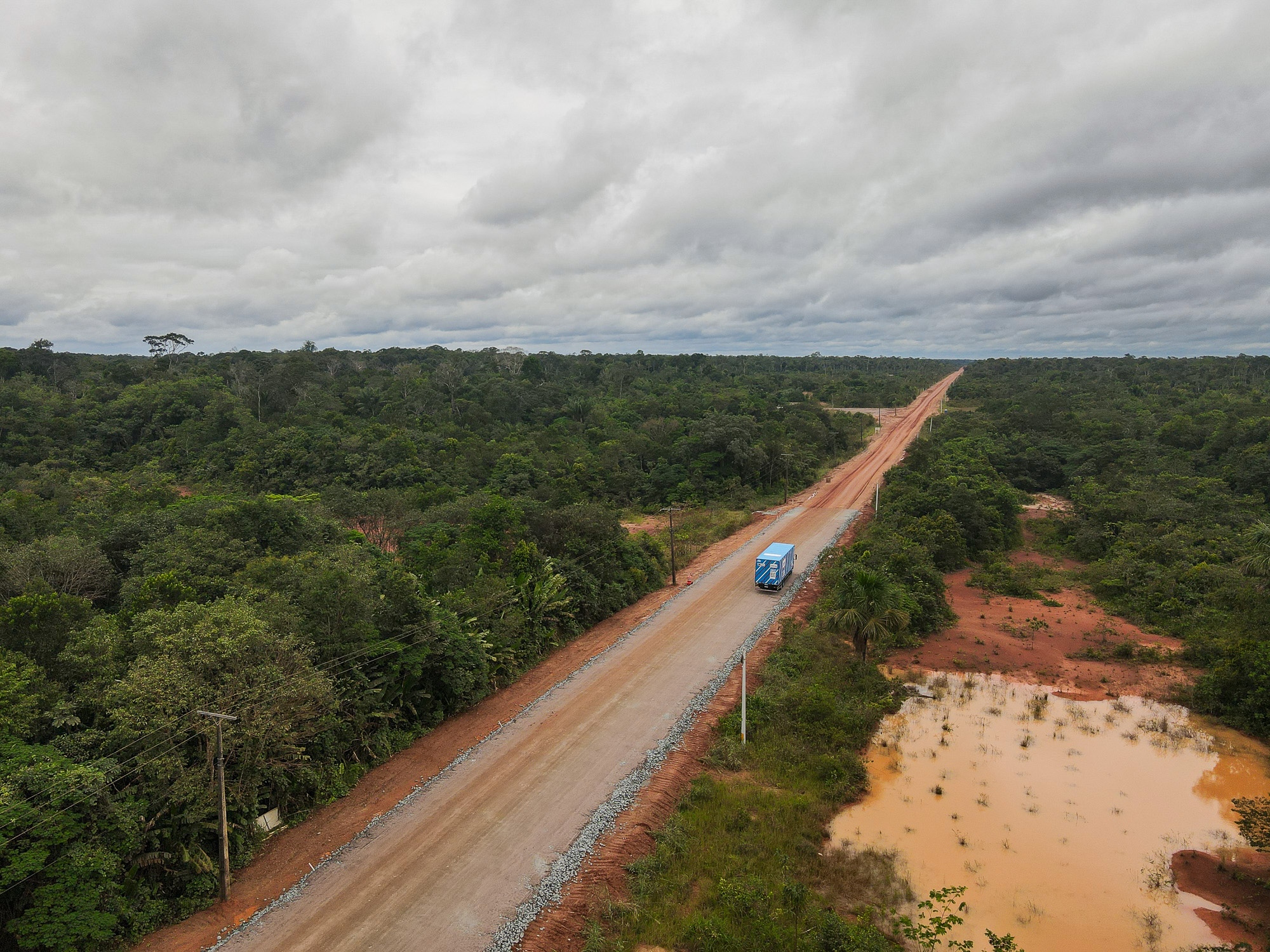
The BR-319 is a 540-mile dirt highway traversing a critical section of the Brazilian Amazon, connecting the state of Amazonas to the rest of the country. For decades, the route has been largely impassable during certain seasons, with truck drivers reporting journeys that can stretch to three weeks when heavy rains transform sections into expanses of mud. Local residents and businesses argue that the road’s poor condition isolates the region economically, raising shipping costs and delivery times while leaving communities dependent on river and air transport that is vulnerable to drought interruptions.
After years of legal challenges and environmental opposition, sections of the highway are now being asphalted, with plans to complete paving the entire route advancing. Supporters within Amazonas, including long-haul truck drivers and regional businesses, view the project as essential infrastructure that would foster economic development and reduce the state’s isolation from the rest of Brazil. The state capital of Manaus, despite its remote location, has developed into a major manufacturing center, though most goods still enter and exit by boat or air.
Environmental scientists and climate researchers warn that paving the road presents significant risks to global climate stability. The Amazon currently stores an estimated 150 to 200 billion tons of carbon in vegetation and soil, serving as a crucial carbon sink that helps mitigate greenhouse gas emissions. Improved road access is historically correlated with increased deforestation, as connectivity typically opens previously inaccessible forest areas to commercial exploitation. Data shows that 94 percent of existing Amazon deforestation has occurred within three miles of roads, and merely the prospect of road improvements often triggers increased clearing in surrounding areas.
Indigenous communities inhabiting the region have also raised concerns about the project, characterizing it as an existential threat to their way of life. The BR-319 was originally paved in 1976 but fell into disrepair over subsequent decades as maintenance costs proved unsustainable in the challenging tropical environment. The current push to restore and improve the highway thus represents a pivotal moment in determining the future trajectory of both the Amazon ecosystem and the communities that depend on it.
Article Attribution | Read More at Article Source
Article summary produced by Claude AI