

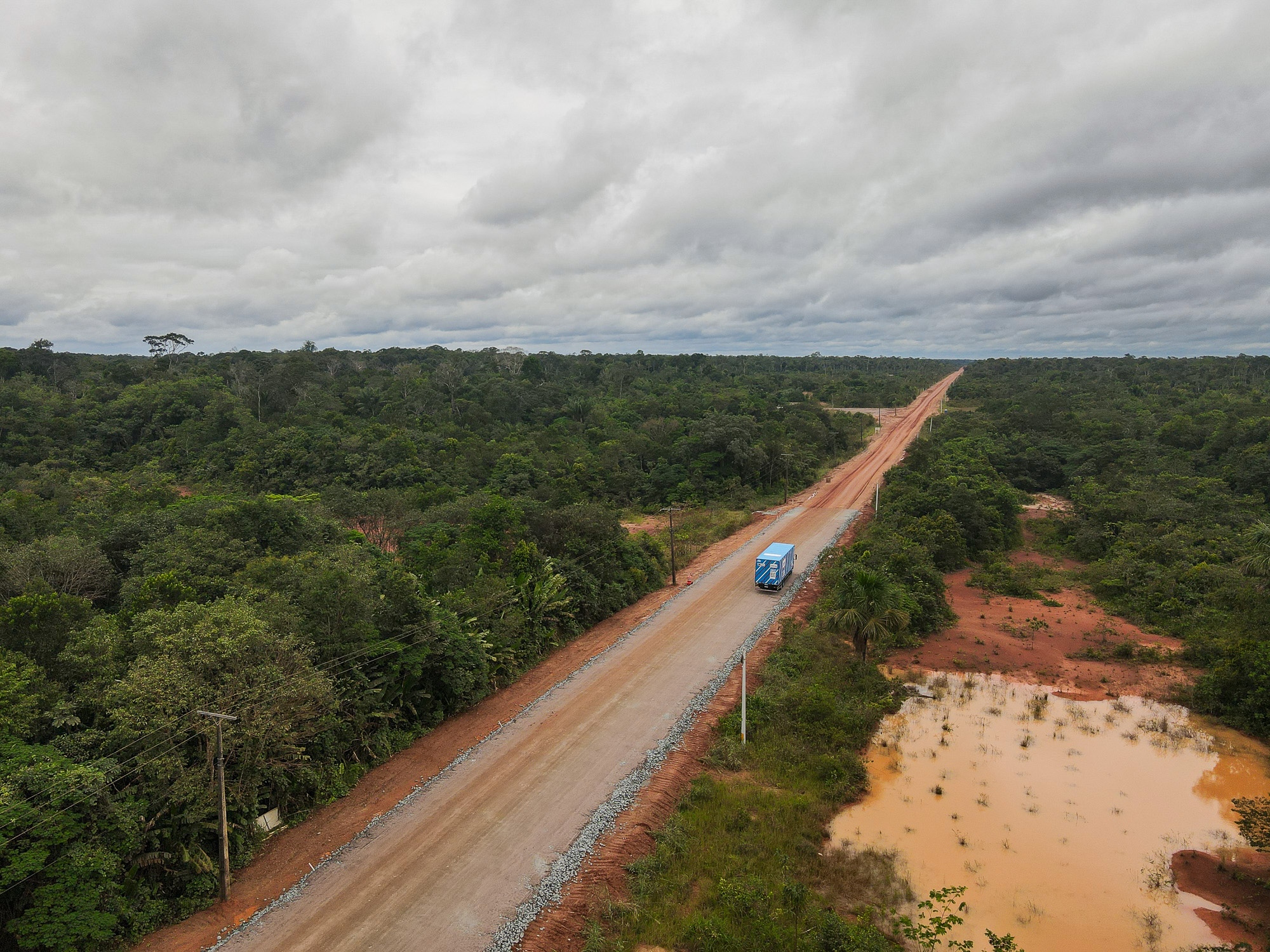
The BR-319 is a 540-mile highway that traverses a critical region of the Brazilian Amazon, serving as the only road connection between Amazonas state and the rest of Brazil. Historically a treacherous dirt route where travel could take weeks during poor conditions, the highway has been undergoing asphalt improvements after extended legal challenges and environmental opposition. Regional residents and businesses argue that the paved connection is essential for economic development and reducing the state’s isolation and dependence on boat and air transport.
Truck driver Carlos Santos has navigated the BR-319 since 2015, when the route reopened following years of deterioration. Originally paved in 1976, the road’s surface degraded over time due to harsh weather cycles, eventually becoming impassable for regular commercial use. Santos describes the journey as unpredictable, with conditions varying dramatically based on seasonal weather patterns and road quality on any given day.
However, scientists and environmental advocates warn that completing the asphalt paving project poses significant risks to the global climate and indigenous communities. The Amazon rainforest currently stores between 150 and 200 billion tons of carbon, which helps offset greenhouse gas emissions worldwide. Research shows that when previously inaccessible forest regions become connected to areas already under development pressure, deforestation accelerates dramatically, releasing stored carbon into the atmosphere. Historical patterns demonstrate that road construction and paving in the Amazon have directly preceded large-scale deforestation, with approximately 94 percent of cleared forest lying within 3 miles of existing roads.
The BR-319 paving project represents a conflict between regional economic aspirations and global environmental concerns. Supporters emphasize that the road’s completion would reduce shipping costs and delivery times while protecting the region from disruptions caused by increasingly severe droughts affecting river navigation. Critics contend that expanding road infrastructure into previously isolated areas will inevitably trigger extensive forest clearing with consequences for climate stability and the survival of indigenous populations living throughout the region.
Article Attribution | Read More at Article Source
Article summary produced by Claude AI