

Voltpost, a Brooklyn-based electric vehicle charging startup, is accelerating its growth following its initial installation in Chicago approximately one year ago. The company now operates charging stations across multiple states and has established partnerships to support its expansion efforts.
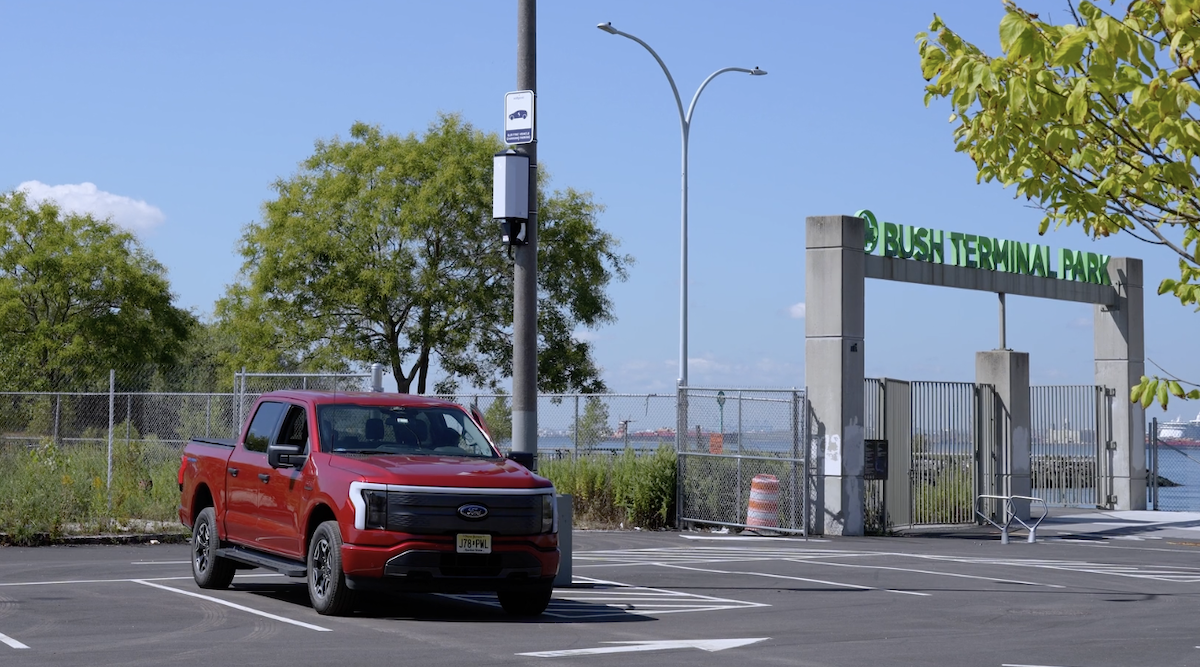
The company’s core offering involves Level 2 charging ports mounted on existing street infrastructure, particularly lampposts and utility poles. This approach significantly reduces installation time to a matter of hours compared to conventional installations requiring trenching. Voltpost’s Air charger model can be mounted on metal, wooden, or concrete poles as well as decorative infrastructure, and installations also are possible in parking lots. The modular system mounts approximately 10 feet above ground with an automatic retractable cable to minimize vandalism and weather-related damage risks.
Recent deployment activity focuses on New York, where Voltpost activated 14 new charging ports across multiple cities including Albany, Saratoga Springs, and the Village of Cold Spring. The Cold Spring installation gained particular attention for its compatibility with the community’s historic district preservation requirements. Funding for these deployments comes partly from the New York State Energy Research and Development Authority, with support from the AT&T wireless network. Active projects are underway in California, Connecticut, Massachusetts, Michigan, Illinois, and Washington, DC, with additional states under consideration.
The company also introduced an in-garage charging variant for drivers with garage access and operates a dedicated mobile application enabling drivers to locate available chargers and monitor charging sessions in real time. In related developments, Voltpost announced a partnership with InCharge Energy, a major EV charging installation and maintenance firm, with initial operations launching in New York, Connecticut, and California.
Industry analysts attribute sustained public charging network expansion to fundamental economic factors, particularly rising fuel costs and improved EV battery technology reducing overall vehicle ownership costs. Public charging infrastructure addresses a significant market gap affecting renters and households without home charging capability, potentially unlocking substantial growth in EV adoption.
Article Attribution | Read More at Article Source
Article summary produced by Claude AI