

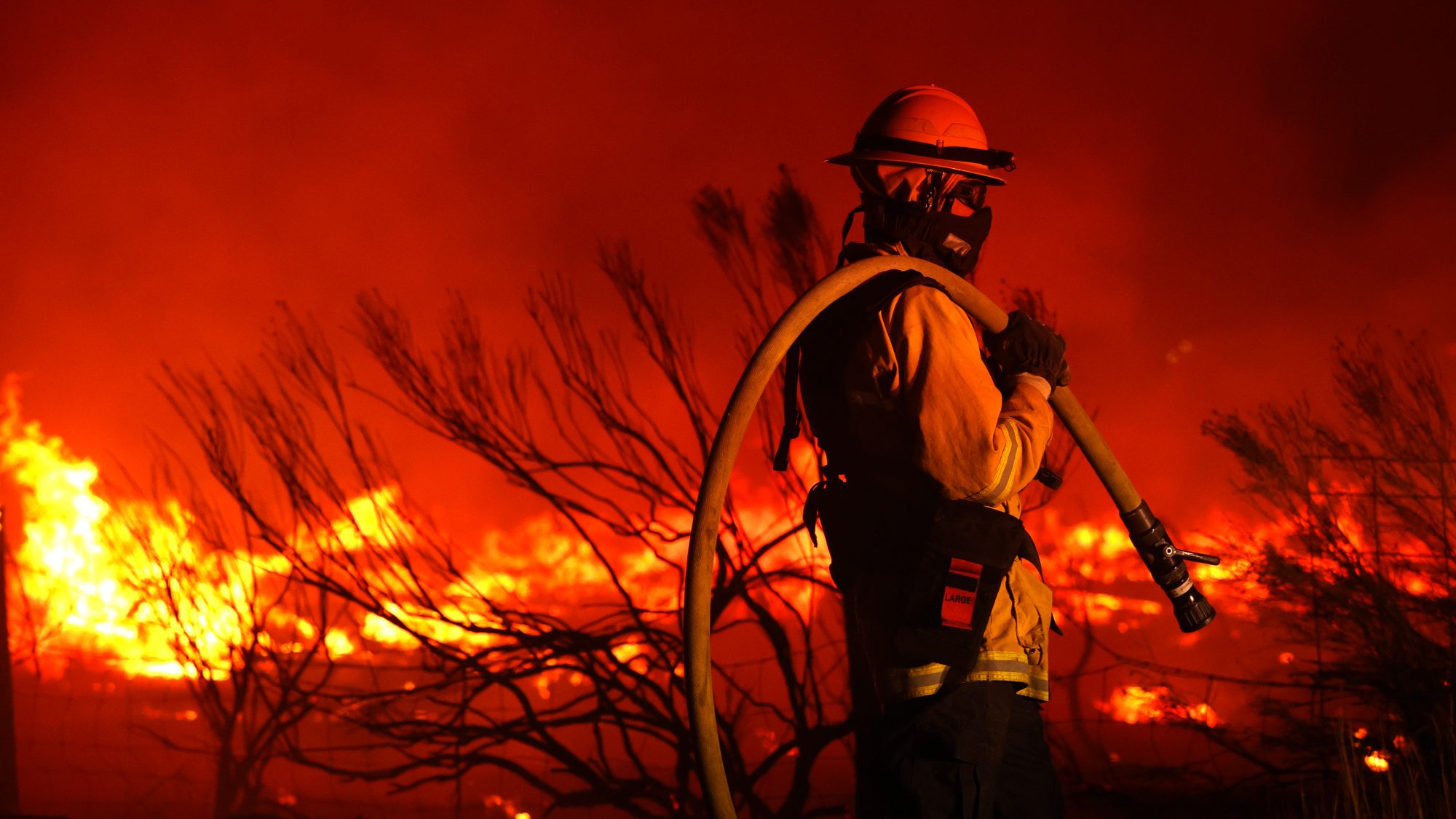
The United States is confronting an intensifying wildfire crisis that experts say requires fundamental shifts in management strategy. Megafires—blazes exceeding 100,000 acres characterized by rapid spread and severe impact—have increased substantially over the past decade, now consuming the majority of federal firefighting budgets. The federal government currently spends roughly 10 times more on wildfire suppression than it did three decades ago.
Dan Dallas, a Forest Service incident commander, has grown increasingly skeptical of traditional suppression tactics that prioritize containing every fire at all costs. During an August 2023 incident in Northern California’s Six Rivers National Forest, Dallas and local officials successfully allowed a controlled wildfire to burn across approximately 50,000 acres under mild conditions, reducing fuel loads that could feed future fires. However, such opportunities are becoming rarer as climate conditions shift toward hotter, drier periods lasting longer throughout the year. Additionally, the Trump administration has returned to a “full suppression” policy that extinguishes all fires regardless of threat level, reversing three decades of federal approaches that, at least theoretically, encouraged more adaptive wildfire management.
Conditions during the 2026 fire season have been particularly severe. Approximately 73 percent of the Intermountain West faces severe to exceptional drought, while temperatures have set records nationwide. Combined with below-average snowpack from the previous winter, these conditions have created ideal burning environments. Through the reporting period, more than 53,000 wildfires have burned over 8 million acres—approximately 3 million acres above the decade average. A memo from the National Multi-Agency Coordinating group warned that firefighting resource availability remains critically low.
A 2015 foresight panel commissioned by the Forest Service concluded that continuing current suppression strategies would ultimately fail across all plausible future scenarios. Without significant policy changes, the panel warned, western landscapes could experience catastrophic resets where much of the region converts to grasslands or shrublands, destroying biodiversity and thousands of homes within the lifetimes of current children. Experts characterize the current situation as a self-perpetuating cycle in which suppression-focused approaches defer rather than resolve underlying fuel accumulation problems.
Article Attribution | Read More at Article Source
Article summary produced by Claude AI