

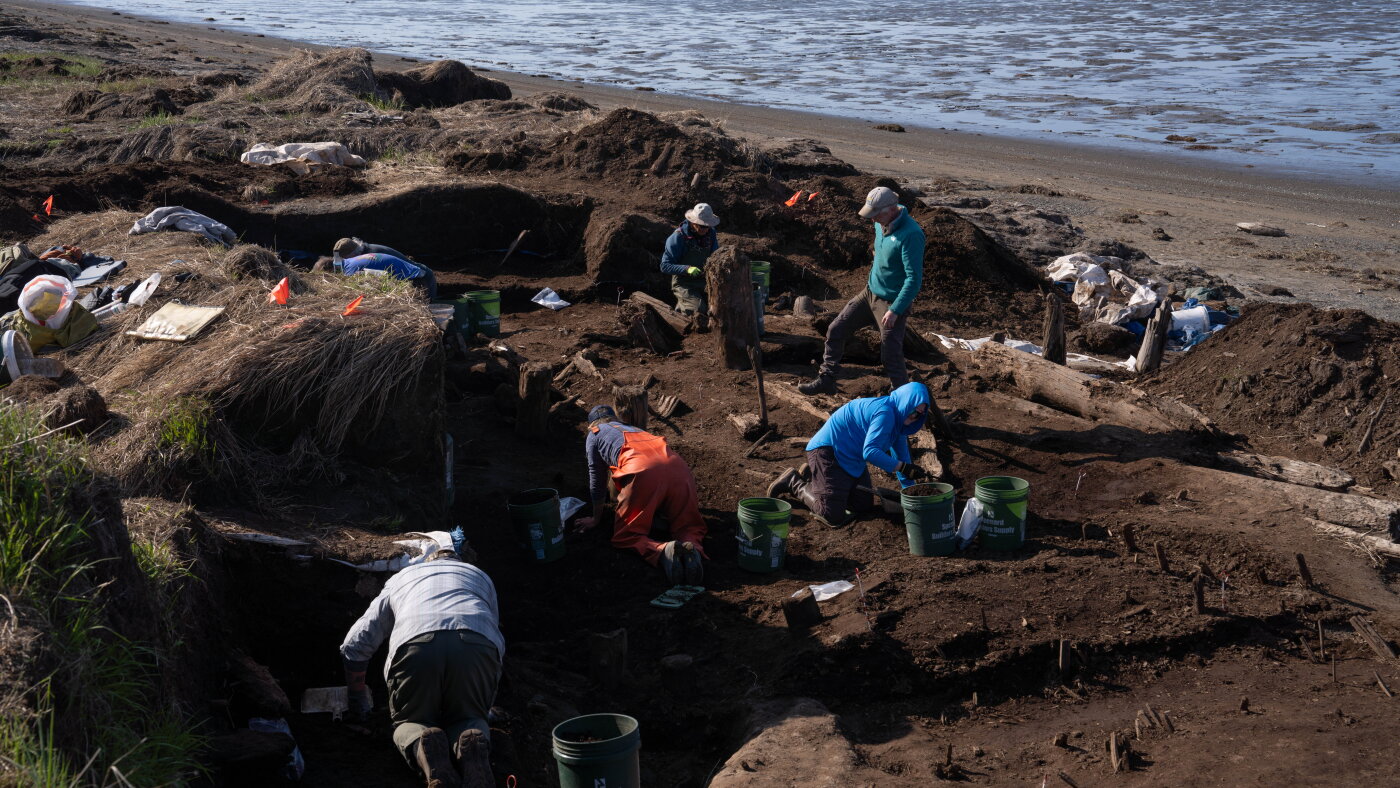
Last October, remnants of Typhoon Halong caused significant flooding across western Alaska, affecting numerous villages. In the coastal community of Quinhagak, the storm damage exposed artifacts from a nearby archaeological site called Nunalleq, one of the most significant repositories of pre-contact Yup’ik culture in the state.
The storm unearthed thousands of objects from the dig site, including hand-carved animals, wooden masks, sewing needles, grass rope, and kayak pieces dating back 400 to 600 years. A local resident discovered a carved wooden bowl scattered among debris on the beach. The deluge also accelerated coastal erosion, reducing the natural buffer between the Bering Sea and where artifacts remain buried. At high tides, seawater now reaches the excavation pit itself.
Archaeologists have worked at the site since 2009, after thawing permafrost revealed substantial collections of organic material in the early 2000s. The village decided to pursue systematic excavation to preserve these cultural treasures. This past summer, a team conducted an emergency dig to salvage as much as possible before additional storms arrive. The excavation area spans roughly the size of a backyard pool and contains remnants of sod houses dating back several centuries.
The archaeological effort relies primarily on volunteers and operates with limited funding from organizations including the Pacific Northwest Archaeological Society and the Daughters of the American Revolution. Lead archaeologist Rick Knecht stated that coastal erosion in this region has accelerated due to declining sea ice and permafrost thaw, both linked to climate change. The team plans to return for additional excavation next summer, pending fundraising through a GoFundMe campaign and Quinhagak Heritage Inc., the nonprofit managing the site.
Artifacts recovered from Nunalleq are preserved at a local culture and archaeology center accessible to both descendants and the public. Community leaders emphasize the cultural significance of stewarding these ancestral belongings for future generations.
Article Attribution | Read More at Article Source
Article summary produced by Claude AI