

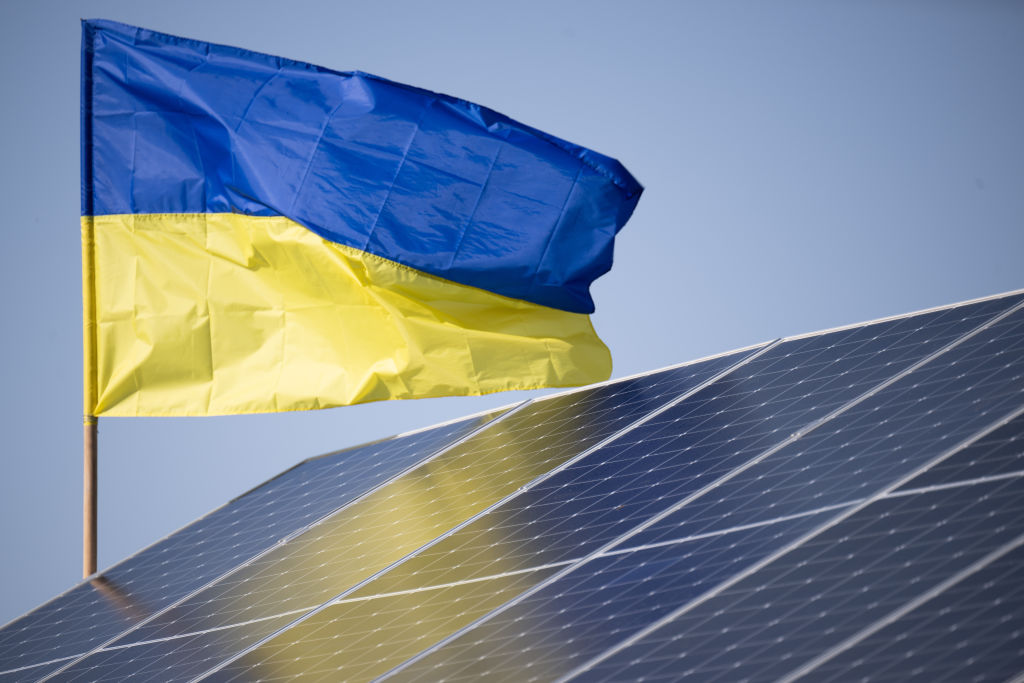
Ukraine is experiencing a significant shift toward renewable energy, particularly solar power, driven by the vulnerabilities exposed during Russia’s sustained attacks on the country’s energy infrastructure. Since the 2022 invasion, Russian missiles and drones have repeatedly struck power plants, substations, and transmission lines, causing widespread and prolonged outages affecting millions of citizens. The damage has destroyed roughly 30 percent of Ukraine’s installed solar capacity and most of its wind farms in the southern regions, while also triggering the shutdown of the Zaporizhzhia nuclear power plant.
Before the invasion, Ukraine relied heavily on a centralized electricity system dominated by nuclear power, which provided more than half the country’s energy, with natural gas and coal contributing roughly a quarter. Renewable energy represented only a small portion of the overall energy mix, though the country had been expanding its solar generation through government incentive programs. The repeated attacks on this centralized infrastructure have made the vulnerabilities of that model starkly apparent, particularly during harsh winter months when electricity rationing has affected major cities including Kyiv.
In response, Ukraine is accelerating its transition toward smaller, distributed renewable energy sources that are more resilient and difficult to target completely. The Solar Energy Association of Ukraine reported that approximately 1.5 gigawatts of new solar capacity was constructed in 2025, nearly double the previous year’s total, with expectations that 2026 installations will maintain or exceed that pace. The government has supported this transition through programs such as the “Affordable Loans 5-7-9” initiative, which offers preferential interest rates and can cover up to 80 percent of installation costs for businesses and households.
Private companies have played a significant role in implementing these projects. One electricity supplier has installed solar panels at 117 sites across the country with a combined capacity of 23 megawatts over the past two years. Industry experts emphasize that distributed renewable systems offer advantages beyond resilience, as they are easier to restore if damaged and can incorporate energy storage capabilities. These developments reflect both a practical necessity in the face of ongoing attacks and a strategic alignment with Ukraine’s European Union integration goals.
Article Attribution | Read More at Article Source
Article summary produced by Claude AI