

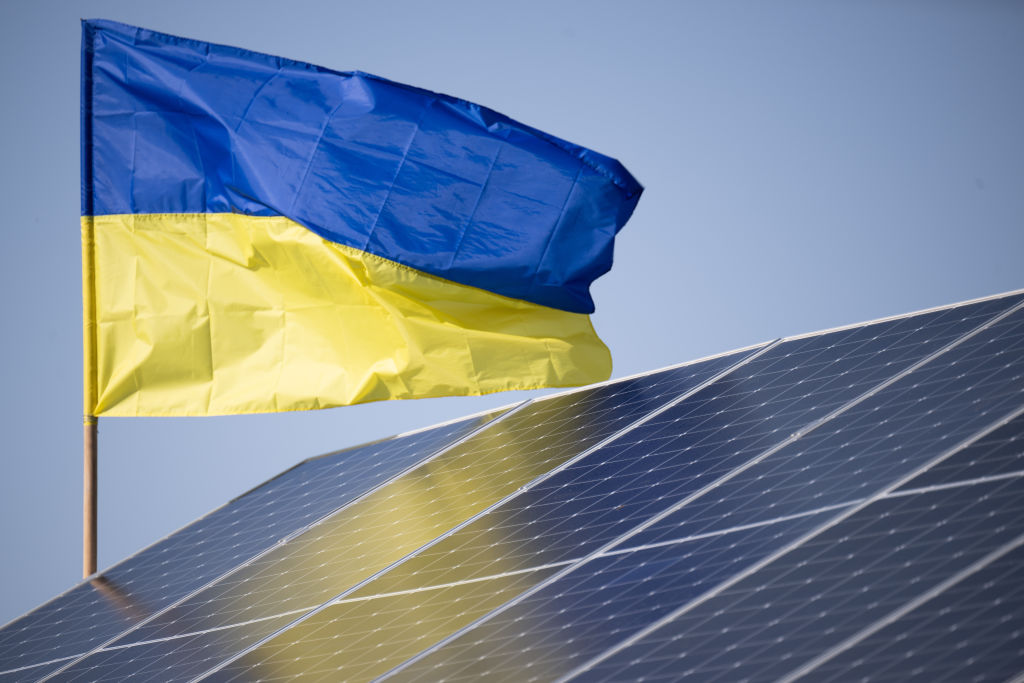
Ukraine is accelerating its transition toward distributed solar energy systems in response to recurring Russian attacks on its centralized electrical infrastructure. A door manufacturing facility in Bila Tserkva recently installed rooftop solar panels with assistance from Yasno, a private energy supplier, to reduce dependence on a grid repeatedly damaged by missiles and drones. The facility’s owner cited cost savings, economic benefits, and independence from grid disruptions as motivations for the switch.
The Ukrainian government has implemented several programs to encourage renewable energy adoption among businesses and households. The “Affordable Loans 5-7-9” initiative offers preferential financing with interest rates of 5, 7, or 9 percent depending on business type, covering up to 80 percent of installation costs. These incentives build on the country’s earlier “green tariff” program, which guaranteed above-market payments for solar and wind electricity through 2030 to support EU energy market integration.
Russian military operations have fundamentally altered Ukraine’s energy landscape. Since the 2022 invasion, attacks have destroyed approximately 30 percent of installed solar capacity and most of the country’s wind farms in the southern regions. The Zaporizhzhia nuclear plant remains under Russian control and shut down, while the centralized system that previously relied on nuclear and fossil fuel power plants faces continuous bombardment. These attacks have created electricity deficits that have worsened from 3 percent to 6 percent according to Ukraine’s National Bank.
In response to infrastructure vulnerabilities, Ukraine is rapidly expanding distributed renewable generation. Yasno has completed 117 solar projects across the country with a combined capacity of 23 megawatts since resuming operations in 2024. The Solar Energy Association of Ukraine reported that approximately 1.5 GW of new solar capacity was installed in 2025, nearly double the prior year, with similar expansion expected to continue. Energy officials emphasize that smaller, distributed systems are inherently more resilient to attacks than centralized power stations, offering Ukraine a strategic advantage during ongoing conflict.
Article Attribution | Read More at Article Source
Article summary produced by Claude AI