

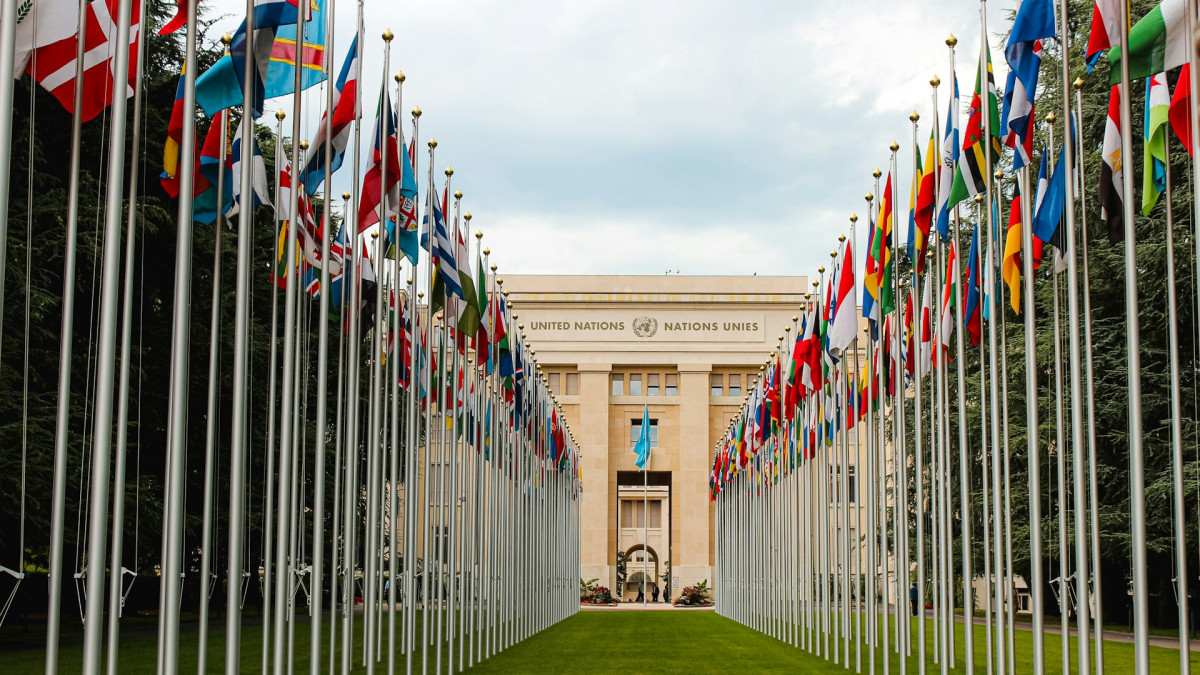
Kyrgyzstan’s President Sadyr Japarov delivered remarks at the UN General Assembly on September 22 advocating for structural reforms to the Security Council. Speaking as his country prepares to assume a two-year seat on the body at year-end, Japarov aligned Bishkek’s position with Beijing’s longstanding call for reconfiguring the council’s composition to shift the balance of power away from Western nations.
Japarov proposed that the African continent, given its population exceeding one billion, should receive two permanent seats on the 15-member council, while Latin America should gain one. The current Security Council structure maintains five permanent members: the United States, United Kingdom, France, Russia, and China. Beijing has consistently framed Security Council reform as necessary to prevent the institution from functioning as an exclusive club for wealthy nations and to enhance its effectiveness in addressing global challenges.
The Trump administration has resisted expansion of the council, while the UK and France support enlargement but favor different candidates: Brazil, Germany, India, and Japan, along with permanent African representation. Such an arrangement would likely prove unpalatable to China, as Germany, India, and Japan maintain contentious relationships with Beijing. A German Foreign Ministry statement from earlier this year acknowledged “fundamental differences of opinion” with China spanning human rights, economic matters, and international law.
Japarov’s address also criticized Western sanctions against Kyrgyzstan, characterizing them as sovereignty violations. The EU implemented sanctions in April targeting dual-use electronic components after determining Kyrgyzstan was facilitating Russian sanctions evasion. The US has similarly sanctioned specific Kyrgyz entities for alleged participation in circumvention schemes. Japarov portrayed sanctions as tools for coercing smaller nations through illegitimate pressure.
The Kyrgyz leader praised Trump’s cuts to funding for international nongovernmental organizations, crediting such measures with strengthening state sovereignty and independent development paths. Trump’s early actions upon returning to office in 2025 included severe reductions to State Department and USAID support for NGOs and independent media globally, culminating in USAID’s elimination as an autonomous agency. Rights monitoring organizations have noted that reduced funding for watchdog groups has diminished governmental accountability mechanisms worldwide, with Freedom House classifying Kyrgyzstan itself as “not free” due to judicial and extralegal mechanisms used against political opponents and civil society critics.
Article Attribution | Read More at Article Source
Article summary produced by Claude AI