

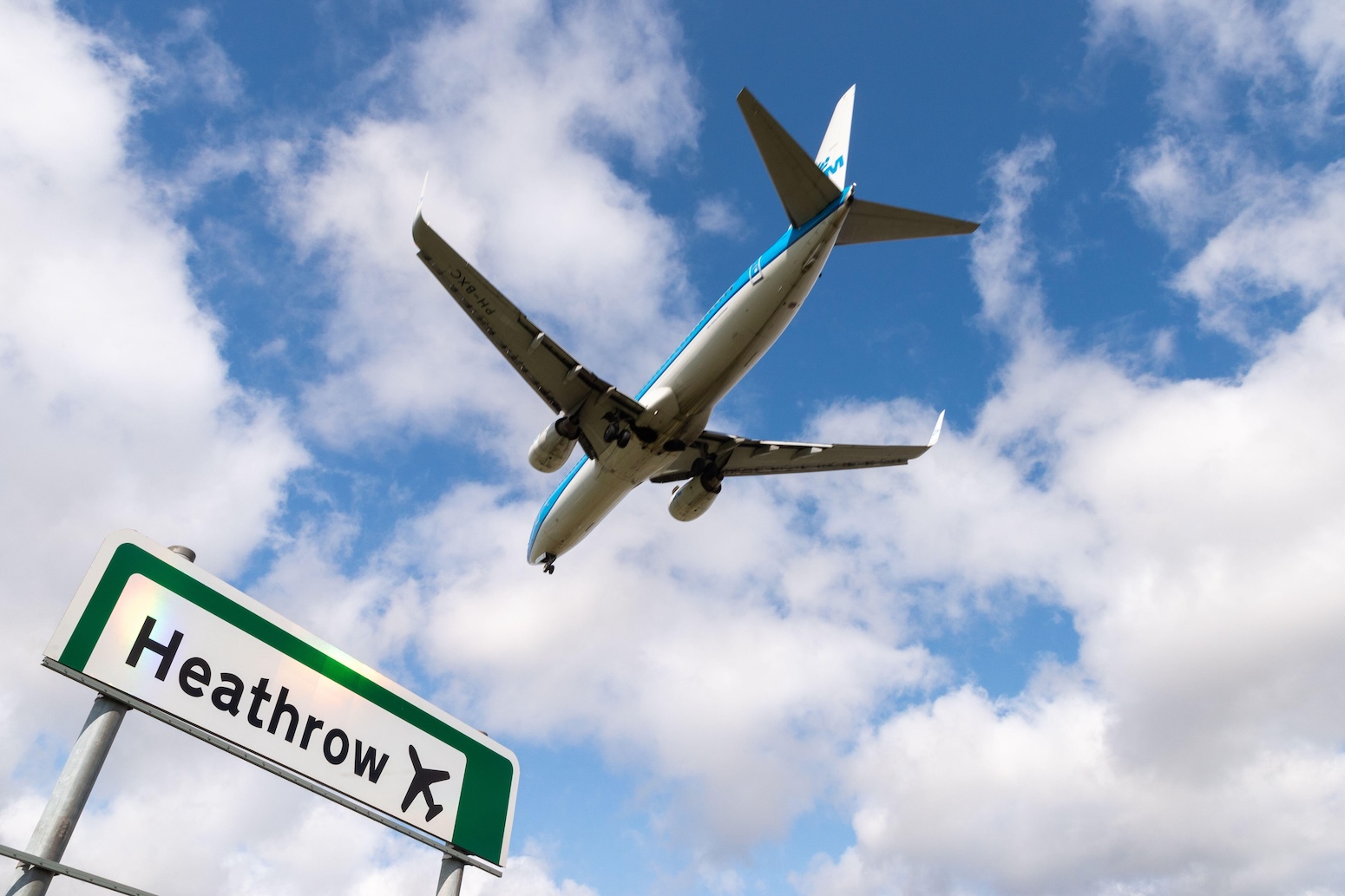
The Climate Change Committee has issued new guidance on aviation policy, warning that flying could represent 80% of the United Kingdom’s carbon dioxide emissions by 2050 if current trends persist. The committee notes that emissions from the aviation sector have more than doubled since 1990 as passenger numbers have increased, marking a sharp contrast to declining emissions across other sectors of the British economy.
Without any airport expansion, aviation emissions are projected to reach 38 million tonnes of CO2 by 2050, accounting for the majority of remaining emissions from the UK economy. The proposed expansion of Heathrow Airport would add approximately 2.4 million tonnes of CO2 in 2050, representing roughly 5% of total national emissions. A final government decision on the Heathrow expansion is expected by 2029.
The committee has concluded that existing government policies are insufficient to address rising aviation emissions and that expanding Heathrow would exacerbate the situation. The previous administration’s jet-zero strategy, launched in 2022, outlined emissions reduction goals through sustainable aviation fuels, electric aircraft, and fuel-efficiency gains. However, the current government has acknowledged these targets were unrealistic. The committee recommends developing a revised strategy by 2027 that would establish a credible framework for aviation decarbonization.
The CCC proposes that airlines should bear responsibility for their emissions through mechanisms such as funding for sustainable aviation fuels and engineered carbon removal technologies, including direct air carbon capture and storage. These removal methods are not yet available at necessary scales but are considered essential for offsetting aviation-related CO2. The committee estimates that placing decarbonization costs on airlines could increase ticket prices by approximately £150 for return trips to Spain and £400 for transatlantic flights by 2050 in 2024 currency values.
The committee acknowledges that higher ticket prices would likely reduce demand for flights, which would otherwise be expected to grow substantially. It argues this cost-based approach is preferable to using public funds, which would require roughly half the population that does not fly to subsidize aviation emissions removals.
Article Attribution | Read More at Article Source
Article summary produced by Claude AI