

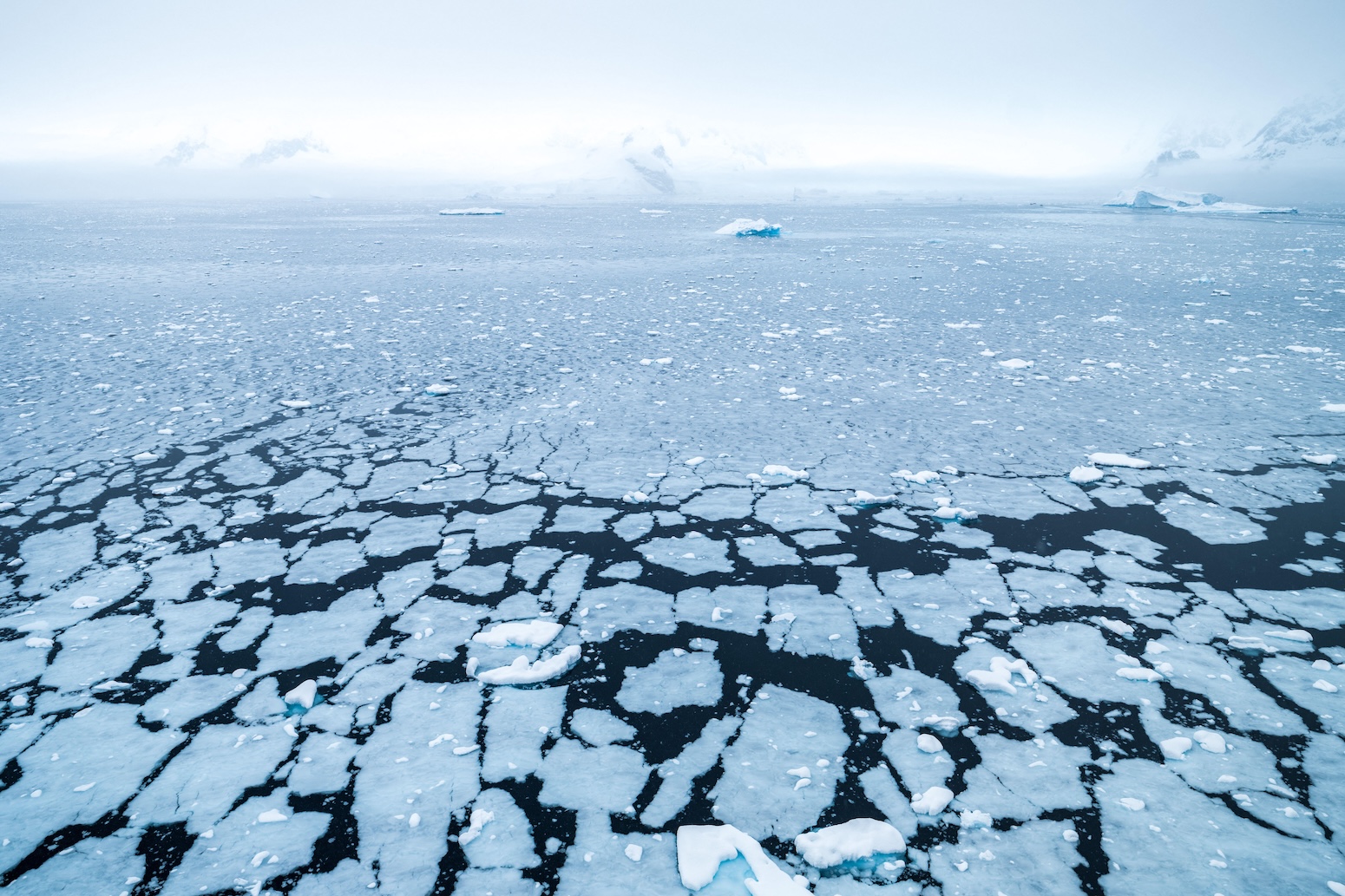
Antarctic sea ice achieved its third-smallest winter peak extent since satellite observations began nearly five decades ago, according to provisional data released by the US National Snow and Ice Data Center. The maximum extent occurred on 14 September at 17.59 million square kilometers. Scientists note that data near seasonal peaks typically exhibit notable variability, and analysis continues as researchers assess the implications of the measurement.
Experts have expressed concern about the persistence of low Antarctic sea ice values following decades of relatively stable or increasing conditions during winter months. Dr. Lettie Roach, a polar climate scientist at the Alfred Wegener Institute, characterized this year’s maximum as substantially below seasonal average levels. However, researchers caution that determining whether current trends represent a fundamental structural shift requires extended observation periods, as distinguishing between human-caused warming effects and natural variability in Antarctic sea ice remains challenging compared to Arctic dynamics.
Seasonal measurements from July and August ranked among the lowest on record, with all five lowest July extents occurring since 2022 and all four lowest August extents since 2023. Regional patterns shifted considerably during the growth season, with ice distribution changing between the Bellingshausen Sea, Amundsen Sea, and East Antarctica as atmospheric pressure and wind patterns evolved. At the Arctic, summer sea ice reached its minimum on 12 September at 4.60 million square kilometers, matching the 10th-lowest extent since satellite records began. Though this measurement does not represent a record low, scientists note it remains lower than any minimum recorded before 2007.
Arctic conditions reflected mixed patterns across regions, with some areas experiencing delayed melt seasons due to cooler, cloudier conditions, while the Atlantic side of the Arctic experienced more extreme summer warming. Parts of western Siberia recorded temperatures persistently exceeding normal levels by more than 5 degrees Celsius, contributing to substantial ice loss in neighboring seas. Scientists have identified challenges in ongoing monitoring efforts, as a critical global air pressure dataset ceased operations in March, temporarily halting production of a major Arctic sea ice thickness reanalysis. Researchers emphasize the importance of continued observations across multiple metrics to better understand ice pack conditions.
Article Attribution | Read More at Article Source
Article summary produced by Claude AI