

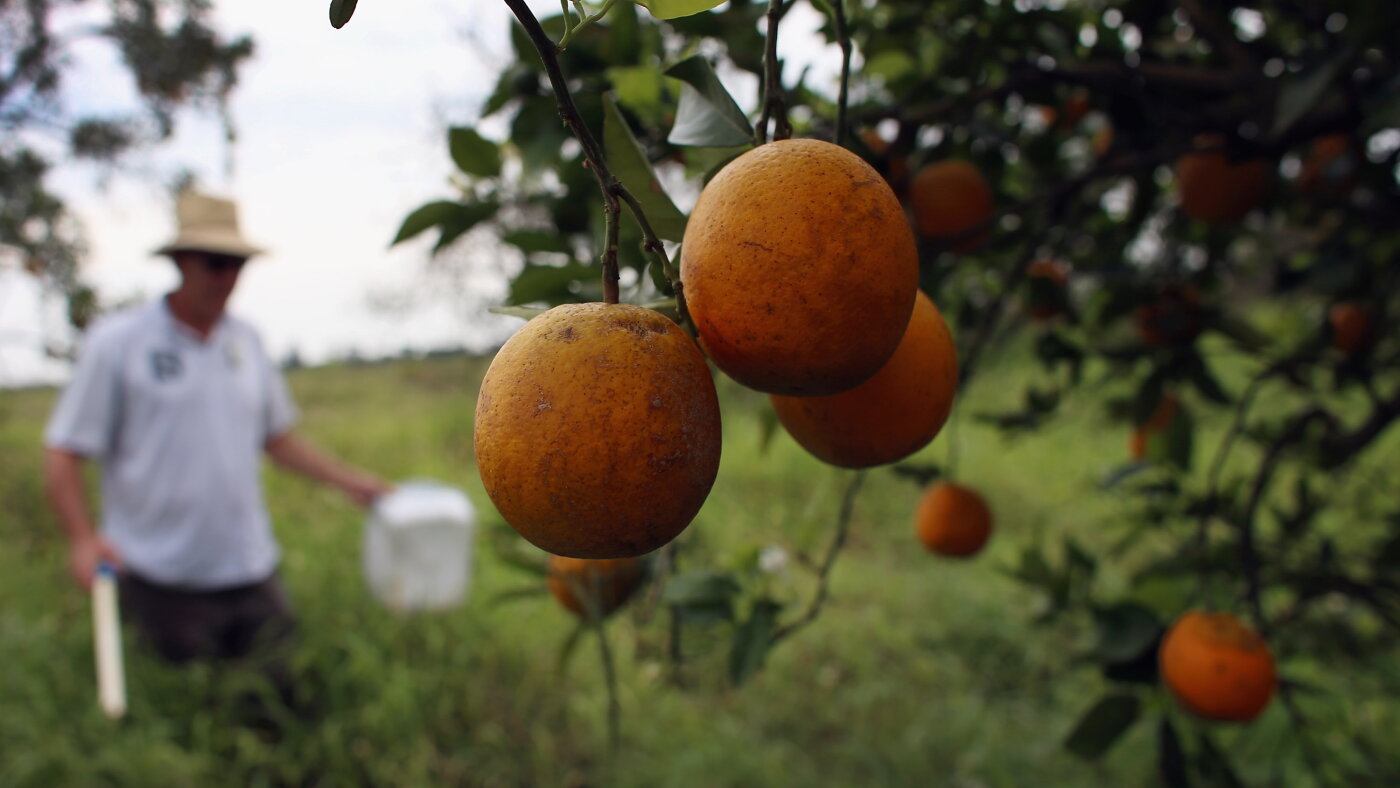
Florida’s citrus industry is testing gene-edited trees designed to combat citrus greening, a bacterial disease that has substantially reduced the state’s citrus production over the past two decades. The disease, which arrived in Florida in 2005, is transmitted by the Asian citrus psyllid and attacks trees’ immune systems, making them unable to fight infection. Affected trees typically produce misshapen, bitter fruit before dying within a few years, with no available cure.
The decline in Florida’s citrus output has been dramatic. Before the disease emerged, growers were shipping approximately 300 million boxes of fruit annually. That volume dropped to just over 15 million boxes during this season, which concluded in June. Individual growers have faced severe losses; one family-operated citrus business in Valrico that had operated for generations was forced to close in 2015 after the disease devastated their groves.
Tampa-based company Soilcea has developed a solution using CRISPR gene-editing technology to create a rootstock variety called CarriCea T1, which the Environmental Protection Agency approved earlier this year. The modified rootstock maintains the tree’s immune system functionality, reducing growers’ dependence on insecticides. According to Soilcea’s CEO, addressing the rootstock is critical because significant root damage occurs before visible symptoms like yellowing leaves appear.
Early results from test fields are encouraging. Trees planted with the CarriCea T1 rootstock display noticeably better health compared to unmodified trees in adjacent plots, exhibiting larger leaves and darker coloration. However, comprehensive evaluation will require extended observation. The actual performance benchmark involves fruit production and quality, which takes years to develop. Soilcea’s leadership indicates that definitive conclusions about long-term viability will only emerge after trees reach approximately 10 years of age.
Article Attribution | Read More at Article Source
Article summary produced by Claude AI