

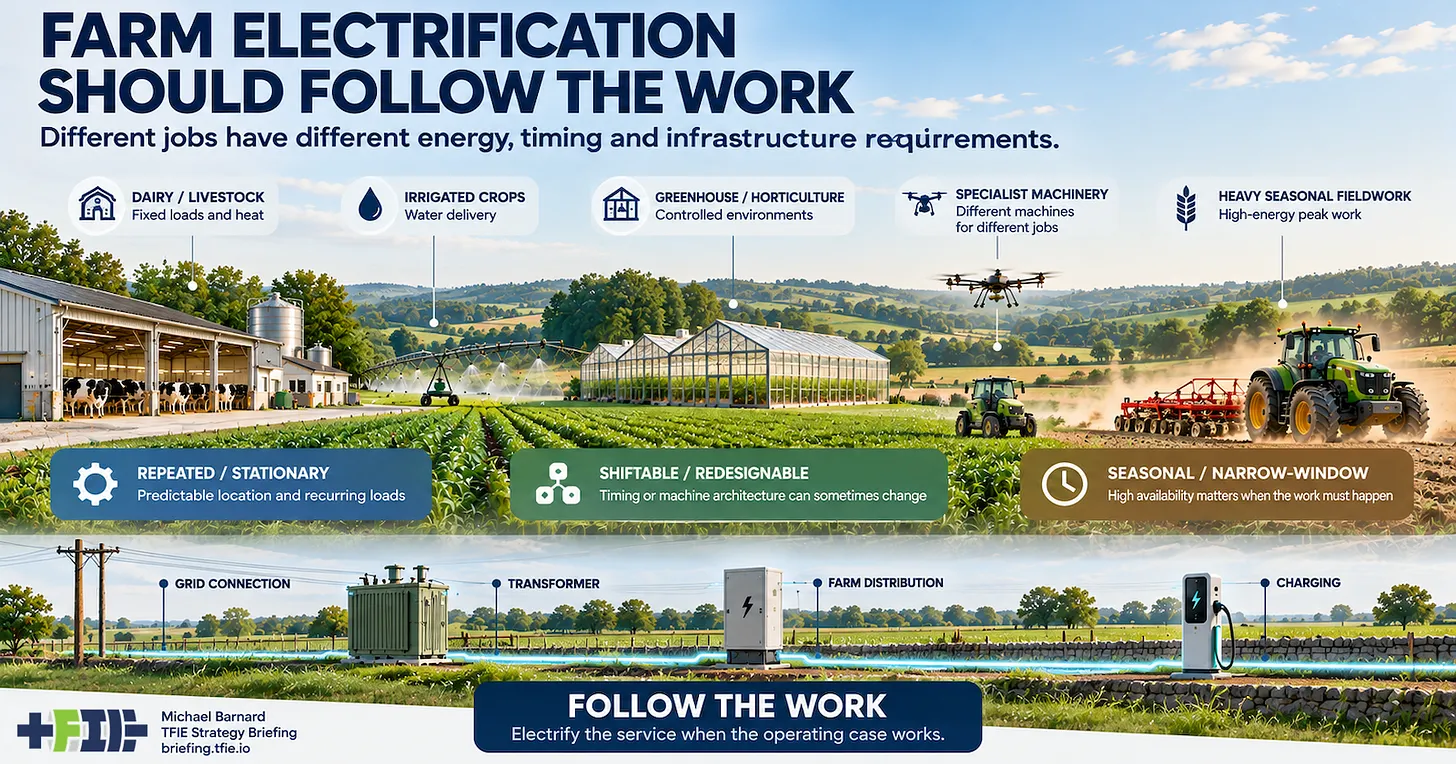
A recent assessment of agricultural electrification argues that the sector’s discussion has become too narrowly focused on replacing large diesel tractors, missing opportunities to electrify other farm operations more readily. The analysis proposes a work-first framework that evaluates what tasks a farm needs to accomplish, then determines the most appropriate electrification approach for each specific service rather than starting with equipment specifications.
The framework identifies multiple agricultural operations with different energy requirements and timing constraints that merit separate consideration. These include cooling milk, pumping water, ventilating and heating livestock buildings, managing greenhouse thermal loads, drying crops, applying chemicals, and operating refrigeration and processing equipment. Each service involves distinct power demands, infrastructure needs, and operational patterns that affect electrification feasibility.
Stationary thermal loads present particularly clear opportunities for electrification using established technologies. A referenced pig farm example showed that replacing kerosene heating with electric heat pumps reduced annual energy costs significantly with a payback period of roughly 20 months, though that case involved decade-old pricing. Solar irrigation systems have achieved substantial deployment in India, with hundreds of thousands of units installed as of July 31, 2026, though effective implementation requires attention to water governance alongside technology to prevent increased groundwater depletion from lower marginal pumping costs.
Mobile machinery like tractors requires careful analysis of duty cycles rather than relying on horsepower ratings. Current commercial electric tractors, such as models with 100 kWh batteries and continuous power around 55 kW, demonstrate utility for lighter specialist tasks with four to seven hour operational windows but face challenges with energy-intensive applications. The analysis suggests that electrification may justify different machine architectures entirely, such as agricultural drones or smaller autonomous equipment that eliminate the need for heavy diesel-powered tractors.
Infrastructure timing presents an additional consideration, as rural grid connections and transformer upgrades often require longer planning and construction periods than equipment procurement. For heavily seasonal work with paid-off diesel equipment and infrequent extreme workloads, retaining existing machinery while electrifying other farm operations may represent the most economically rational strategy rather than premature replacement requiring substantial capital investment and grid upgrades.
Article Attribution | Read More at Article Source
Article summary produced by Claude AI