

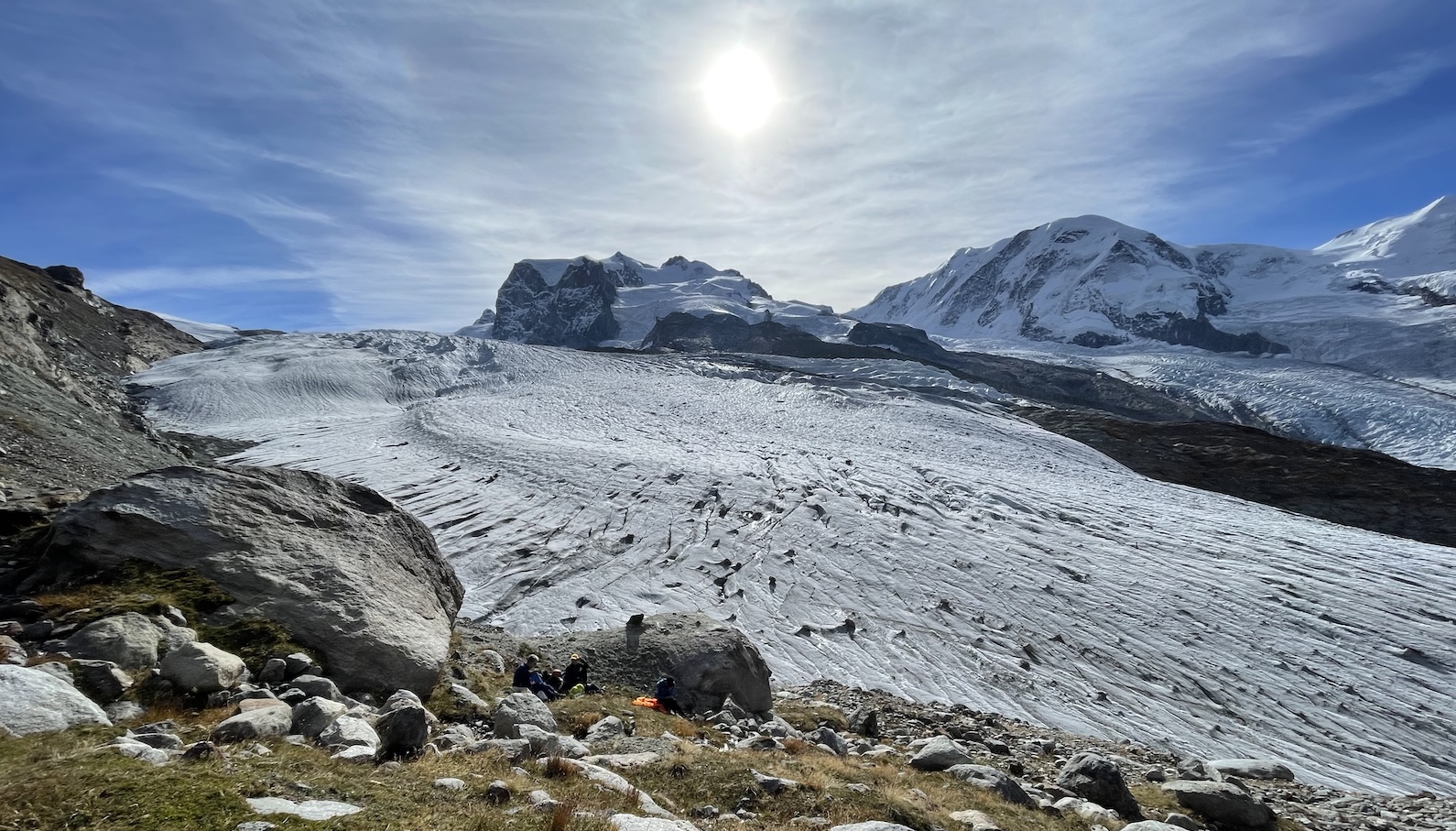
Scientists have deployed distributed acoustic sensing (DAS) technology—a method using fiber optic cables to detect vibrations—to study how glaciers deteriorate in real time. Researchers at ETH Zurich laid a grid of fiber optic cables across an alpine glacier in Switzerland and used laser pulses to detect minute disturbances along the cables, successfully identifying over a thousand fractures in just one week of fieldwork.
The technology works by analyzing how vibrations scatter light through fiber optic cables, allowing researchers to pinpoint the exact location and intensity of what scientists call “icequakes”—fractures that generate seismic activity. A single fiber optic cable can be configured to function as thousands of individual strain sensors, providing far more detailed data than traditional seismometers, which detect movement at only a single point. The approach offers practical advantages as well: fiber optic cables are relatively inexpensive, require no constant human presence on dangerous glacial terrain, and transmit real-time data wirelessly.
The findings highlight a concerning mechanism called hydrofracturing, in which meltwater seeps into cracks and creates internal pressure that forces ice apart. This process compromises glacial structural integrity independent of surface melting from warmer temperatures. The research has implications beyond the Swiss Alps, as similar processes are believed to destabilize ice sheets in Greenland and Antarctica, potentially contributing to catastrophic collapses and sea level rise.
Scientists envision DAS developing into an early-warning system for dangerous glacial failures, though significant challenges remain in translating seismic signals into actionable alerts that could protect nearby infrastructure and populations. The technology could also help researchers understand the depth and extent of subsurface fracturing in major ice sheets, providing better predictions of how quickly glaciers may disintegrate and their contribution to future sea level changes.
Article Attribution | Read More at Article Source
Article summary produced by Claude AI