

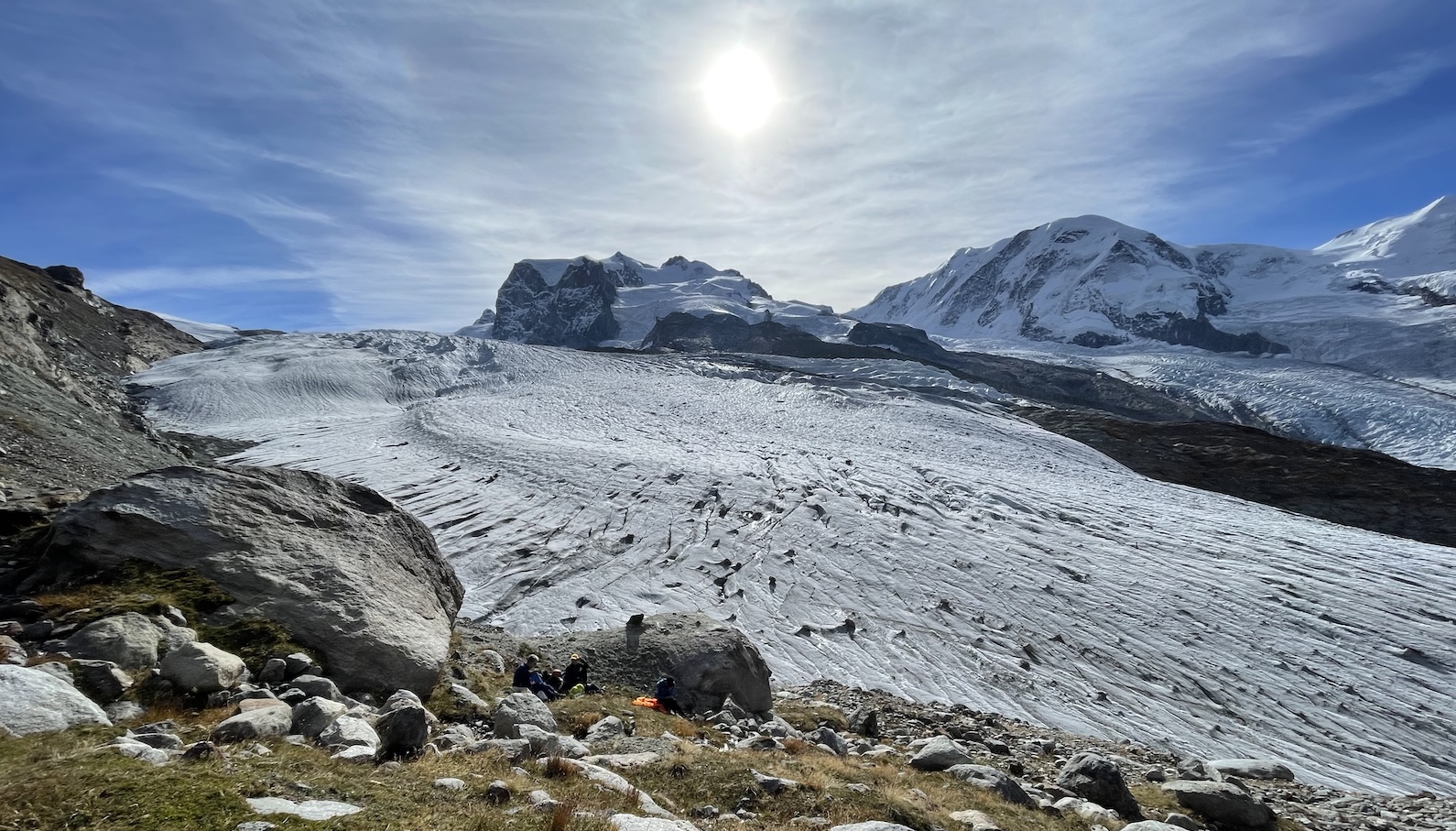
Researchers have deployed distributed acoustic sensing (DAS) technology to study rapid deterioration in glaciers, focusing on a phenomenon called hydrofracturing where meltwater penetrates deep into ice and creates pressure-induced fractures. Using fiber optic cables laid in a grid pattern on a Swiss alpine glacier, scientists can detect seismic vibrations from these fractures with unprecedented precision, essentially converting cables into thousands of individual strain sensors.
The DAS system works by firing laser pulses through fiber optic cables and measuring how vibrations scatter light back to a receiving device called an interrogator. This allows researchers to pinpoint the exact location of “icequakes”—fractures that generate seismic activity—along the cable at different distances. In just one week of fieldwork, the team detected more than one thousand icequakes. The technology offers significant advantages over traditional seismometers, which record data at only single points, and it provides real-time monitoring without requiring researchers to work in the dangerous terrain around glaciers.
The findings reveal that Swiss alpine glaciers face threats beyond simple melting from rising air temperatures. Because liquid water is denser than solid ice, it flows into cracks and forces the ice apart, compromising structural integrity. This hydrofracturing mechanism is hypothesized to be capable of causing major disintegration of ice shelves and sheets in places like Antarctica and Greenland, though the process has never been observed in such detail before.
Scientists envision using DAS as an early-warning system for catastrophic glacier collapses similar to recent events in Nepal, though they acknowledge significant challenges remain in translating seismic signals into actionable alerts. The technology could also enhance monitoring of ice sheets already collapsing into the world’s oceans, particularly in Greenland and Antarctica where complex dynamics including underwater warming and self-perpetuating melting cycles are accelerating ice loss. Understanding crack depth and distribution through DAS could improve predictions about how quickly glaciers may break apart and contribute to sea level rise.
Article Attribution | Read More at Article Source
Article summary produced by Claude AI