

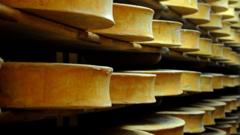
France’s National Institute for Origin and Quality has issued temporary waivers allowing manufacturers of several protected-designation cheeses to modify their production practices in response to severe drought conditions affecting the region. The dispensations, which appeared in government decrees on Wednesday, apply to cheeses including Abondance, Beaufort, and Comté from eastern French mountains, along with several others such as Cantal, Bleu d’Auvergne, and Rocamadour.
The temporary relaxations permit farmers to source animal feed from outside their traditional geographical zones and incorporate supplements into livestock diets. For example, makers of Abondance cheese in the Alps may reduce pastured grass in animal diets from 50 percent to 15 percent and import forage from other regions. Similarly, producers of Comté cheese in the Jura may substitute locally-grown maize with maize sourced elsewhere. These modifications diverge significantly from the strict production standards normally required to maintain protected designation status.
Products beyond cheese have also received temporary regulatory relief. Protected items benefiting from similar waivers include certain Calvados and cider varieties from Normandy, Crémant d’Alsace sparkling wine, lamb from Poitou-Charentes, and Reine-Claude plums. The INAO characterizes the 2026 drought as “historic” in its scale and impact on agricultural production.
Protected designations of origin allow producers to command premium prices but require adherence to rigorous regulations governing production location and methodology. These rules are designed to preserve the distinctive character of foods linked to terroir, a French concept connecting geographic location and production tradition to product identity. Under French and European law, temporary derogations from such requirements are permitted during periods of exceptional weather, with similar measures having been implemented following the dry summer of 2022.
The relaxed standards raise longer-term questions about the sustainability of current labeling systems. Should climate patterns continue to prevent traditional production methods in established regions, the fundamental concept of terroir and its applicability to protected designations may face significant strain.
Article Attribution | Read More at Article Source
Article summary produced by Claude AI