

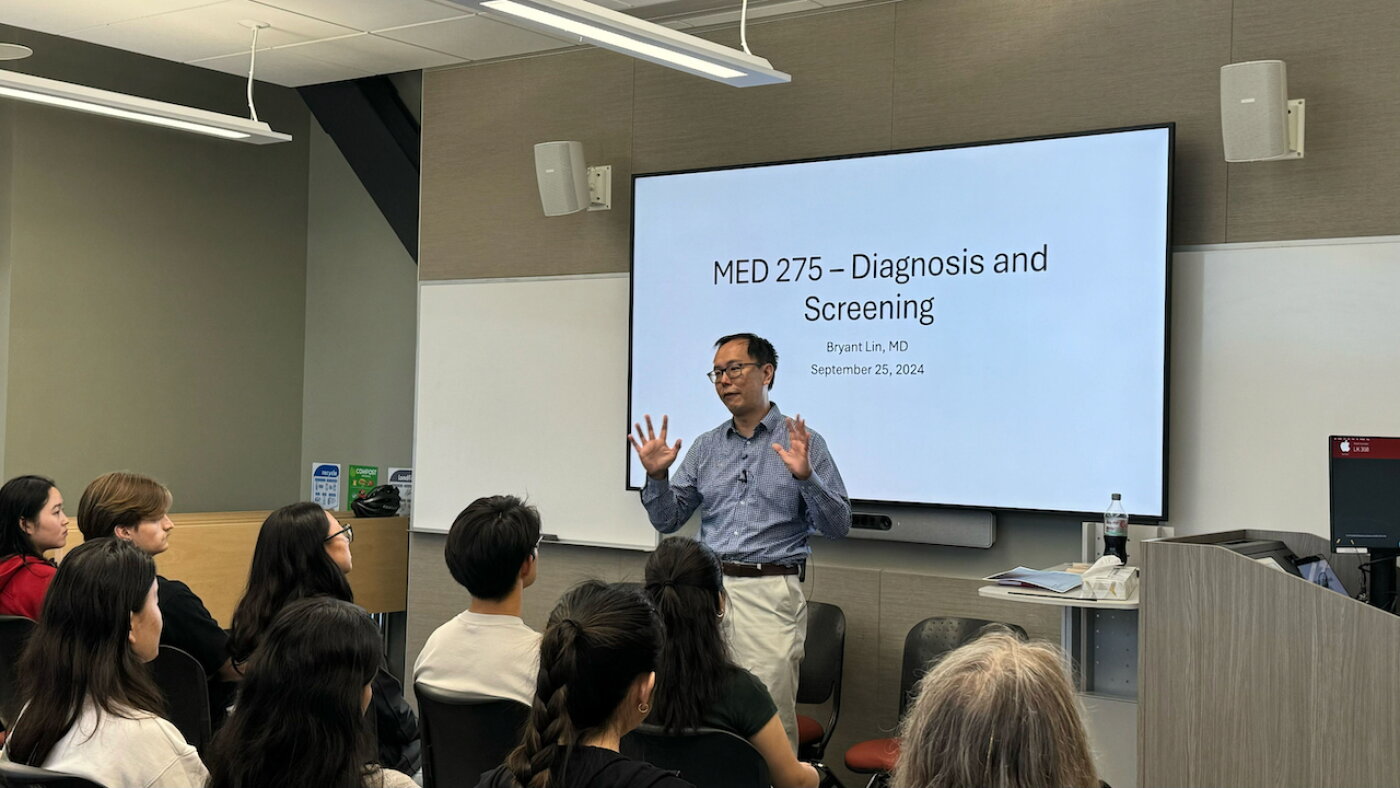
Dr. Bryant Lin, a Stanford University medical professor who founded the school’s Center for Asian Health Research and Education and has long advocated for improved lung cancer screening, was diagnosed with Stage IV lung cancer two years ago. Lin, a non-smoker, has become both a researcher and patient navigating the latest developments in cancer treatment.
Recent advances in lung cancer care center on the ability to identify specific genetic mutations driving individual cancers through comprehensive genomic testing. This development allows oncologists to prescribe targeted drugs designed to attack cancer cells with particular mutations rather than using broad-based treatments. According to UCLA oncologist Jonathan Goldman, this approach typically produces fewer side effects than traditional chemotherapy and can extend survival from less than a year to several years or longer. The five-year survival rate for all stages of lung cancer has doubled over three decades, though it remains at 30% overall, with early-stage localized cancers showing 67% five-year survival rates between 2015 and 2021.
Despite the promise of these treatments, implementation faces obstacles. Fewer than half of lung cancer patients in the United States undergo genetic testing before treatment because it is not yet considered standard medical care. Additionally, some oncologists may not be aware of or trained in these newer approaches, as treatment technology continues evolving rapidly.
Lin initially received treatment with a daily pill called Tagrisso after his diagnosis in May 2024. When that therapy ceased working after approximately a year, he transitioned to a drug combination consisting of amivantamab and lazertinib, which targets his specific EGFR mutation type. Lin describes his symptoms as well-controlled under current treatment, allowing him to continue teaching, traveling, and maintaining his professional responsibilities.
Insurance coverage represents another significant barrier to treatment access. Lin, despite his position at a prestigious medical center, has encountered insurance denials and prior authorization requirements for expensive new medications. He notes that some targeted drugs cost $16,000 or more, with oral and intravenous options sometimes reaching hundreds of thousands of dollars—figures most patients cannot afford independently.
Article Attribution | Read More at Article Source
Article summary produced by Claude AI