

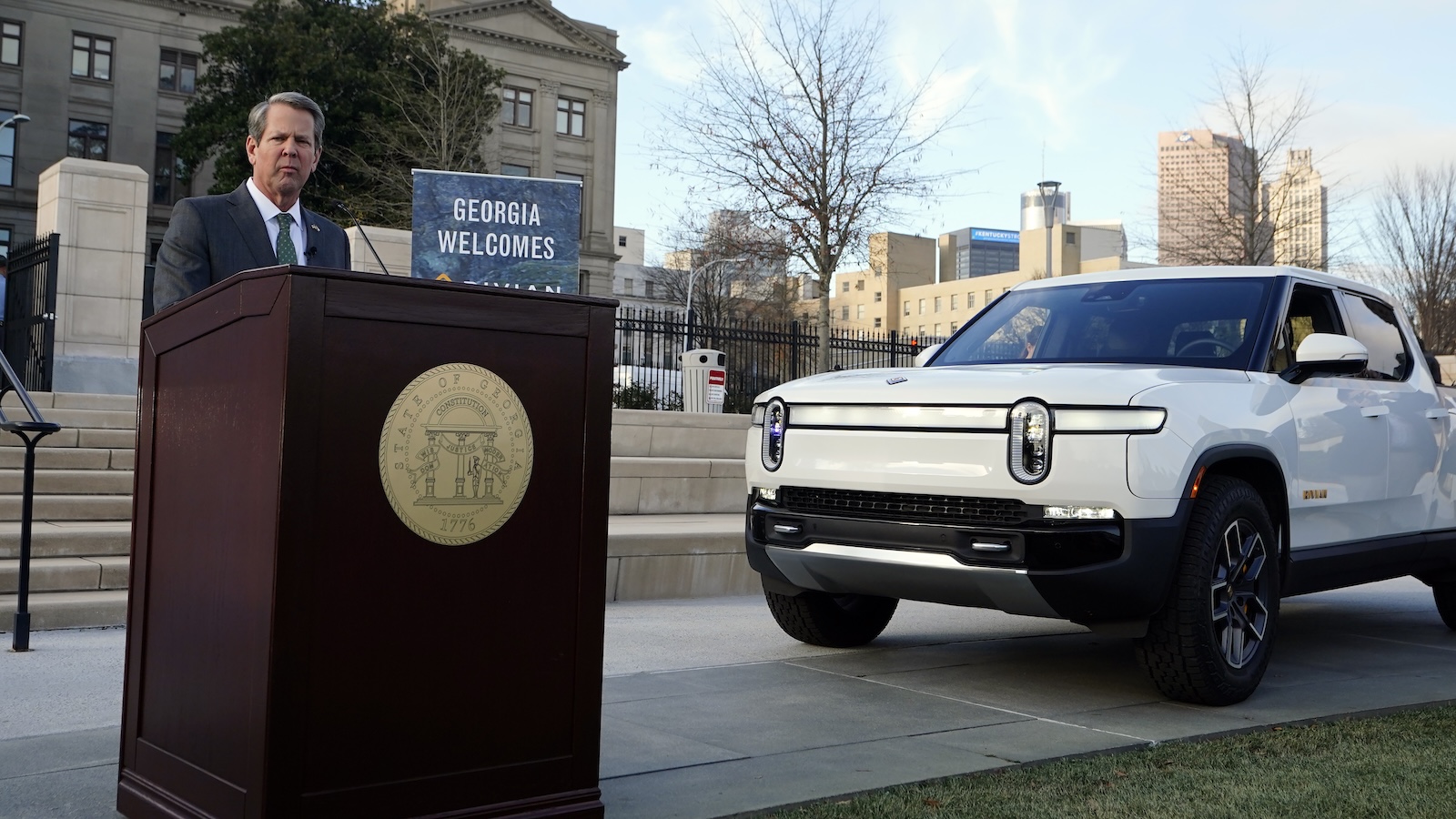
Georgia has invested substantially in attracting electric vehicle and battery manufacturing over the past several years, creating what had become one of the state’s most significant economic development sectors. Companies including Blue Bird, Hyundai, Kia, and Rivian have established or expanded operations in the state, supported by tax incentives and workforce training programs.
The operating environment for these manufacturers has shifted considerably under recent federal policy changes. The elimination of federal EV tax credits, the imposition of tariffs on battery components and charging equipment, the relaxation of emissions standards for gas-powered vehicles, and the suspension of government fleet electrification initiatives have all contributed to reduced demand for electric vehicles. Additionally, a federal immigration enforcement action at a battery manufacturing facility last year resulted in significant disruptions to operations.
In response to these market conditions, major automakers have adjusted their strategies. Kia’s West Point facility now emphasizes flexible manufacturing to produce vehicles according to consumer demand, with a current shift toward hybrid vehicles rather than pure electric models. Similarly, Hyundai has added hybrid production capacity at its Savannah plant, which was originally constructed to manufacture electric vehicles exclusively. Battery manufacturers throughout the state have begun diversifying their operations to produce stationary energy storage systems alongside automotive battery products.
Despite these challenges, substantial manufacturing investment continues across the region, with nearly $74 billion in EV and battery-related projects moving forward. However, more than $4 billion in planned investment has been canceled or reduced. Industry analysts note that the sector faces headwinds partly due to Georgia’s lack of consumer incentives for EV adoption and the presence of additional vehicle registration fees that do not favor electric purchases.
Investment activity continues from the private sector, with automakers and utilities expanding charging infrastructure and grid capabilities. Industry observers suggest that local manufacturing presence may eventually drive consumer adoption, though the timeline for market stabilization remains uncertain.
Article Attribution | Read More at Article Source
Article summary produced by Claude AI