

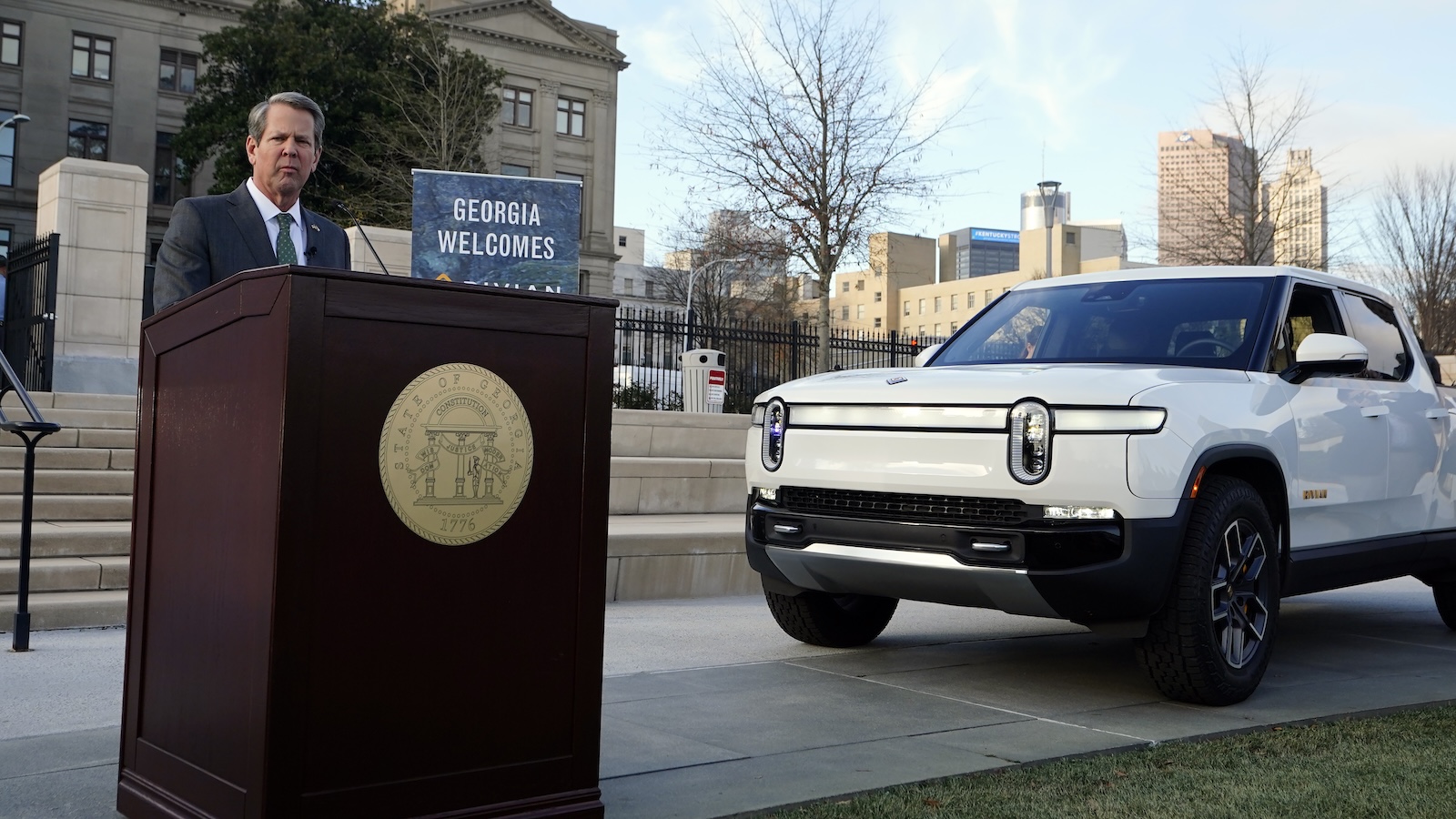
Georgia has invested heavily in attracting electric vehicle and battery manufacturing over the past decade, with major facilities from companies including Hyundai, Kia, and Rivian established throughout the state. The state offered tax breaks and worker training programs to encourage such investments, which represented some of the largest economic development projects in Georgia’s history.
The landscape has shifted significantly following changes in federal policy. The Trump administration has eliminated federal EV tax credits, imposed tariffs on battery components and charging equipment, eased emissions regulations for gas-powered vehicles, and halted efforts to electrify government vehicle fleets. These policy reversals have disrupted market conditions for manufacturers and reduced consumer incentives to purchase electric vehicles.
In response, manufacturers operating in Georgia have adjusted their strategies. Kia’s West Point facility has increased hybrid production to match current consumer demand, while Hyundai has similarly added hybrid manufacturing at its Savannah plant originally designed for EV production. Battery makers have begun diversifying into electricity storage batteries beyond those intended for vehicles. Industry analysts note this represents a transitional period as companies recalibrate to market conditions.
Georgia’s EV and battery sector has experienced setbacks, including layoffs at SK Battery and more than $4 billion in canceled or scaled-back investments across the Southeast. However, approximately $74 billion in manufacturing investment continues across the region. Industry observers note that Georgia lacks state-level incentives for EV adoption, featuring instead a registration fee to offset lost gasoline tax revenue, which creates additional headwinds.
Despite policy challenges, private investment continues through charging infrastructure development and utility investments. Analysts suggest that long-term EV adoption may be supported by familiarity with products manufactured locally, as workers and families gain exposure to electric vehicles through employment and community presence.
Article Attribution | Read More at Article Source
Article summary produced by Claude AI