

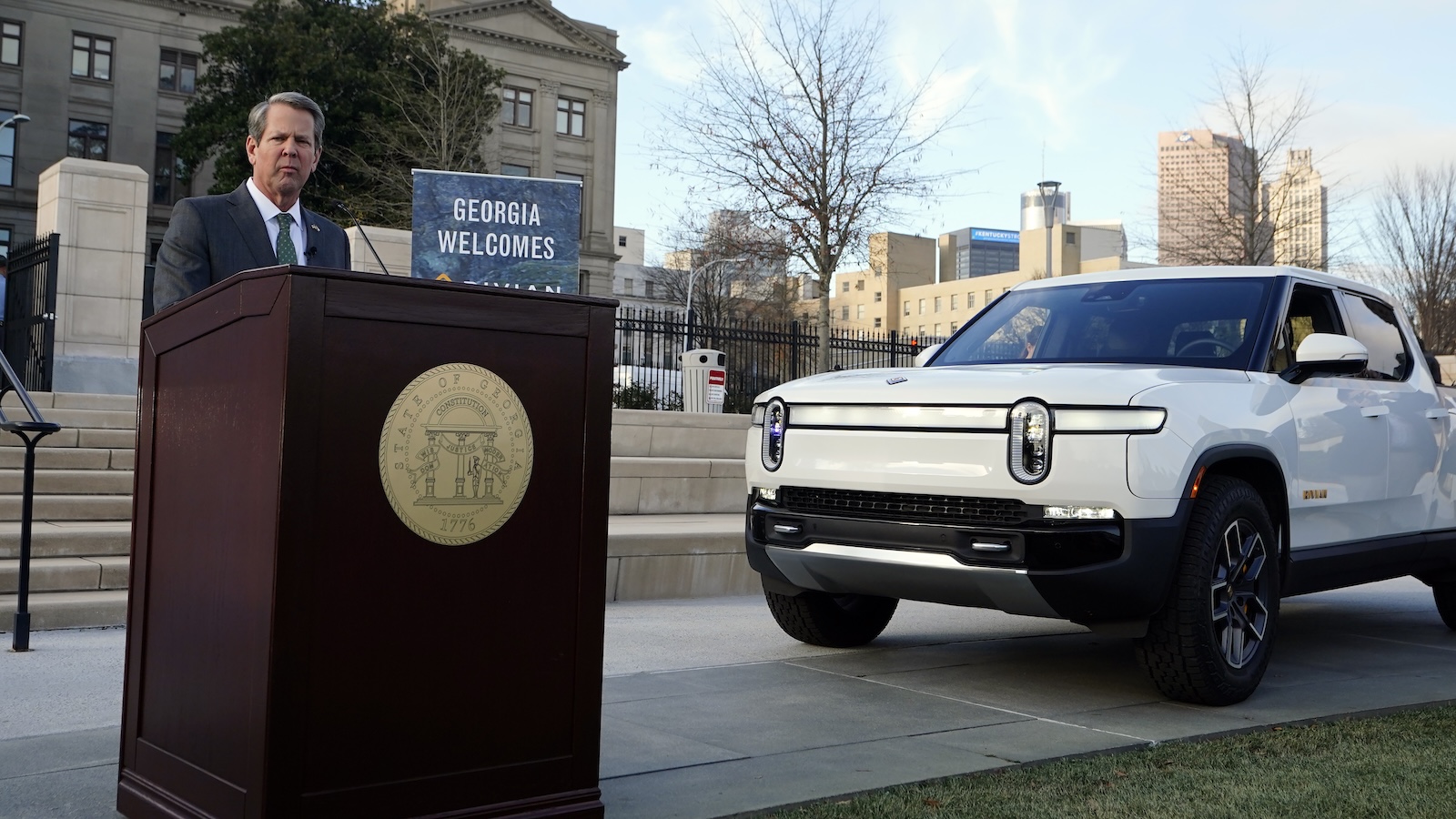
Georgia has invested heavily over several years to establish itself as a hub for clean energy manufacturing, particularly electric vehicles and battery production. Major companies including Hyundai, Kia, and Rivian have built or expanded facilities in the state, representing some of the largest economic development projects in Georgia’s history. The state offered tax breaks and worker training programs to attract these manufacturers.
The economic landscape shifted significantly following policy changes at the federal level. The elimination of federal EV tax credits, new tariffs on battery components and charging hardware, relaxed emissions standards for gas-powered vehicles, and the end of efforts to electrify government fleets have destabilized the sector. Additionally, a federal immigration enforcement action at a battery plant earlier resulted in the arrest of over 400 workers, disrupting operations.
Manufacturers operating in Georgia have begun adjusting their strategies in response to these developments. Kia’s West Point facility has increased hybrid vehicle production alongside electric models, adapting to consumer preferences shaped by policy changes and economic factors. The removal of federal tax incentives has particularly impacted EV sales, according to factory leadership. Hyundai’s Savannah plant, originally designed for EV production, has similarly added hybrid manufacturing capacity.
Battery makers throughout Georgia have begun diversifying, shifting focus toward producing energy storage batteries in addition to vehicle batteries. Despite these adaptations, the sector has experienced setbacks, including layoffs at battery manufacturers. More than $4 billion in investment across the Southeast has been canceled or scaled back over the past year, though nearly $74 billion in manufacturing investment remains on track.
Industry observers note that Georgia lacks state-level incentives to encourage consumer EV purchases and maintains a vehicle registration fee structure that disadvantages electric vehicles. However, private sector investment continues, with automotive companies and utilities expanding charging infrastructure and investing in related services. Some analysts project that long-term EV adoption in Georgia may benefit from local manufacturing presence and workforce familiarity with the technology.
Article Attribution | Read More at Article Source
Article summary produced by Claude AI