

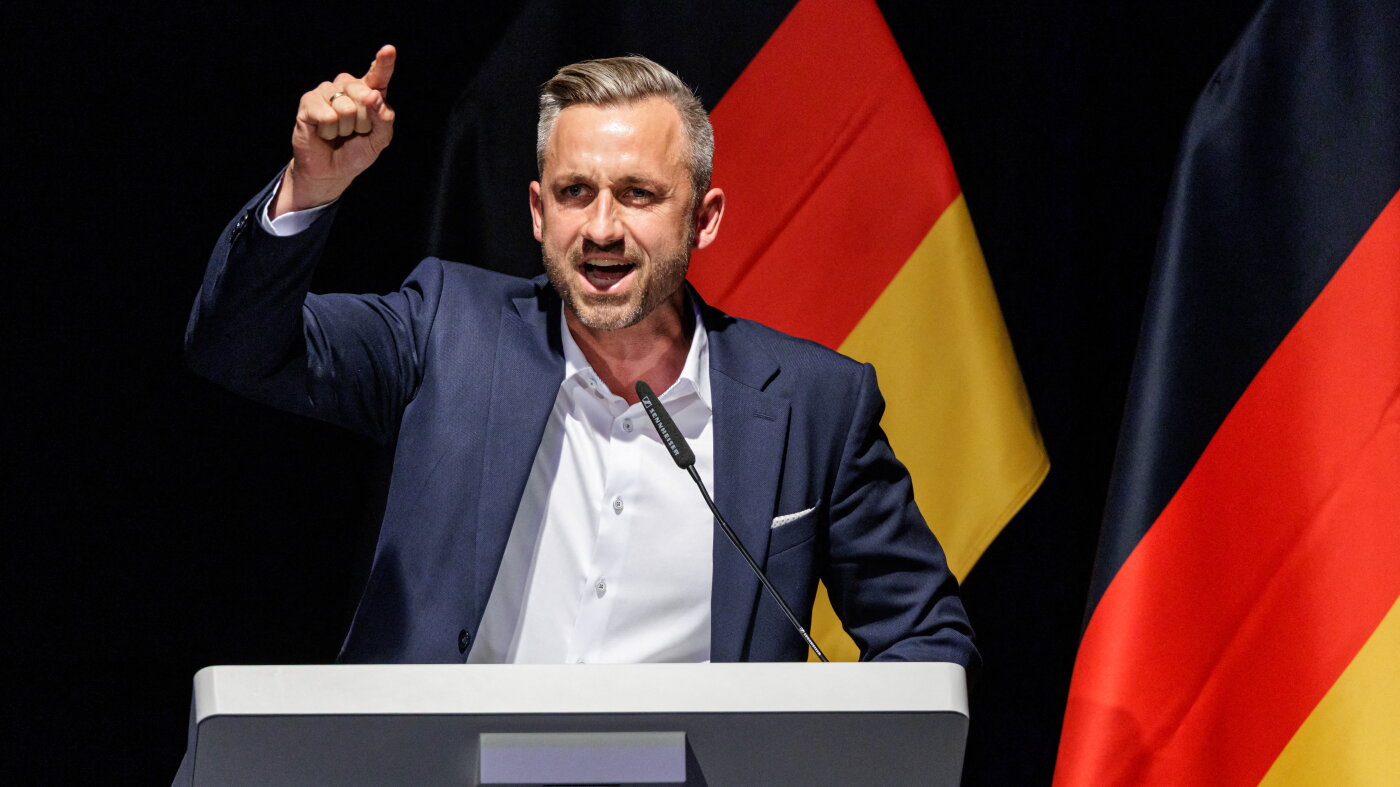
The Alternative for Germany (AfD) is positioned to achieve a significant political milestone in an upcoming state election in Saxony-Anhalt. The party’s candidate, Ulrich Siegmund, has leveraged social media platforms to build widespread support, accumulating a substantial following that rivals the eligible voting population of the eastern state. His campaign strategy emphasizes social media engagement and a polished public image distinct from other party members.
Siegmund’s political positioning centers on anti-immigration policies and mass deportation measures, framed through a carefully managed public persona that contrasts with the more confrontational rhetoric typical of far-right movements. His economic proposals and broader policy positions receive less emphasis in public communications, with campaign messaging focusing on optimistic messaging rather than detailed policy discussion. Critics of the party, including former supporters turned activists, highlight disparities between the AfD’s public messaging and its actual policy positions, particularly regarding economic matters that they argue disproportionately benefit wealthier segments of society.
Support for the AfD extends beyond traditional far-right constituencies. Some voters cite specific policy positions such as immigration restrictions while maintaining reservations about other party platform elements. Researchers studying democratic resilience note that AfD voters express commitment to democratic principles while simultaneously expressing skepticism about the functioning of existing democratic institutions in Germany.
The party’s political trajectory extends beyond state-level contests. The AfD currently polls first at the federal level across the country, representing a significant shift in German politics. A victory in Saxony-Anhalt would constitute a historic breakthrough for a party classified as right-wing extremist by domestic intelligence authorities in multiple German states. This potential outcome underscores broader political developments occurring in the country’s electoral landscape.
Article Attribution | Read More at Article Source
Article summary produced by Claude AI