

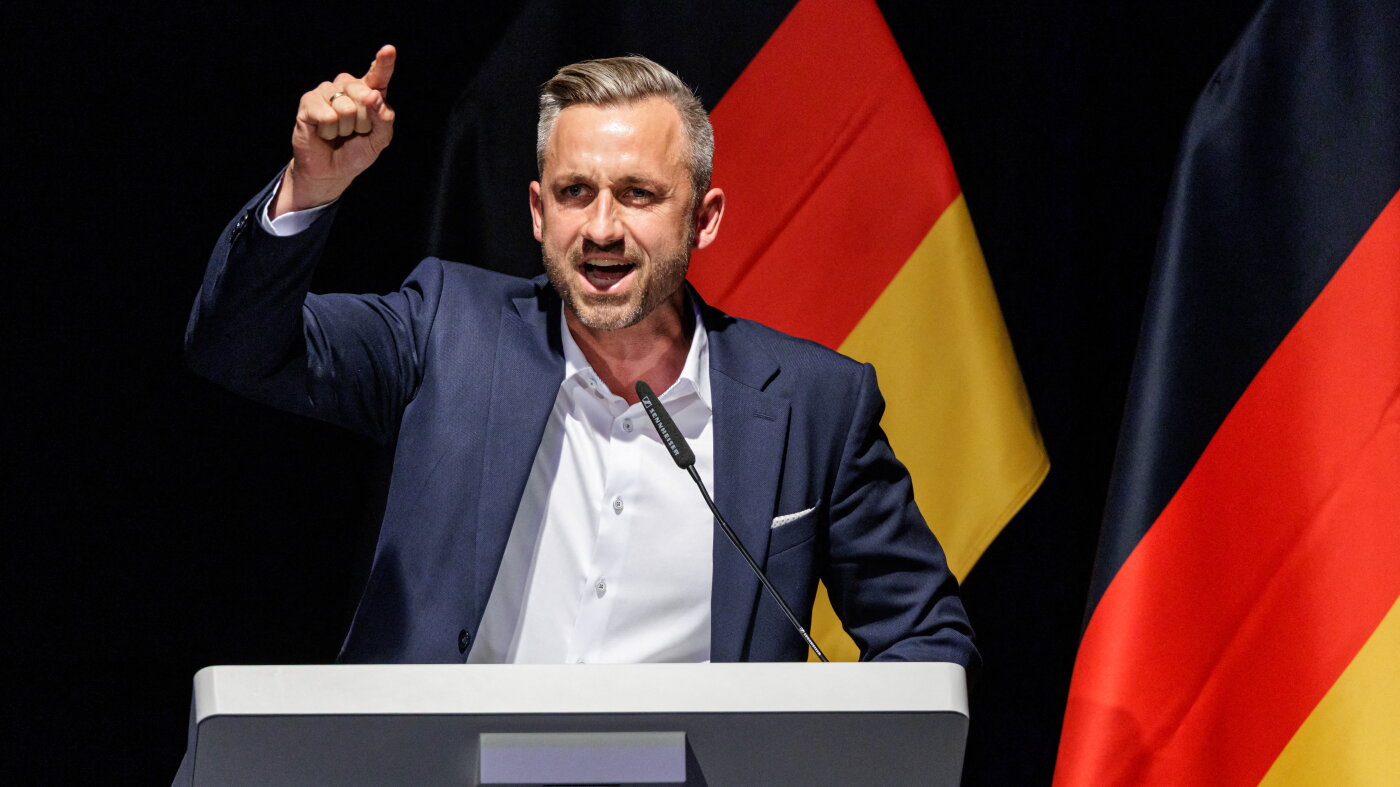
The Alternative for Germany (AfD) is positioned to potentially make history in an upcoming state election in Saxony-Anhalt, where the party’s candidate Ulrich Siegmund leads in polling. A victory would mark the first time since World War II that a far-right party leads a German state government.
Siegmund, a 35-year-old former marketing professional, has built a significant social media presence, particularly on TikTok, where he engages directly with constituents on policy matters. His carefully curated public image—characterized by polished appearance and optimistic messaging—contrasts with the party’s hardline positions on immigration and deportation. He emphasizes the party’s stance on issues such as healthcare worker standards, framing the matter in terms of national interest rather than explicit anti-immigration rhetoric.
Opposition to the AfD exists within the electorate, including among some former supporters. Hannes Kreschel, a 23-year-old law student who previously voted for the party, now actively engages voters at AfD rallies to highlight perceived inconsistencies between campaign messaging and actual policy proposals, particularly regarding economic impacts. Despite his efforts, Kreschel acknowledges that the AfD’s media presence significantly outreaches his own counter-messaging.
Among voters, perspectives on the AfD vary considerably. Some, like Alexander Winsek, express support for specific policies such as migration restrictions while disagreeing with other party positions on NATO membership and relations with Russia. Others, particularly Winsek, cite Siegmund’s demeanor and relative youth as distinguishing factors compared to other AfD figures.
Academic research on the party’s appeal suggests that many AfD voters support democratic processes while expressing skepticism about democratic functionality in Germany. The party frames itself as offering “real” democracy to constituencies it characterizes as underrepresented by establishment parties. The AfD’s anti-establishment messaging has gained traction beyond eastern Germany, with the party also leading federal-level polling. Observers note that the party maintains strict boundaries regarding dissent within its campaign spaces.
Article Attribution | Read More at Article Source
Article summary produced by Claude AI