

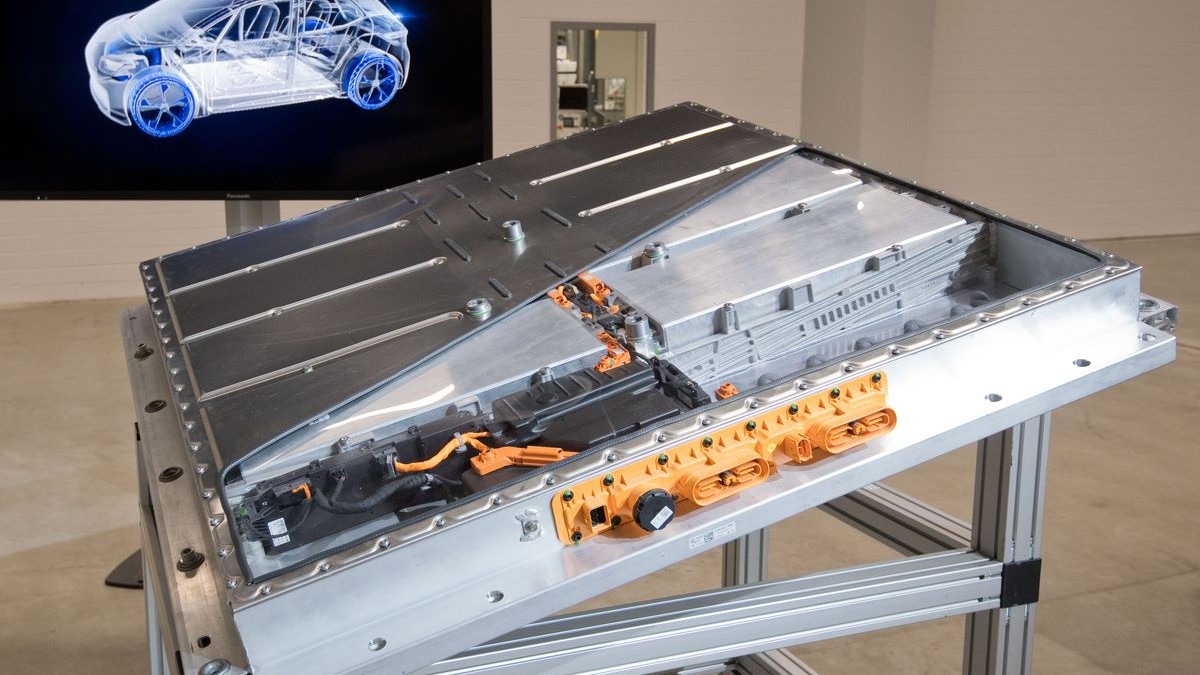
General Motors and Ford are redirecting underutilized battery manufacturing capacity from electric vehicles into energy storage systems, seeking to capitalize on accelerating demand across the U.S. power sector. Both companies have absorbed significant financial losses from their EV expansion efforts, with Ford recording a $19.5 billion write-down and GM accumulating $10.9 billion in charges as they scaled back production. Rather than allowing this capacity to remain idle, the automakers are now positioning themselves as competitors in the burgeoning battery energy storage business.
Ford established Ford Energy, a wholly-owned subsidiary, at the end of 2025 as part of a broader restructuring of its EV strategy. The company plans to repurpose battery manufacturing facilities in Glendale, Kentucky and invest approximately $2 billion over the next two years to expand the operation. Ford aims to deploy at least 20 GWh of battery storage annually by late 2027, serving utilities, data centers, and large industrial and commercial customers. In May, the company secured a five-year framework agreement with EDF power solutions North America for the potential procurement of up to 20 GWh of direct current block systems.
General Motors has similarly launched its own energy storage business and vehicle-to-grid technology offerings. The automaker announced a partnership with Peak Energy in June to develop and deploy sodium ion chemistry systems for grid-scale storage. GM has also been providing repurposed second-life battery packs to support renewable integration projects, including work with Redwood Materials on what the company describes as a circular battery lifecycle initiative.
The timing of these corporate pivots aligns with explosive growth in the U.S. energy storage market. Recent data from the Solar Energy Industries Association and Benchmark Mineral Intelligence indicated that the nation installed 20.2 gigawatt-hours of new battery capacity in the second quarter alone, marking the largest quarterly installation on record. Industry analysts attribute this surge to grid operators and utilities responding to reliability concerns and elevated power demands driven by data center expansion and renewable energy integration. The U.S. Energy Information Administration reported that utility-scale battery storage capacity has grown at an average annual rate of 70% over the past three years.
Article Attribution | Read More at Article Source
Article summary produced by Claude AI