

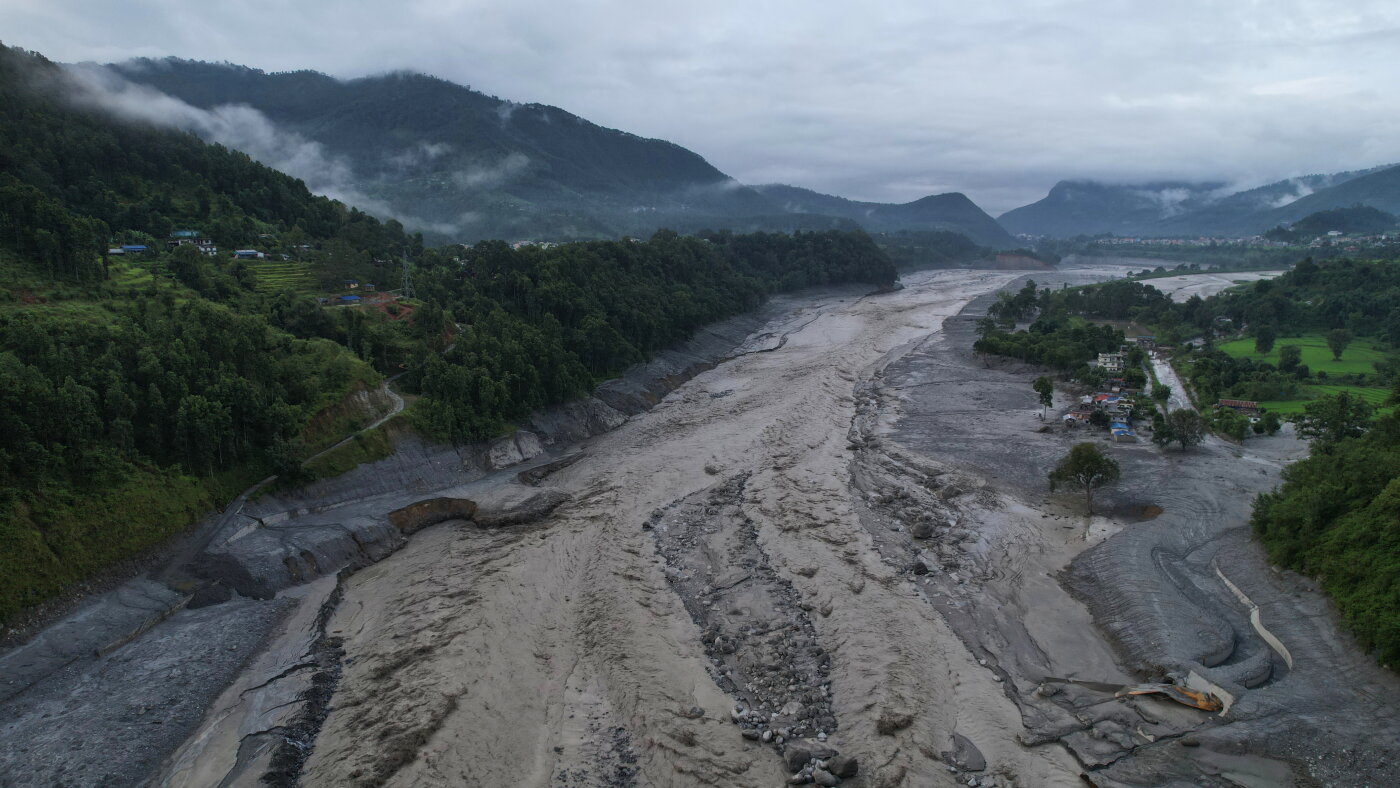
Catastrophic flooding struck Nepal last Wednesday, leaving hundreds dead and missing. Among those unaccounted for are numerous pilgrims who were en route to Mount Kailash, a sacred Himalayan peak located in Chinese-held Tibet. According to reports from China and Nepal, approximately 853 foreigners remain missing, with Indian authorities reporting 287 missing Indian nationals and U.S. officials accounting for 80 missing American citizens. Many of the missing appear to be pilgrims undertaking the sacred journey, based on social media appeals and interviews.
The disaster occurred near a border crossing between Nepal and Tibet, an area that experienced a catastrophic glacial break. A portion of glacier detached and plummeted approximately 4,000 feet into a river valley, generating a powerful surge of ice, water, and rock that engulfed the Gyirong Port Immigration Office, a multi-story concrete structure. The surge overwhelmed the facility and affected surrounding areas where pilgrims were located. One spiritual leader noted that the timing of their group’s arrival at the border crossing at 9:05 a.m. was deliberate, aimed at avoiding delays at immigration processing.
Mount Kailash holds profound religious significance for Hindus, Buddhists, Jains, and indigenous Tibetan religions. For devout Hindus, visiting the mountain represents one of the most significant spiritual undertakings of their lives. According to religious historians, Hindus regard Mount Kailash as the ultimate dwelling place of Lord Shiva, a principal deity associated with power and destruction. Pilgrims traditionally circumambulate the mountain’s base over approximately three days, covering roughly 33 miles at extreme altitude, rather than climbing the peak itself, which is considered sacrilegious.
Scientists attribute the glacial failure partly to climate change. Environmental organizations report that Himalayan glaciers have been losing ice at a rate that has doubled over the past quarter century. Spiritual leaders have emphasized that the disaster underscores the urgent need for environmental protection and warned that global warming threatens both the physical mountain range and the cultural and religious heritage centered on it.
Article Attribution | Read More at Article Source
Article summary produced by Claude AI