

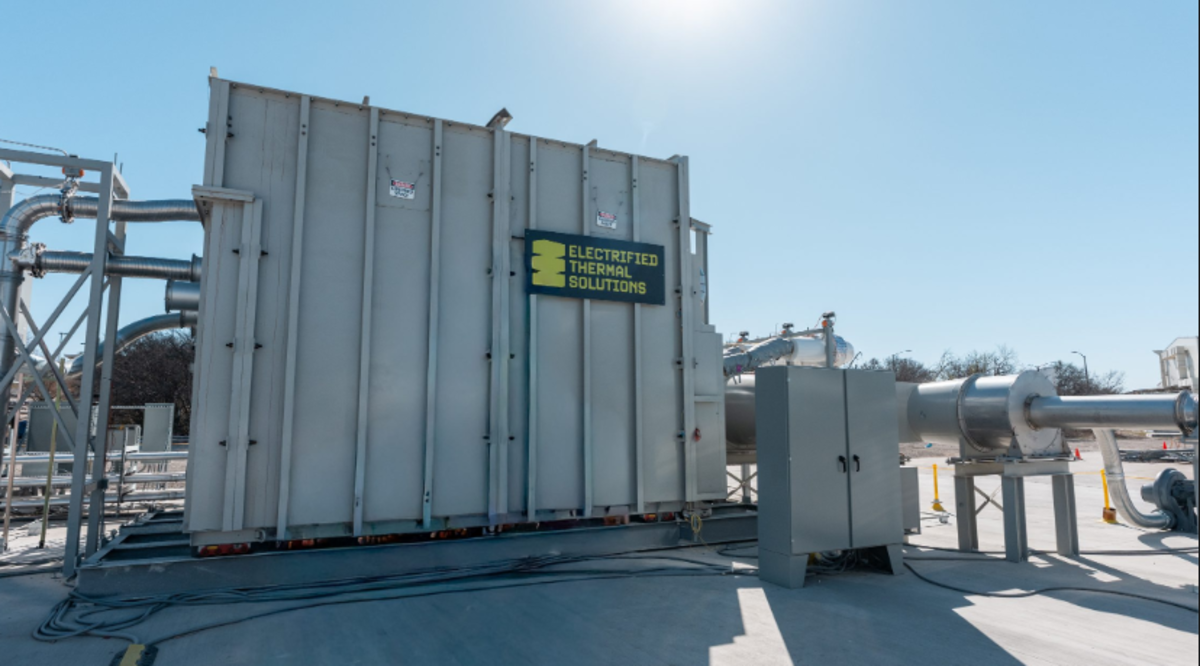
Electrified Thermal Solutions, an MIT spin-off company, announced the completion of a significant industrial deployment involving two Joule Hive thermal batteries at a cement manufacturing facility operated by Holcim, one of the world’s largest cement producers. The Joule Hive is an insulated enclosure containing specially engineered firebricks that conduct electricity and can reach temperatures of 1800º Celsius, making them suitable for industrial processes that traditionally required fossil fuel combustion.
The technology addresses a critical challenge in industrial decarbonization. Approximately 20 percent of global energy consumption is dedicated to process heat applications in sectors such as steel, aluminum, and cement production. Until the development of the Joule Hive, achieving the extreme temperatures necessary for these operations using electricity alone was not feasible. The modified firebricks operate at 95 percent efficiency and can store heat for up to three days, allowing industrial facilities to utilize excess renewable energy. The Holcim deployment follows successful testing of a commercial-scale Joule Hive system at Southwest Research Institute in San Antonio, which accumulated over 1,000 hours of operational data.
Cement production contributes approximately 8 percent of global carbon dioxide emissions, making it one of the most difficult industrial sectors to decarbonize. Holcim indicated the deployment will evaluate the technology’s potential for reducing emissions from high-temperature operations as part of the company’s broader sustainability strategy. Holcim has also become an investment partner in Electrified Thermal Solutions.
Previously, Ashland, a specialty chemical manufacturer, received Department of Energy support for deploying Joule Hive technology at its Kentucky facility. The Tennessee Valley Authority noted that the system’s ability to charge during off-peak hours reduces strain on electrical grids while enabling industrial decarbonization. The projected greenhouse gas reduction from replacing methane-fired boilers at that location is approximately 70 percent.
Article Attribution | Read More at Article Source
Article summary produced by Claude AI