

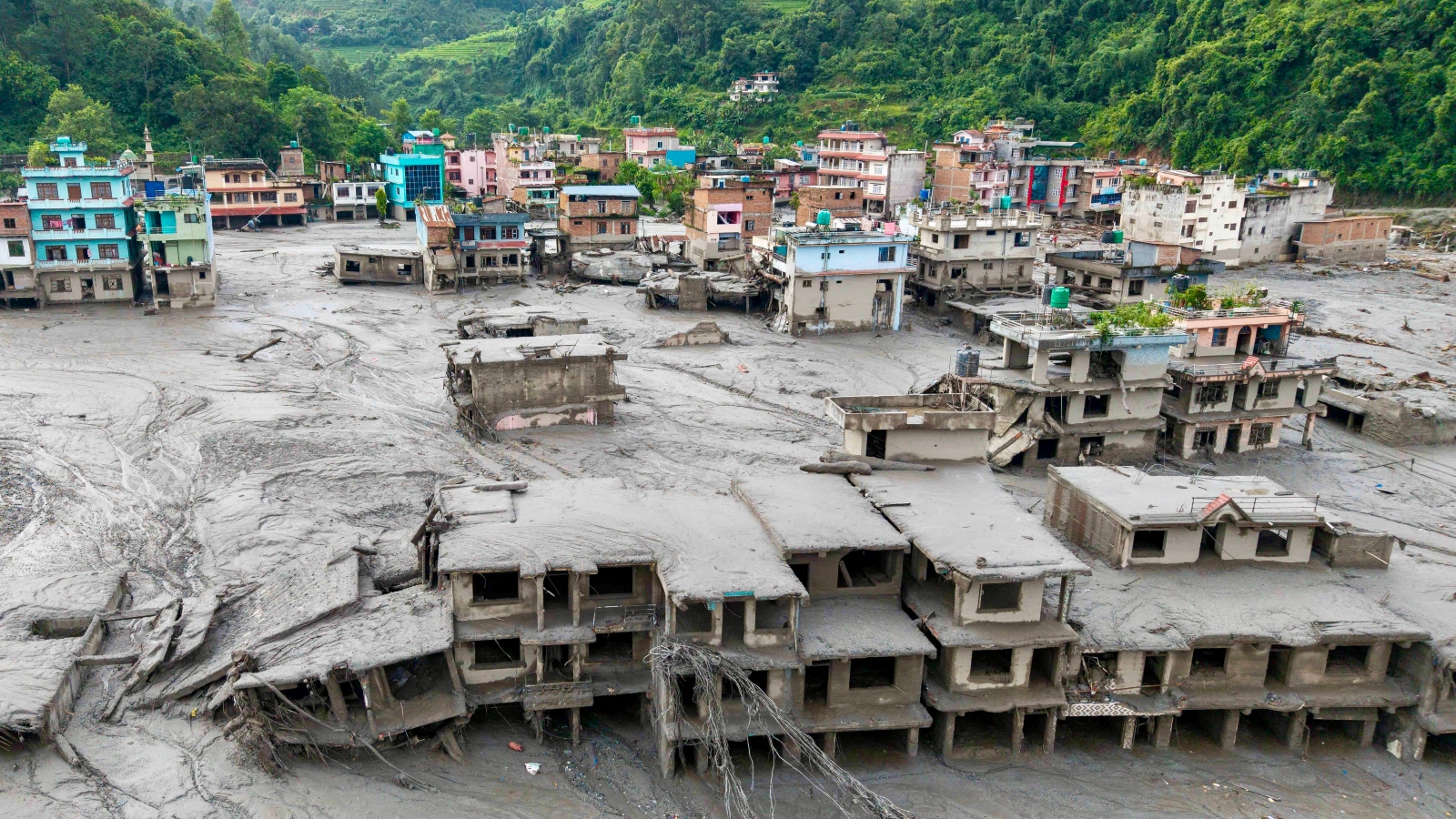
A catastrophic flooding event struck the mountainous border region of Nepal and Tibet on Wednesday, resulting in approximately 160 deaths and hundreds of missing persons, including numerous international tourists. Satellite imagery and government reports indicate that the disaster was likely initiated when a large piece of glacier broke away and fell hundreds of feet into a valley below.
Experts attribute the glacial collapse to warming temperatures in the region. A geologist from the University of Calgary noted that satellite data suggested a roughly 2,000-foot-wide section of ice may have fallen nearly 4,000 feet, and that melting snow on the glacier earlier in the week could have been a contributing factor. The collapse and resulting debris flow were forceful enough to register as a magnitude 5.2 seismic event according to the U.S. Geological Survey.
The incident reflects broader climate-driven changes affecting glaciers throughout the region. Research shows that Nepal’s glaciers have undergone significant retreat, losing nearly a quarter of their area between 1970 and 2010, with more than 160 smaller glaciers in the country disappearing entirely. Since 2000, global glaciers have collectively lost 5 percent of their ice, with some regions experiencing more severe losses.
As glaciers retreat due to warming, multiple hazardous cascading effects can occur. Receding glaciers can destabilize slopes and trigger landslides, while also creating dammed lakes at higher elevations that pose risks of catastrophic outburst floods. Additional risk factors in warming conditions include thawing alpine permafrost, which can mobilize previously frozen rock and soil. Similar glacier collapse events linked to rising temperatures have occurred elsewhere, including incidents in Switzerland and Italy in recent years.
Article Attribution | Read More at Article Source
Article summary produced by Claude AI