

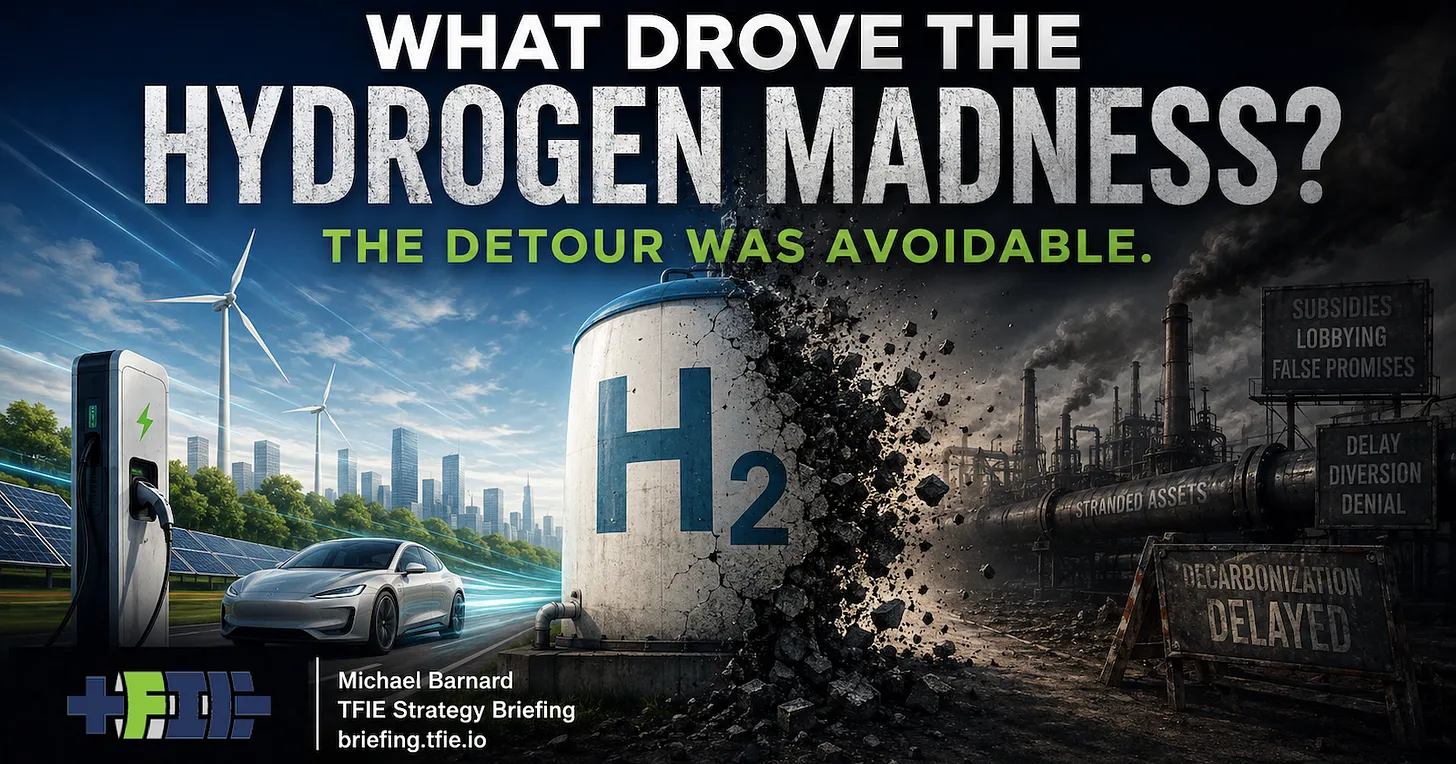
A comprehensive analysis of hydrogen’s trajectory reveals that continued investment in the technology persisted despite mounting evidence of fundamental flaws, according to recent commentary on energy policy and decarbonization strategy.
The technical and economic constraints surrounding hydrogen were well-established by 2003, when thermodynamic research demonstrated that hydrogen production, compression, transportation, storage and use required significantly more energy than direct electricity use. This inherent disadvantage remained constant even as green hydrogen production using renewable electricity became technically feasible. The economics proved equally challenging, as producing hydrogen competitively required both extremely inexpensive electricity and high plant utilization rates—conditions that proved incompatible when combined with the intermittent nature of wind and solar power sources. By 2025, actual project costs were substantially exceeding forecasts from major institutions.
Despite these observable constraints, hydrogen continued receiving substantial support and investment. The explanation lies less in technical ignorance than in the strategic interests of established industries. Gas companies faced declining value for reserves, pipelines and infrastructure in an electrified future, making hydrogen an attractive pathway to preserve assets and organizational competencies. Similarly, legacy automakers saw hydrogen and alternative fuels as ways to maintain relevance for existing combustion technologies, manufacturing facilities and supplier networks during the transition away from traditional engines.
Governmental involvement created an additional layer of institutional commitment. Once hydrogen targets, subsidy programs and infrastructure strategies were established, billions of euros in investment decisions and industrial planning organized around them, according to institutional reviews. Critically, the decision-making process lacked effective stopping rules that would have forced reconsideration when evidence turned negative. Each successive intervention—production subsidies, demand support, additional infrastructure—could be individually justified while the fundamental question of hydrogen’s suitability for specific applications gradually disappeared from policy discussions.
Currently, hydrogen retains legitimate applications in decarbonizing ammonia, methanol and chemical production, where the molecule itself carries value. However, its broader deployment as a general-purpose energy substitute in heating, transportation and storage represented an economically inefficient detour driven primarily by organizational self-interest rather than energy requirements.
Article Attribution | Read More at Article Source
Article summary produced by Claude AI