

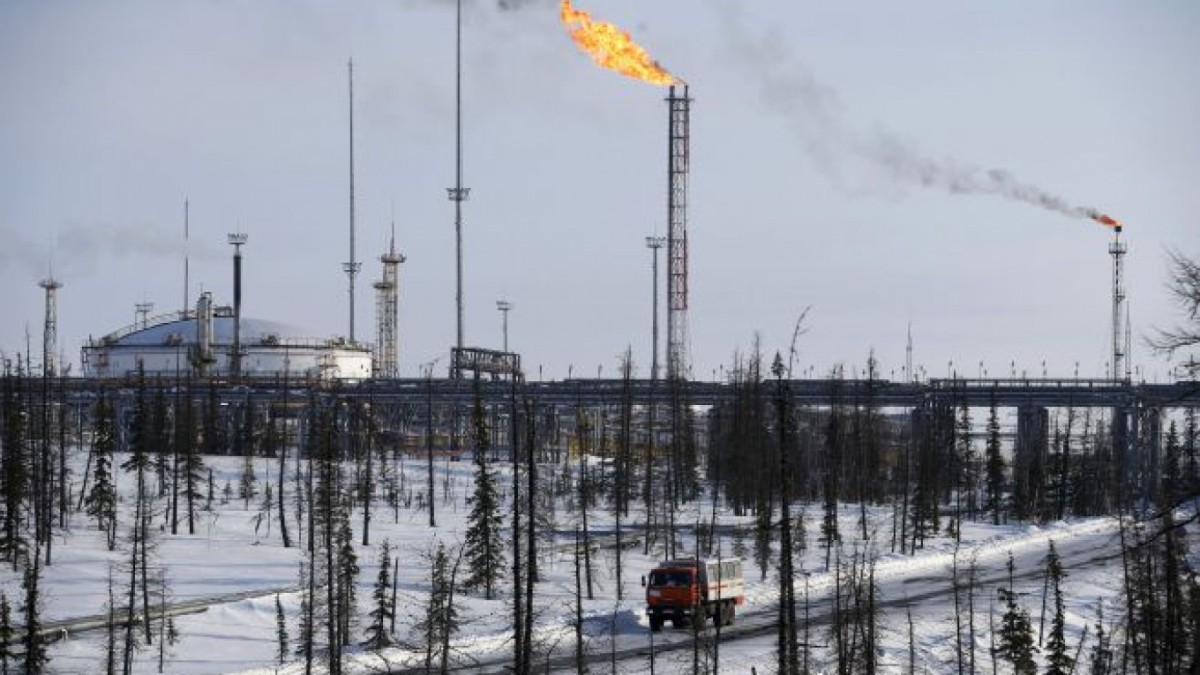
Russia has initiated a major Arctic oil development project aimed at establishing new export routes to Asia, particularly China, following initial agreements made in early 2022. The Vostok Oil project, launched by state-owned Rosneft, encompasses several oil and gas fields in Siberia’s remote Taymyr peninsula, including the Vankor cluster, Zapadno-Irkinsky block, Payakhskaya group, and East Taimyr cluster. These fields are estimated to hold at least 6 billion metric tons of proven liquid hydrocarbon reserves, positioned near the Northern Sea Route, a maritime corridor through the Arctic.
Rosneft’s chief executive stated that the complete project, estimated to cost approximately 10 trillion rubles or $135 billion at 2022 exchange rates, would create a new oil and gas province. The development includes infrastructure such as two airports and 15 industry towns. The project recently achieved a milestone with the opening of a new pipeline connecting the Vankor and Payakha fields to Bukhta Sever port on the Kara Sea, designed to handle 100 million metric tons annually. The first cargo of Arctic crude was loaded onto an ice-class tanker at the port facility.
The Arctic infrastructure expansion aligns with broader energy cooperation agreements between Moscow and Beijing established in early 2022. Russia and China signed deals during that period committing to substantial oil deliveries, including an $80 billion agreement for 100 million metric tons of crude over ten years from Kazakhstan. The Vostok Oil project is expected to supply 30 million metric tons of oil by the second half of 2027, potentially reaching 50 million metric tons annually by 2030, according to company projections.
The development strategy builds on existing export patterns, with Russian Arctic reserves estimated at approximately 35.7 trillion cubic meters of natural gas and over 2.3 billion metric tons of oil and condensate. However, implementation of these expansion plans has faced challenges due to international sanctions imposed following Russia’s invasion of Ukraine. These obstacles have affected related Arctic exploration ventures, including a joint venture between Gazprom Neft and Shell, from which Shell withdrew early in 2022.
Article Attribution | Read More at Article Source
Article summary produced by Claude AI