

The ongoing conflict in the Middle East has severely disrupted the movement of oil and gas through the Persian Gulf, creating significant economic challenges for energy-importing nations. According to a report from the Centre for Energy Research and Clean Air, the global energy import bill increased by $330 billion during the first six months of the conflict, a spike directly attributable to the closure of the Strait of Hormuz, a critical shipping corridor.
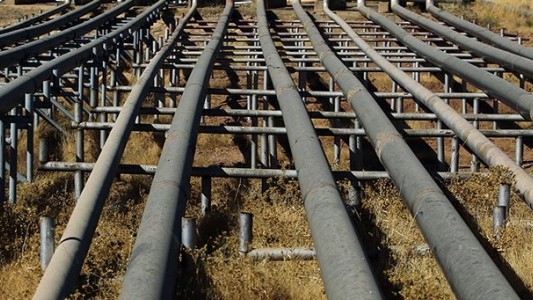
Facing supply constraints and elevated costs, Persian Gulf oil producers have pivoted toward developing alternative export routes that circumvent the Strait of Hormuz entirely. Saudi Arabia mobilized its East-West pipeline to reroute crude from the Persian Gulf to the Red Sea’s Yanbu Port early in the conflict, increasing throughput to approximately 7 million barrels daily. However, this alternative proved vulnerable due to Houthi activities in the Bab el-Mandeb strait and subsequent congestion when shipments were rerouted through the Suez Canal. The United Arab Emirates announced plans to expand its Fujairah pipeline capacity, with state-owned ADNOC developing the West-East 1 Pipeline project expected to become operational next year, potentially doubling export capacity to 3.6 million barrels daily.
Major international oil companies have begun participating in these infrastructure initiatives. TotalEnergies committed to involvement in the ADNOC pipeline expansion and a separate Iraqi pipeline project targeting Mediterranean export ports through Syrian territory. While American officials have endorsed these developments, the Iraqi pipeline is projected to require at least $15 billion and four years to complete. Iraq is separately negotiating with Syria to rehabilitate a dormant pipeline and exploring expanded flows through Turkey’s Kirkuk-Ceyhan route. Kuwait, Qatar, and other regional producers are similarly pursuing pipeline network expansions to access alternative ports.
The expansion efforts have attracted international financing interest, with Japan agreeing to support pipeline infrastructure investment given its substantial dependence on Middle Eastern energy supplies. Regional governments have also begun emphasizing port infrastructure as a critical priority, with industry sources indicating intensified investment focus in this sector. Despite these ongoing developments, the conflict continues to escalate, suggesting that stabilization of alternative routes will remain a long-term undertaking that will fundamentally alter Middle Eastern energy export risk dynamics.
Article Attribution | Read More at Article Source
Article summary produced by Claude AI